Hack a 3D Printing Pen to Make a 3D Printer for Under $100

 As I write more stories about 3D printing, not only do I want to purchase my own printer, but I want everyone — especially K-12 schools — to have access to a 3D printer, too. It’s such a remarkable technology, and although it is getting cheaper, cost is still prohibitive in the 3D printing space. But, let’s let our inventiveness and creativity make up for what our wallets can’t provide, okay? Necessity is definitely the mother of invention, and this project, to build a 3D printer from a 3D printing pen, is one example of how money won’t keep the masses from getting their 3D printing machines.
Daniel, of Tinkernut, has hacked a 3D printing pen to provide us with a very inexpensive option for a 3D printer (that has limits on resolution and print size, of course). So let’s review a little about how he does it. All 3D printers have four basic parts: bed, extruder, a hot end, and filament. That’s it!
In a video called “How to Make a Cheap 3D Printer” (check it out below!), Tinkernut takes us through the details of building this machine.
First, he decided that a 3D printing pen makes a better choice for the project than a hot glue gun, although it costs more. Tinkernut states that “…a hot glue gun would be cool, but then it would require us to build a motorized extruder from scratch.” So the pen wins as the option to build from due to the fact that it comes with extruder functions that are built-in.
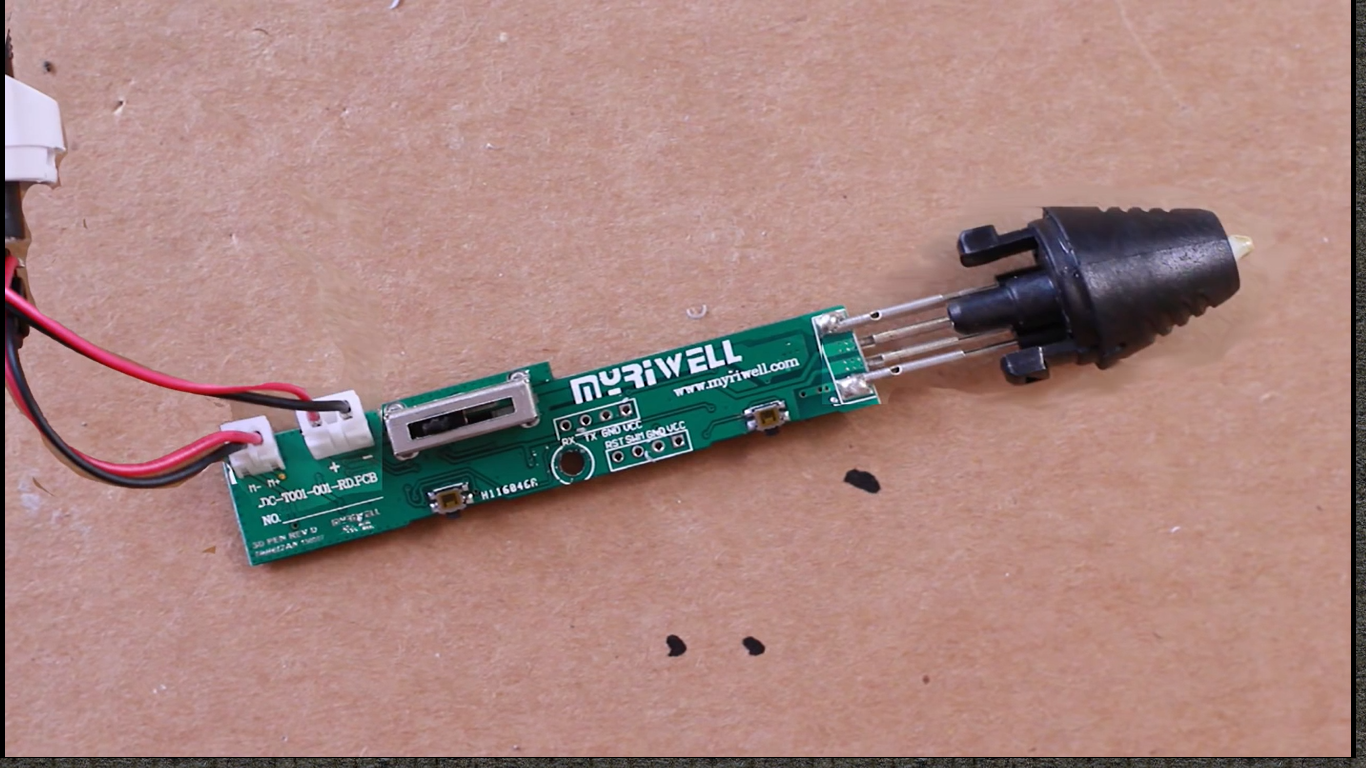 Tinkernut then proceeds to take the pen apart (shown very clearly in the video) so that he can automate it. The pen comes with “extrude backward” and “extrude forward” buttons, and the idea is that the “extrude forward” button of the 3D printing pen needs to be automated and then controlled by an Arduino.
That makes sense enough to me, but for the uninitiated, it is really critical for you to follow Tinkernut’s video if you are planning on trying to build your own 3D printing machine from a pen. The directions are straightforward enough, and by then end of the video, you will see that it is possible for you to try this at home. But as Hackaday reminds us:
“It’s not quite as simple as just strapping a 3D printing pen to a CNC machine, though. The pen and the CNC machine have to communicate with each other so that the pen knows when to place filament and the CNC machine knows when to move. For that, [Daniel] went with a trusty Arduino in order to switch the pen on and off. Once it’s working, it’s time to start printing!”
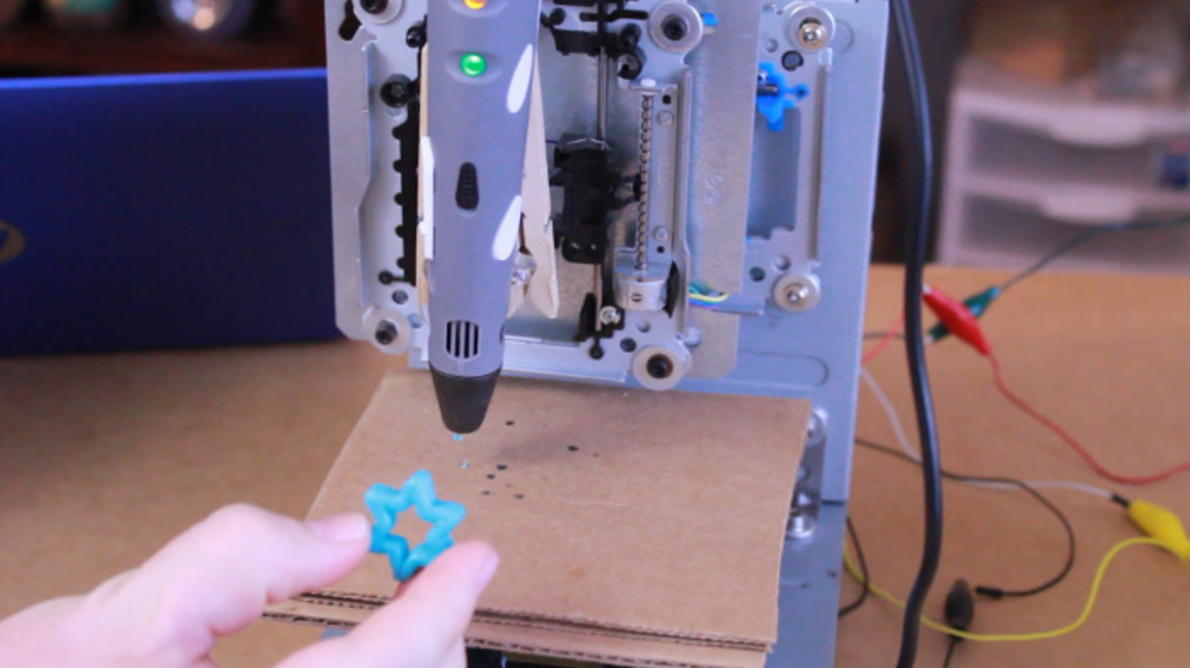
Of course, as 3D printing pens become more common, we are sure to see more people trying this type of elaboration. Tinkernut is ahead of the game, as he impressively achieved his original mission to build an affordable 3D printer that works, even if resolution and print size are limited by his main instrument– a 3D printing pen. Will you be trying this project? Let us know in the Under $100 3D Printer Hack forum thread on 3DPB.com.
Check out the tutorial below:
Subscribe to Our Email Newsletter
Stay up-to-date on all the latest news from the 3D printing industry and receive information and offers from third party vendors.
Print Services
Upload your 3D Models and get them printed quickly and efficiently.











You May Also Like
Cisco Report Finds Cybersecurity and Networks Determine AI Growth in Manufacturing
Additive manufacturing (AM) is a market in-itself. Still, more broadly, it can be viewed as one component of a shift in the productive economy towards interconnection by the Industrial Internet...
AMR Webinar to Reveal 2025 3D Printing Market Data and What 2026 Will Really Look Like
On March 24, 2026, Additive Manufacturing Research (AM Research) will host a free webinar that many in the industry won’t want to miss. Titled “3DP/AM Market Insights: 2025 Review and...
The Tribal Knowledge Crisis in AM Cannot be Solved Without an AI Intervention
Additive manufacturing (AM) has long relied on a deep well of expertise that is notoriously hard to document. That expertise can be found in the nuances involved in setting up...
Generative AI Is Moving From Design to Factory Floors: TCT Asia 2026 Shows the Full Workflow
Generative AI is rapidly moving beyond digital experimentation and into real manufacturing environments — but the key challenge remains: can AI-generated 3D models move seamlessly from creation to production? At...