The Smart Gastronomy Lab Pushes the Boundaries of 3D Printed Food

 Following their support of the first International Conference on Food 3D Printing, Gembloux Agro-Bio Tech and the Smart Gastronomy Lab at the University of Liège say the 3D printer may well be the “microwave of tomorrow.”
The full vision includes a day when hungry people download recipes with a smartphone and then print their way through a a menu via their dedicated food 3D printer in their own kitchens.
“3D Printing Food is an opportunity to develop new ingredients, such as insects and algae, which are not very appetizing but have a clear nutritional interest because of their important protein intake and their abundant production,” says Dorothée Goffin of the Smart Gastronomy Lab. “They can be printed in 3D with new shapes and textures that resemble the products that we already know. “
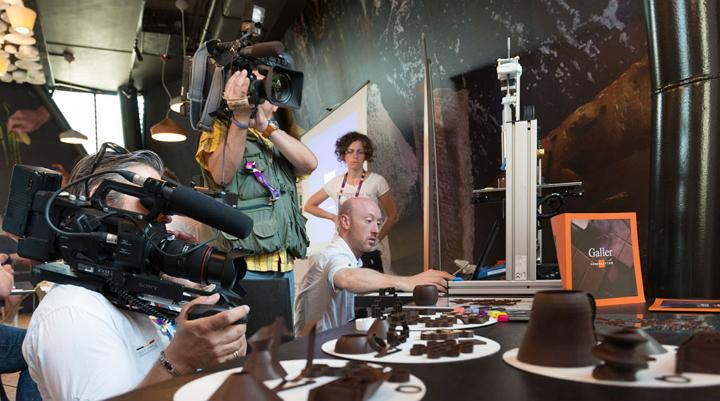
 Goffin’s SGL in Belgium is packed with 3D printers, digital milling machines and more common kitchen equipment, and the goal is to bring together a rotating team of technicians, chefs and the random curious and hungry visitor to examine and direct the future of 3D printed food.
The Living Lab Smart Gastronomy Lab is a “co-creation and prototyping laboratory which catalyzed culinary and technologic experimentation.” Goffin says the key to the concept is that it “puts the user in the center of the concept, including him in the creative, prototyping and test phases.”
The project is part of a multidisciplinary consortium which includes the Gembloux Agro-Bio-Tech, the Bureau économique de la Province de Namur, the KIKK – a non-profit organization to promote digital and creative cultures, art, science and technology and Génération W, another non-profit organization. The groups say their goal is to form a “multidisciplinary approach to allow building the food of tomorrow.”
Goffin is the director of SGL, and she says it’s all about making 3D printed food a palatable alternative to a generally suspicious public. She says the end product will be foods that, though they sport nutritional upgrades, are actually attractive and edible.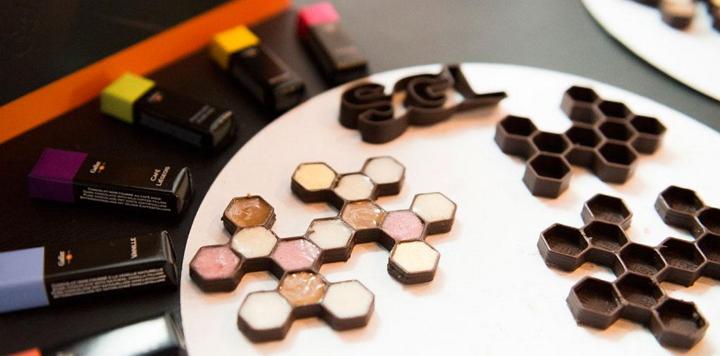
“We will cook again like our grandmothers did, but using new technologies,” Goffin said during a (French language) TEDx talk on the subject.
While the current materials available tend toward Belgian chocolate and other liquid concoctions, companies such as pasta maker Barilla are applying the technology and Hershey is focusing on commercial applications for their proprietary chocolate printer.
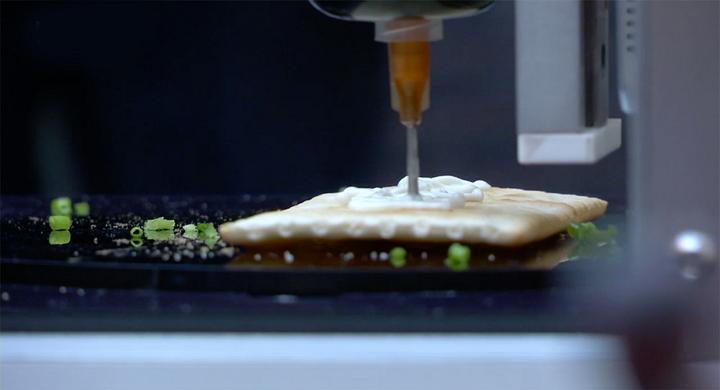 According to Goffin, the major problems with 3D printing food are sidestepped with materials like chocolate and pasta. In regard to chocolate, a high fat content lets the material congeal at room temperature and makes it ideal for current printing methods (and, Goffin notes, they started with chocolate “because we are Belgian”). But she says it’s techniques like actually cooking and heating meats and vegetables as they’re extruded that will drive 3D printed gastronomy forward.
There are plans for the Smart Gastronomy Lab to combine a laboratory space with a working restaurant capable of polling consumers on their reactions to various experimental recipes which push the boundaries of form and texture. Some 20 notable Belgian chefs have already signed on to take part in the project, and the teams will work with everything from micro-proteins to odd ingredients like insect proteins and algae compounds.
“That’s the idea of the Living Lab: to test the reaction of people in their real life,” Goffin says of the project. “If you are working only on nutrition, you do something like Soylent. That’s nutrition. But food is pleasure. It’s something very personal. 3D printing will allow us to reconstitute food, and in doing so restore the pleasure of eating.”
One of the many benefits Goffin mentions specifically is the use of 3D printing for food for the aging population. Eating purees may not be appealing, but through 3D printing, food could seem more like food than mush.
Have you ever tasted 3D printed food? What are your hopes for its future? Let us know in the 3D Printed Food forum thread on 3DPB.com.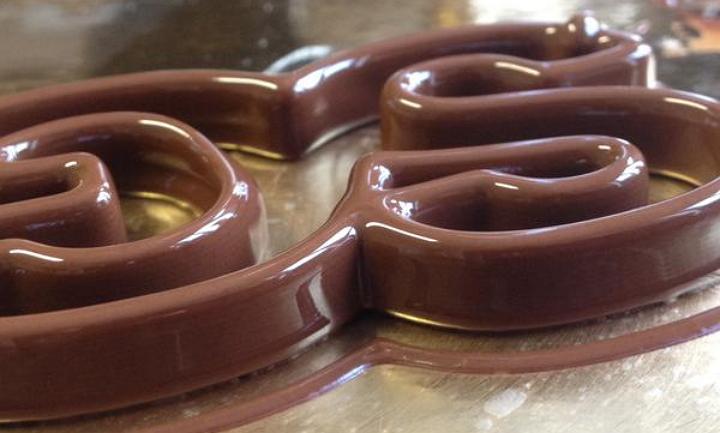
Subscribe to Our Email Newsletter
Stay up-to-date on all the latest news from the 3D printing industry and receive information and offers from third party vendors.
Print Services
Upload your 3D Models and get them printed quickly and efficiently.











You May Also Like
From Material Maturity to Fleet Execution: What Comes Next for Additive Manufacturing in the U.S. Navy
Additive manufacturing is steadily moving from experimental use toward routine application in U.S. Navy shipbuilding, sustainment, and much more. In recent years, the Navy, working through its Maritime Industrial Base...
Industrial Additive Manufacturing Reaches Its Most Important Inflection Point
Additive manufacturing is entering the most consequential period in its evolution. After years of experimentation and uneven adoption, the industry is showing renewed momentum, shaped by supply-chain pressures, and a...
Scaling Beyond 10 Printers: When Support Becomes a Bottleneck
The leap to industrial-scale 3D printing is a support problem, not a hardware problem. A 3D print farm is a centralized facility that uses a large number of 3D printers...
Reshoring Requires Rules of Engagement
Reshoring manufacturing in the U.S. is a stated national priority. Policymakers, industry leaders, and defense planners agree that domestic production capacity is essential for economic resilience, national security, and long-term...