Smoothing 3D Prints with Epoxy by TechWiz

 Jonathan Russell is a graphic designer and web developer who lives near Sydney, Australia. He says he’s been fascinated with computers since the tender age of 4, and he’s grown up around technology and its advancements of the past 35 years.
Russell says he coded his first game at just 10 years old back in 1990, and he built his first PC at age 15.
“I have always pushed the envelope of what is normal for the time,” Russell says.
Now he operates a website and a YouTube channel under his TechWiz brand.
One of his posts is an examination of alternatives to using acetone to smooth his 3D printed models.
“I wasn’t happy with cold vapour smoothing with acetone (or the dangerous hot method), so I tested out smoothing using epoxy instead,” Russell says. in his video description. He elaborates on his TechWiz Facebook page, “I have tried acetone smoothing on my 3D prints in the past and never really liked the results, so after some research found a solution that provides (or can provide) a safer and more effective smoothing solution for 3D Models.”
Russell used the Z-Poxy PT-39 30 Minute epoxy solution to smooth out his model, and he was rather pleased with the results.
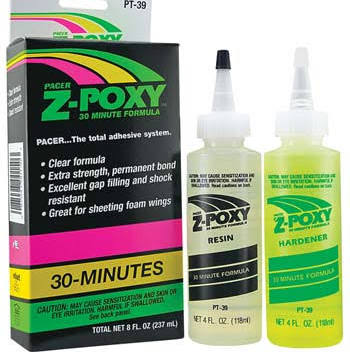
Once you’ve brushed it on, it produces a tough, permanent bond in just half an hour, and one kit includes a 4oz bottle of Z-Poxy Resin and a 4oz bottle of Z-Poxy Hardener. The total working time for the product is around 20 to 30 minutes, and it fully cures in that half hour.
As it contains epoxy resin and polyamide resin, it does, Russell notes, produce some fumes.
Russell says that though he made some mistakes in this first attempt, he addresses them in his video, presented as a top ten list of things to know–and he notes that overall, he was pleased with method and the finished product.
You can check out a video of Russell smoothing out his Darth Vader Melted Mask below.
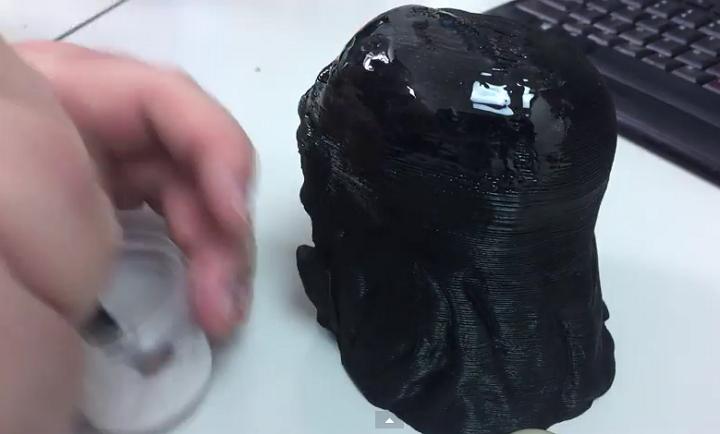 You can also see a whole passel of his other projects where he posts videos of coding, 3D printing, tutorials and reviews to tech products and games on YouTube.
Have you ever used epoxy rather than acetone to finish off your 3D printed models? Let us know how it worked out in the Smoothing 3D Models With Epoxy forum thread on 3DPB.com.
Subscribe to Our Email Newsletter
Stay up-to-date on all the latest news from the 3D printing industry and receive information and offers from third party vendors.
Print Services
Upload your 3D Models and get them printed quickly and efficiently.











You May Also Like
ExOne + voxeljet Are Trying to Do the One Thing Customers Need Right Now: Keep Machines Running, and Rebuild Confidence
For years, ExOne and voxeljet were two of the best-known names in binder jet 3D printing, especially in sand printing for foundries. But in recent years, ExOne “got buried” inside...
BigRep Launches ONE.5X 3D Printer, Announces New Massive Dimension Partnership at RAPID + TCT 2026
As the whole world is starting to realize, the Hormuz supply chain fallout is only just beginning to filter into the global economy, and the rising cost of plastics should...
Orano Federal Services & UNC Charlotte Show How AM Could Cut Costs in Nuclear Energy Resurgence
Outside of the defense sector, few industries have been impacted by Russia’s ongoing occupation of Ukraine more than nuclear energy. The same appears to already be happening in response to...
EOS to Spotlight AI, Robotics, and Industrial Tooling at Hannover Messe
The US-Israel war on Iran is already catalyzing the sorts of major shifts to global supply chains that will effectively amount to permanent economic changes. In this context, the nations...