LulzBot’s 3D Printer ‘How It’s Made’ Episode to Air Tomorrow As Company Prints 500,000th Part

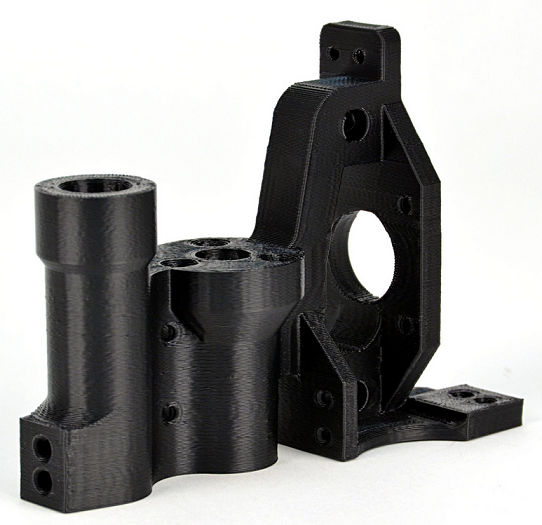
500,000th printed part: The x-end motor mount
If you read many of our articles, then you likely have realized that we sort of have a bit of an obsession with Loveland, Colorado-based Aleph Objects, and their 3D printer brand LulzBot. Personally I just love the fact that this company has grown so quickly when the majority of the components they use within their high-quality, award winning desktop 3D printers are 3D printed themselves.
In fact, the company prints so many components, using a cluster of 144 LulzBot machines, which represents a miniature manufacturing facility, that they just announced a major 3D printing milestone. Today they have printed their 500,000th 3D printed part, an x-end motor mount for the company’s LulzBot Mini desktop 3D printer.
“To our knowledge, no other company in 3D printing uses their own printers for the production of parts on this scale,” said Jeff Moe, President and CEO, Aleph Objects, Inc. “We are particularly proud of our achievement in reaching our 500,000th part milestone, as it illustrates the speed and reliability of our LulzBot line of 3D printers.”
The x-end motor mount is a rather complex multi-functioning part, used to hold a stepper motor while enabling the extruder to move along the x and y axes. Just like the other parts you’d find on any of LulzBot’s 3D printers, this part is freely licensed under GPLv3 and available in several different file formats for anyone, anywhere to download at no charge. As mentioned before, the speed at which this company is growing is simply staggering, and this milestone certainly is a testament to that growth.

In other news pertaining to LulzBot, it appears that 3DPrint.com may not be the only ones who have taken a keen interest in this company. As we reported back in July of last year, The Science Channel’s ‘How It’s Made‘ television series has been filming a segment for their show at LulzBot’s Loveland Headquarters, chronicling the steps it takes to manufacture the company’s TAZ 4 3D printer. Nine months later, this episode will finally air tomorrow evening at 9 pm EST on The Science Channel.
The television segment will show viewers how the Taz 4 is produced from start to finish, including final calibrations prior to shipping. And as the company told us last year, the printer will be manufactured on-air using a green thermoplastic filament for its parts, rather than the typical black that’s used for all of LulzBot’s current machines. The finished product will be a special limited edition, ‘How It’s Made’ Lulzbot 3D printer.
For those unfamiliar with the TAZ 4, it’s a rather robust machine, which has received rave reviews, and has since been eclipsed by the company’s latest version, the Taz 5, priced at $2,200.
Let us know if you happen to catch tomorrow night’s episode, and what you thought. We will be sure to tune in and post our thoughts in the LulzBot ‘How It’s Made’ forum thread on 3DPB.com.
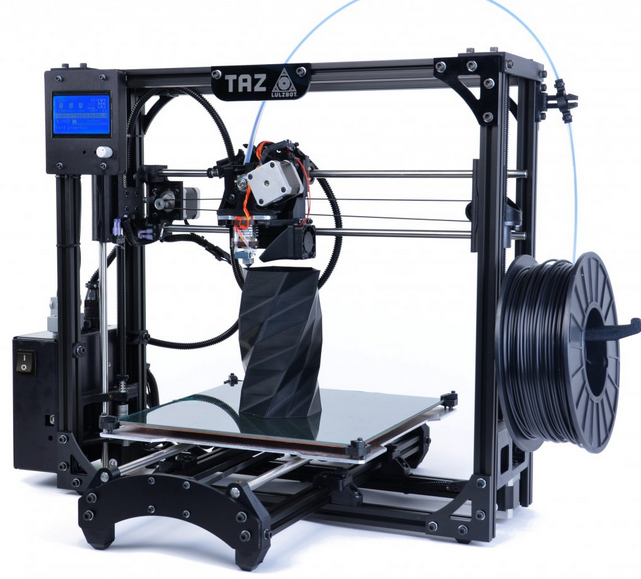
TAZ 4
Subscribe to Our Email Newsletter
Stay up-to-date on all the latest news from the 3D printing industry and receive information and offers from third party vendors.
You May Also Like
3D Printing Unpeeled: $5000 Cold Spray 3D Printer, Roland DGA & Living Materials
The AeroForge is a $5000 cold spray metal printer for copper made by a student team at Rice University. In a paper for ACS Central Science a team from Nanjing...
3D Printing Webinar and Event Roundup: April 28, 2024
In this week’s 3D Printing Webinar and Event Roundup, the Ceramics Expo is taking place in Michigan, Stratasys continues its advanced training courses, and SPE is holding a Polymer Characterization...
Meltio Expands Global Reach with New Partnerships in the Americas and Europe
Spanish 3D printing manufacturer Meltio has expanded its sales network across the globe. With the addition of three new partners in the United States, Brazil, Argentina, and Italy, Meltio aims...
US Army Corps of Engineers Taps Lincoln Electric & Eaton for Largest 3D Printed US Civil Works Part
The Soo Locks sit on the US-Canadian border, enabling maritime travel between Lake Superior and Lake Huron, from which ships can reach the rest of the Great Lakes. Crafts carrying...