3D Systems Teams with 5 Artists to 3D Print Incredible Ceramic Sculptures

 There are so many materials available now-a-days to 3D print with. Of course most of us, from a consumer standpoint, are familiar with the thermoplastics such as ABS and PLA, or the photosensitive resins used within desktop SLA printers like the Form 1+, but outside the general consumer space, there are even more materials! These materials, such as metals, clay ceramics, bio-composites, etc., promise to change the way businesses are run, the sick are cured, and artists imagine and materialize their creations.
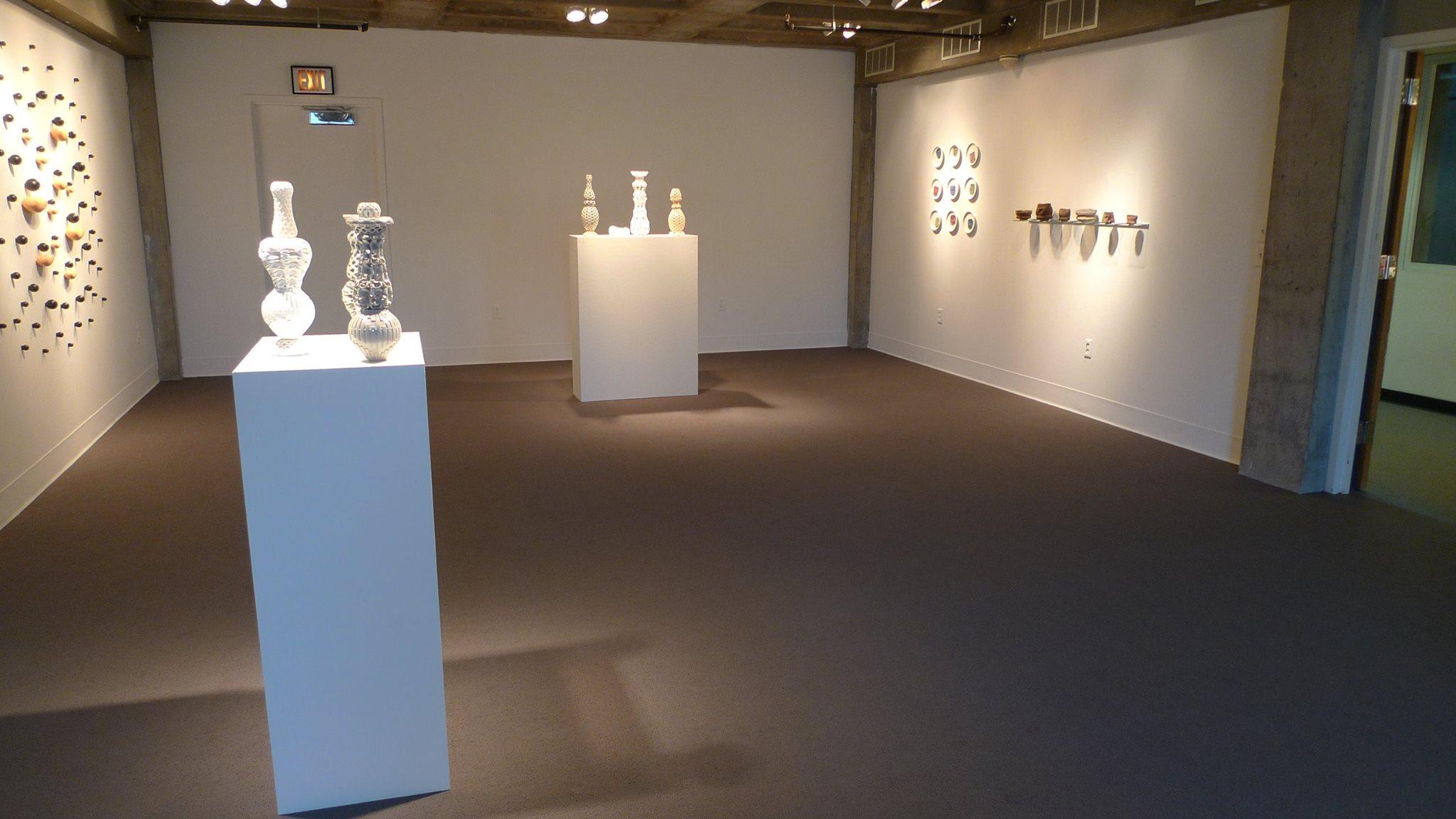
One example from the art space is a recent project worked on by 3D Systems and five mid-career artists who had little to no 3D printing experience under their belts. Kate Blacklock from the Rhode Island School of Design initially had contacted 3D Systems’ ceramics team, letting them in on her plans to exhibit a show featuring 3D printed ceramic sculptures. All that she would 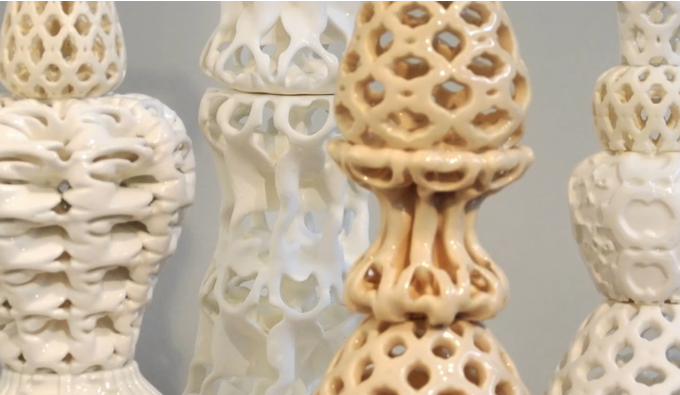 need was access to a ceramic 3D printer and some help with the modeling process.
Blacklock and her team of four other artists she had assembled for this exhibition were in luck, as 3D Systems had been working, rather quietly, on a new printer called the CeraJet. The CeraJet uses 3D Systems’ Color Jet Printing (CJP) technology to rapidly print intricate ceramic objects, which are then ready to be fired and glazed. The machine itself is expected to be available sometime next year–much to the excitement of sculptors and potters everywhere.
“It was really great to have the sponsorship by 3D Systems,” explained Kate Blacklock. “It allowed us to produce a lot of work. It allowed me to ask artists to participate that wouldn’t have been able to participate without this sponsorship.”
Kate Blacklock, Jonathan Bonner, Chris Gustin, Tayo Heuser, and Andrew Raftery were able to obtain first-hand experience with the CeraJet machine, each of them designing incredibly intricate and detailed designs on a computer screen, and then transforming those designs into physical ceramic objects. Because none of these artists had had 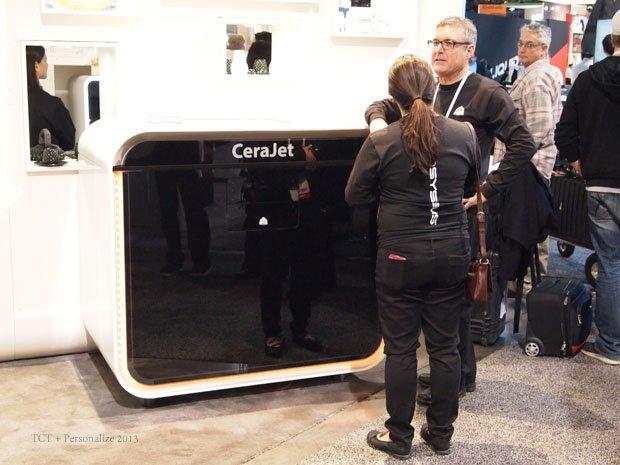 experience designing with CAD, 3D modeling expert Matthew Paquin was on hand helping out. The process actually worked rather smoothly. Paquin, who is an instructor at the Rhode Island School of Design, took in the ideas of each artist and used his talent to realize those ideas within the software. When the model was just right he would send them off to be printed. Traditionally, the art of ceramics is a solitary process, but in this case, these pieces resulted from the collaborative work of many.
“The particular pieces I was working on started from Illustrator drawings that were a part of paintings that I was working on,” Blacklock stated. “So I knew that if there was a way, because a lot of the forms were built on the computer, that I could push that into ceramic pieces. One thing that surprised me was how much the actual pieces looked like the renderings. It’s different when you make things out of clay and you fire them and there are often surprises with the clay doing things that you don’t expect.”
When the pieces were finally completed, they turned out even better than the artists and designers had hoped for. They were all presented at the Chazan Gallery in the group exhibition ‘HIfire RESolutions: 3D Printing in Clay,’ which ran March 19-April 3.
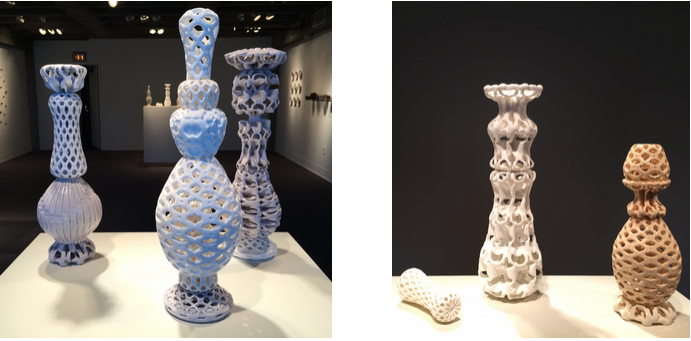
“The most exciting part is obviously seeing the end products, because they are gorgeous. They’re amazing. They are absolutely everything you would ever want them to be,” explained Matthew Paquin. “3D printing and ceramics is going to be absolutely mainstream going forward.”
What do you think? Will be see an ever expanding presence within the ceramics space for 3D printing, now that 3D Systems’ CeraJet is scheduled to soon be brought to market? Discuss in the 3D Printed Ceramics forum thread on 3DPB.com. Check out the video below detailing the process these artists used:
Subscribe to Our Email Newsletter
Stay up-to-date on all the latest news from the 3D printing industry and receive information and offers from third party vendors.
Print Services
Upload your 3D Models and get them printed quickly and efficiently.













You May Also Like
10 Years of Multi Jet Fusion: Onsite at HP’s Vancouver, Washington Facility
At this year’s RAPID event in Boston, HP Additive Manufacturing Solutions celebrated ten years in the additive manufacturing (AM) market. The company ushered in the milestone with several innovations, including...
These 3D Printed Lattices Can Sense Damage Before Failure
A new paper, “Full-Field Damage Monitoring in Architected Lattices Using In situ Electrical Impedance Tomography,” points to lattices being able to detect damage. This could really help composites in critical...
3D Printing News Briefs, October 3, 2026: Hypersonics, Hotends, & More
We’re starting off with defense in this weekend’s 3D Printing News Briefs, as Titomic was awarded a $5 million U.S. defense contract, and VulcanForms announced a partnership with Specter Aerospace...
3D Printing News Briefs, October 1, 2026: Defense, Enclosures, & More
In today’s 3D Printing News Briefs, we’re starting with defense news, first from Massivit and then from AML3D. Then we’ll move on to U.S. manufacturing of a new large-format LPBF...