Aerialtronics Uses 3D Printing to Streamline Operations for Their Data Collection Drones


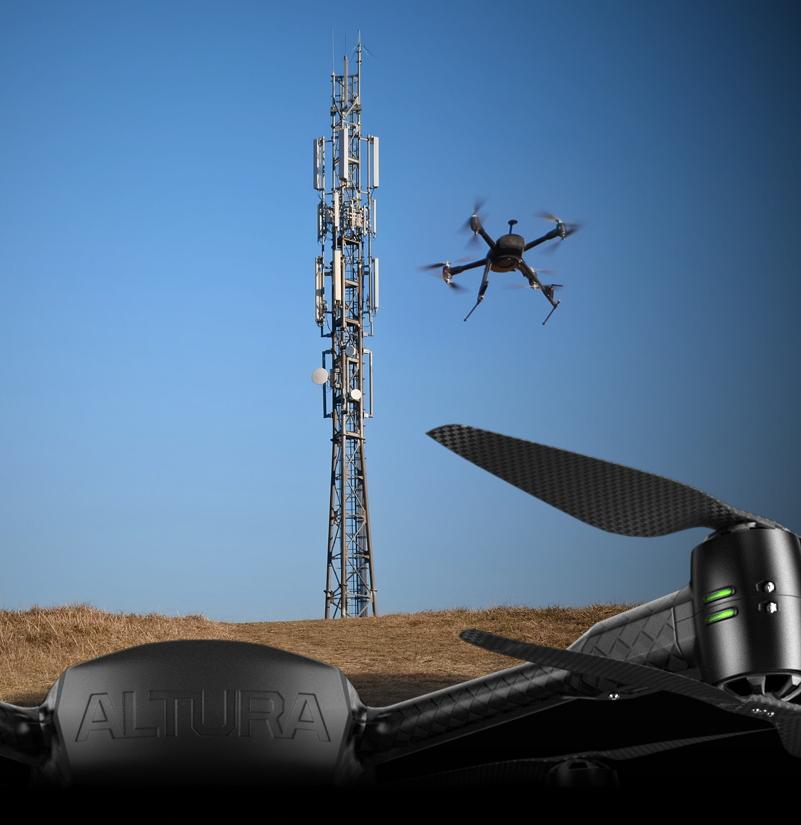 If you see a drone fly over your house, you want to shoot it down. Admit it. You do. But you won’t and you’d better get used to the idea of swarms of them cruising the skies above you — and soon. So put down your shotgun and get your mind right.
Drones are generating both joy and controversy as the technology behind them improves, and Joost Hezemans, the Head Designer at Aerialtronics, is one of the people responsible.
Aerialtronics designs, produces, and services unmanned aircraft systems with products like the Altura Zenith, an advanced aircraft system which has found applications in safety and security, inspections, videography, surveying and mapping, agriculture, and research.
Unmanned aircraft systems, or drones for civilian and commercial applications, are certainly disruptive technologies. Based in the Netherlands, Aerialtronics’ drones are built with 3D printing as a key element of their creation. The company turned to 3D prototyping after becoming exasperated waiting the full month it once took them to produce each iteration of their designs.
 So Aerialtronics brought a solution in-house in the form of a Stratasys uPrint SE Plus 3D Printer which they use to build customized pieces such as motor housings, gimbals, and protective boxes and enclosures for hardware and software.
“We have basically developed a concept that uses a standard platform and is customizable to individual customers and applications,” Hezemans says. “The result of our development is the Altura Zenith. Specially tailored options include the number and power of motors, the payload capacity, flight times and variations of required software systems. Developing even these limited variations required many design iterations requiring prototype models. The process was slow and expensive. Since taking control of our own 3D printing requirements, we have eradicated the lengthy lead times we previously had to endure and have cut our R&D time by about 50 percent.”
Using ABSplus material, Hezemans says, means parts surround motors which generate a lot of heat have the combination of strength and weight characteristics the devices need to function at peak efficiency.
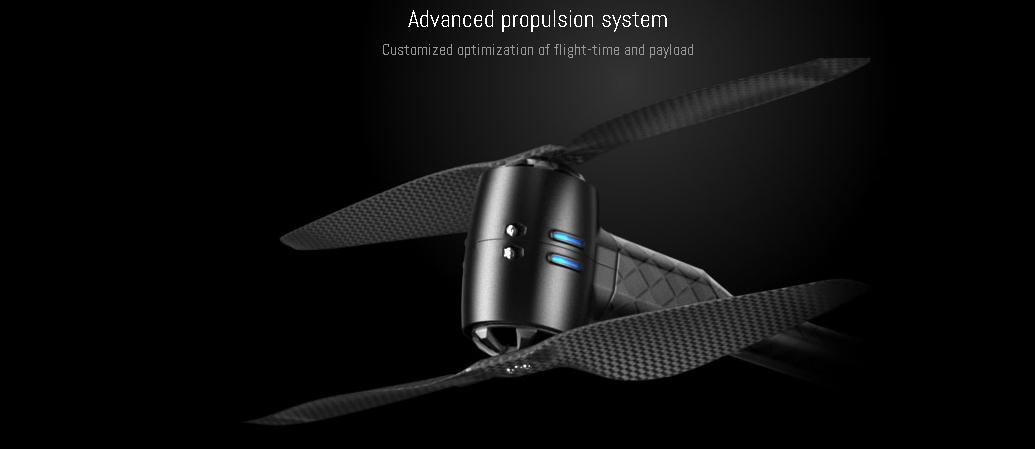
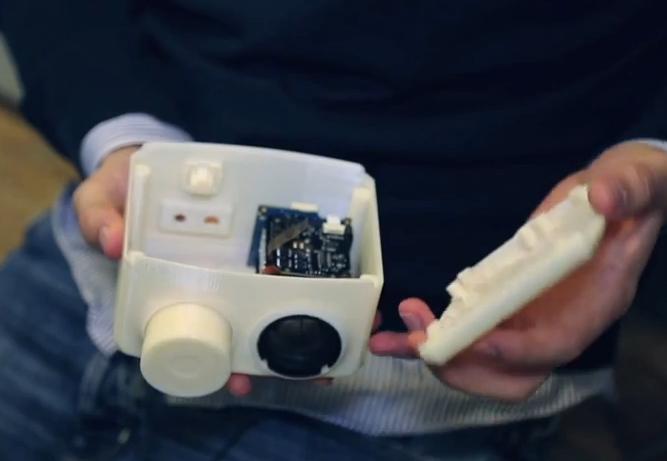 Aerialtronics constructs the main platform of their drones from carbon fiber, but they produce a variety of 3D printed parts for final-use that vary in size according to the specific needs of customers. The parts are often used to house sensor equipment, video and GPS systems, and enclosures to hold cabling and electronic components.
“With the uPrint 3D printer, we can adjust a design one day and 3D print new parts overnight, test it, tweak it some more, and print another to test the next day,” Hezemans said. “This process means that designs have gone through between five and 10 more iterations than before.”
And as for that shooting them out of the sky? Aerialtronics says they have high hopes Valkenburg, a former naval air base, will be developed into a site for what they call an Unmanned Valley initiative where UAVs can be tested in the Netherlands. The company is also at work with the FAA and CAA to educate regulators about the impact and importance of remotely piloted aircraft on businesses.
“Stratasys’ 3D printing technology helped us advance the design and development of the Altura Zenith drone far more quickly – and at a much lower cost – than would have been achievable with conventional methods,” Hezemans said.
Designers are bringing 3D printers in-house to speed up their time-to-market through rapid prototyping? Do you know of any other companies that bought their own 3D printer for prototyping? Let us know in the 3D Printing Data Collection Drones forum thread on 3DPB.com. Find out more about Aerialtronics’ use of 3D printing in the video below:
Subscribe to Our Email Newsletter
Stay up-to-date on all the latest news from the 3D printing industry and receive information and offers from third party vendors.
Print Services
Upload your 3D Models and get them printed quickly and efficiently.












You May Also Like
3D Printed Chip Packaging Specialist XTPL Enters Japanese Market
The additive manufacturing (AM) industry naturally wants to move beyond prototyping to production at scale, and the industry is certainly starting to demonstrate success with that objective, especially in Asia....
UT Researchers Use 3D Printing to Develop “Tabletop EUV Lithography” Process
Photolithography, the semiconductor manufacturing process whereby lasers transfer patterns onto chemical layers coating a substrate, is one of the most amazing industrial processes humanity has ever created. It is also...
3D Printing News Briefs, May 30, 2026: RIMPAC 2026, Acquisition, Ceramic Implants, & More
We’re kicking things off with materials news in this weekend’s 3D Printing News Briefs. Then it’s on to a hybrid manufacturing system for a maritime exercise, an expansion of industrial...
The University of Utrecht: “3D Printing Could Change Who Gets to Become a Manufacturing Power”
For decades, manufacturing has mostly been controlled by countries with huge factories, lower labor costs, and industrial systems that took years, sometimes decades, to build. But Utrecht University human geographers...