
Prusa Core One L+: A Worthy Upgrade?

Disclosure: The Core One L+ was provided to me by Prusa3d free of charge for the purpose of this review. I have not received any other compensation. All opinions expressed are my own, and Prusa3d has had no influence on the content of this review.
Unboxing
Packaging Quality
This may sound like a broken record, but true to Prusa’s standard, the Prusa Core One L+ is packaged exceptionally well. I really appreciate their heavy reliance on recyclable cardboard, paired with foam only where extra structural support is critical. It strikes an excellent environmental balance, getting printers safely to customers while maximizing recyclability.
-
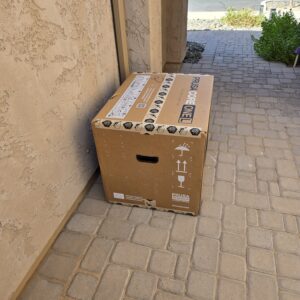
- Core One L+ Arrival.
-
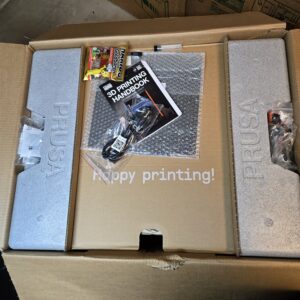
- Core One L+ Initial Box Opening.
-
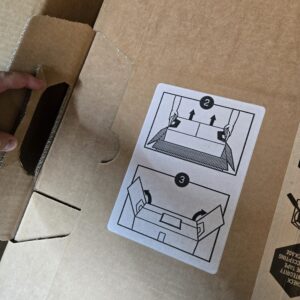
- Prusa Unboxing Instructions ex: 1.
-
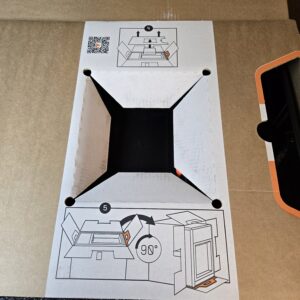
- Prusa Unboxing Instructions ex: 2.
-
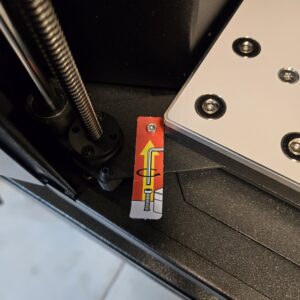
- Bed Shipping Screws.
-
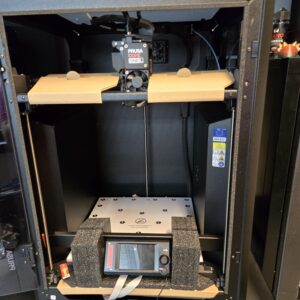
- Final Unboxing Cardboard motion System.
Assembly/Build Quality
The build quality is a decent upgrade over the original Core One that I reviewed last year. Notably, the thick aluminum print bed and Z-axis screw/bearing mounts are where I see the biggest improvements, primarily in that print bed. While I see nothing wrong with the PCB bed that Prusa typically uses, I enjoy the larger thermal mass and stronger magnetic holding force of the Core One L+’s print bed.
First Print and Impressions
Right off the bat, I wanted a direct comparison between my original Core One (non-plus) and the Core One L+ with all the recent upgrades (listed here).
While you can still see vertical fine artifacts (VFAs) in the left model, you can also clearly see the improvement in their severity. Now, I didn’t see the VFAs to this extent when handling the left part in normal lighting. However, with very harsh lighting and super shiny PETG, you can still see even the smallest surface artifacts. Overall, I am very much so impressed by the quality improvement! Without direct, harsh lighting, you’re unlikely to really notice the VFAs. Of course, with matter- or fiber-filled, the VFAs are essentially unobservable.
-
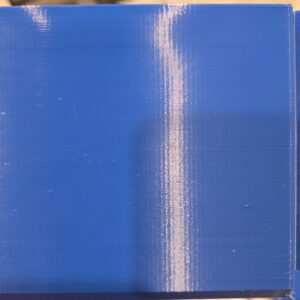
- Core One L+ surface
-
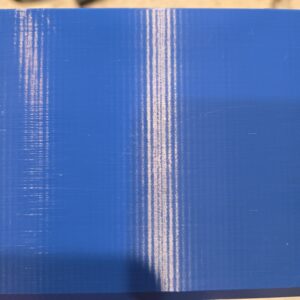
- Core One surface
Hardware and Specs
Based on the Core One, but enlarged to fit the larger build volume, the Core One L+ sports a 300x300x330mm build volume. Keeping the Core One’s internal PC-CF printed components, the Core One L+ is a strong, robust upgrade over the original Core One. Some of the noted upgrades are a 6mm thick aluminum print bed with built-in, very strong magnets, and an actively heated chamber.
Software and UI
Prusa has a familiar and intuitive UI on the printers. Personally, this works for me, and I enjoy the clicky scroll wheel. Though, I do think this is where Prusa may be lagging. The screen is touch-sensitive, but I don’t think it’s quite up to par with competitors whose UI’s are designed specifically for a touch interface and feel more like using a smartphone. That said, the UI is still very usable and shouldn’t inhibit use of the printer.
I also want to note that Prusa3D is keeping up with, or exceeding, the competition in slicing. While Prusaslicer is based on Slic3r, nearly all other slicers from the competition are based on Prusaslicer. And while I am not personally a fan of the latest stable release’s (2.9.6) UI, I have also downloaded the alpha version of PrusaSlicer 3.0.0. And I have to say, while this is an alpha and certainly comes with bugs, once a stable version is released, the improvements Prusa has made will definitely make me reconsider my daily slicer, Orca Slicer.
I also want to mention that you don’t need to connect to any cloud services. If you want, you can keep your Prusa offline and print that way. There is no degradation in capability or performance. With Prusa now providing a critical infrastructure version of the Core One L+ and XL, you can rest assured that your data is even more secure.
Test Prints and Performance
In my testing over the last month, I used the Core One L+ for large-scale models and heavy batch printing. I have been printing many things to support my wife’s hobbies and my friends. This has led to essentially 100% uptime over the last month, with over 26 days of printing.
Print Examples
-
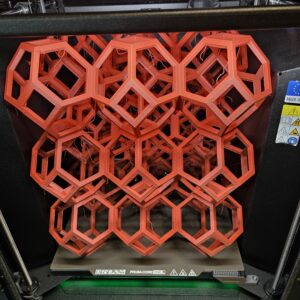
- Full Build Volume Lattice.
-
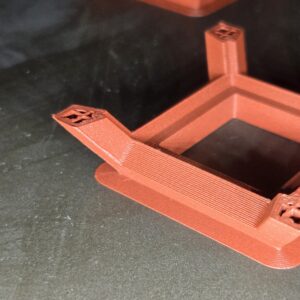
- Up close layer stacking.
-
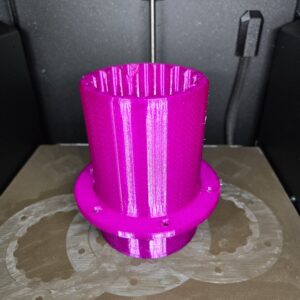
- Prototype #1 – PETG
-
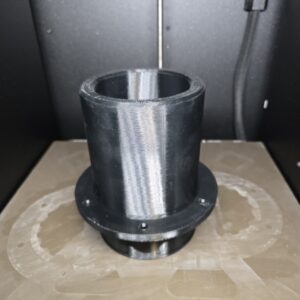
- Prototype #2 – ASA Smooth enough surface to see finger smudges in. WOW
-
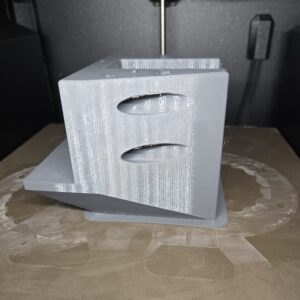
- Outdoor mount – PCTG
-
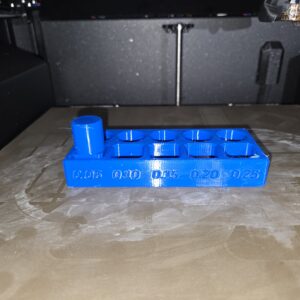
- Tolerance Test #1 – PCTG
-
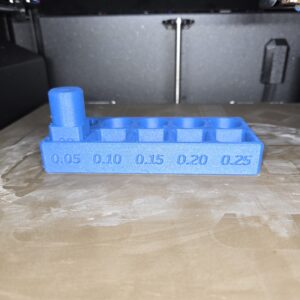
- Tolerance Test #2 – ASA-CF
-
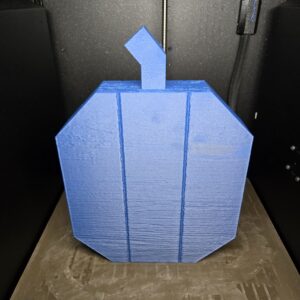
- Pumpkin test
-
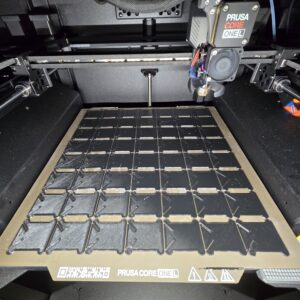
- Batch Prints for Wife, thread bobbins for embroidery threads. Printed over 10 plates in just 2 days.

Accuracy Test Results: X Measurement: 99.97 of 100mm Y Measurement: 99.97 of 100mm Z Measurement: 99.99 of 100mm XZ Measurement: 135.08 of 135mm YZ Measurement: 134.98 of 135mm XY – A Measurement: 149.93 of 150mm XY – B Measurement: 149.98 of 150mm
Actual Print Speed
This is where I am happy to say Prusa3d has made some excellent progress. Again, while it’s not as fast as the higher-flow-rate competition, the Core One L+ is much faster. I think the ability to measure and calibrate input shaping without an external add-on is a driving factor here. I’ve been able to reach 350 mm/s as the printing speed on many prints. Of course, this depends on materials. PETG, for example, definitely won’t print at this speed without a high-flow variant.
Actual Material Capabilities
The Core One L+ has a unique chamber-heating method. While it doesn’t have a dedicated chamber heater, fans under the print bed actively circulate warm air from the bed itself. With a maximum chamber temp of 60c, I have been able to comfortably print with PETG, ASA, PA6/PA12-CF, and PC-CF. I printed the CF parts with a Diamond nozzle so I didn’t wear out the stock brass nozzle.
Noise Level
The Prusa Core One L+ is again one of the quietest CoreXY printers I have seen. With minor peaks around 60-61db and valleys around 40-42db, I am averaging ~50 dB. I am totally comfortable having the Core One running right next to me. I can tell it’s running, but it’s not nearly as much of a nuisance as the older i3 models once were.
Reliability and Maintenance
I have to say, the reliability has impressed me. From basic PETG to PA12-CF, I have had no failures. Even while using the alpha version of PrusaSlicer, where I expected to see bugs and hiccups in the prints or in the quality. Instead, even with 3rd-party filaments, I have had 100% print success. And just like any other Prusa3D product, maintenance is easy, and there are guides/replacement parts for everything.
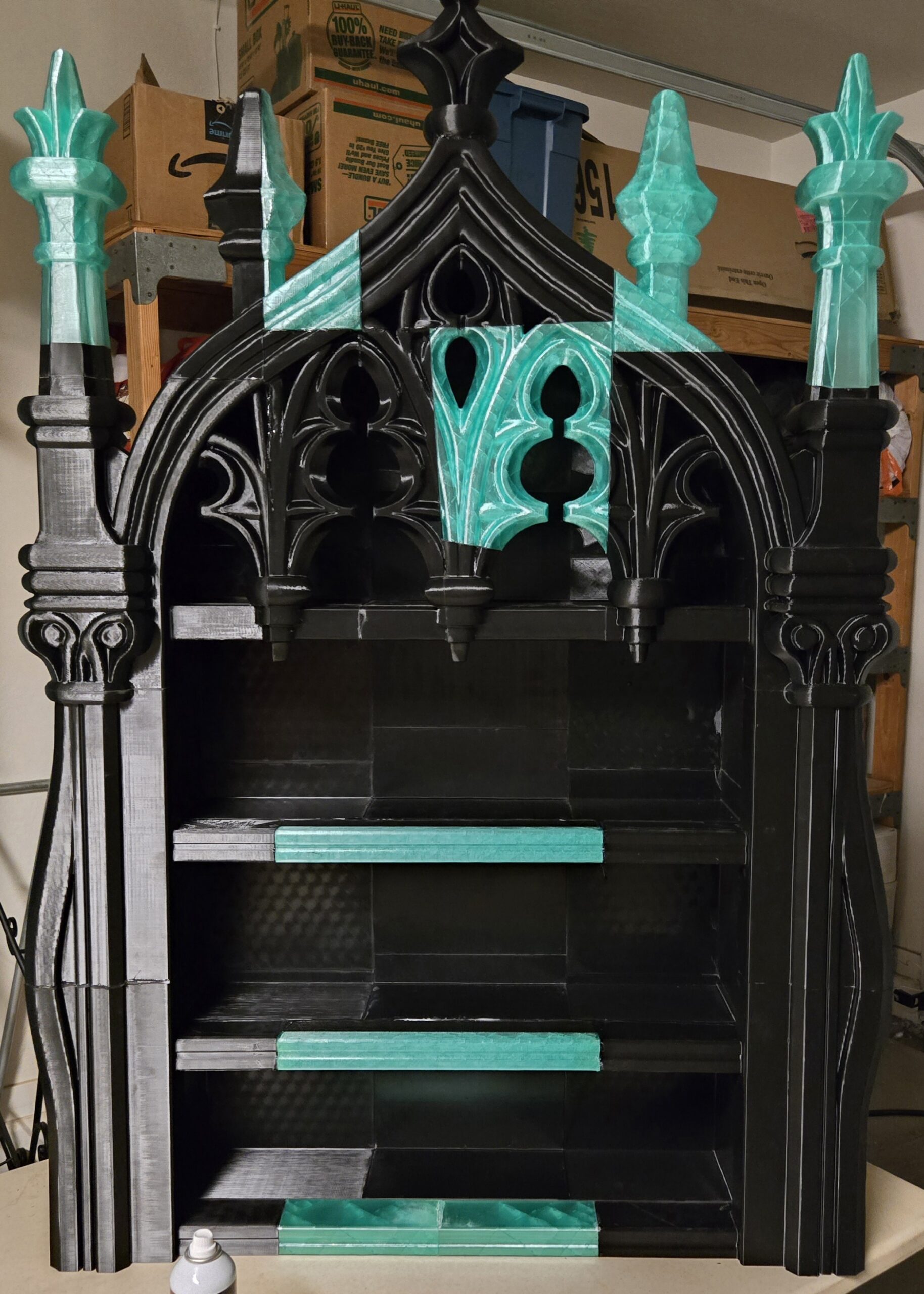
Full-size Gothic Shelf (for a friend, will be painted over) – PETG
Cost and Value
At $1,999 for the pre-built unit, I think Prusa3d has something really compelling here. Now, I will be the first to admit it’s not the cheapest printer out there, but it has some of the most consistent, highest-quality output of any prosumer printer I have come across. With a primary focus on repairability and upgradeability, you are getting a rock-solid frame that you can upgrade over time whenever innovations or technology, such as Bondtech’s INDX (Prusa INDX), become available, without the need to purchase a whole new printer. And that’s the biggest reason to pick a Prusa over any other. It’s designed to evolve and not become garbage.
So, who is this for?
This is for someone or a company that is seriously into 3d printing. This is a production-ready printer that is easy to maintain, upgrade, operate, and implement in an office or workshop. This is for more than hobby models; you can 100% batch-print functional, end-use parts, and it has a large 300x300x330 build volume.
Pros
- Print quality
- Large build volume
- Reliability
- Upgradeability
- Repair-ability
- Ease of use
- Material profiles
Cons
- More expensive than similar competition
- UI feels a bit dated
- Still flow rate limited for speed
Summary
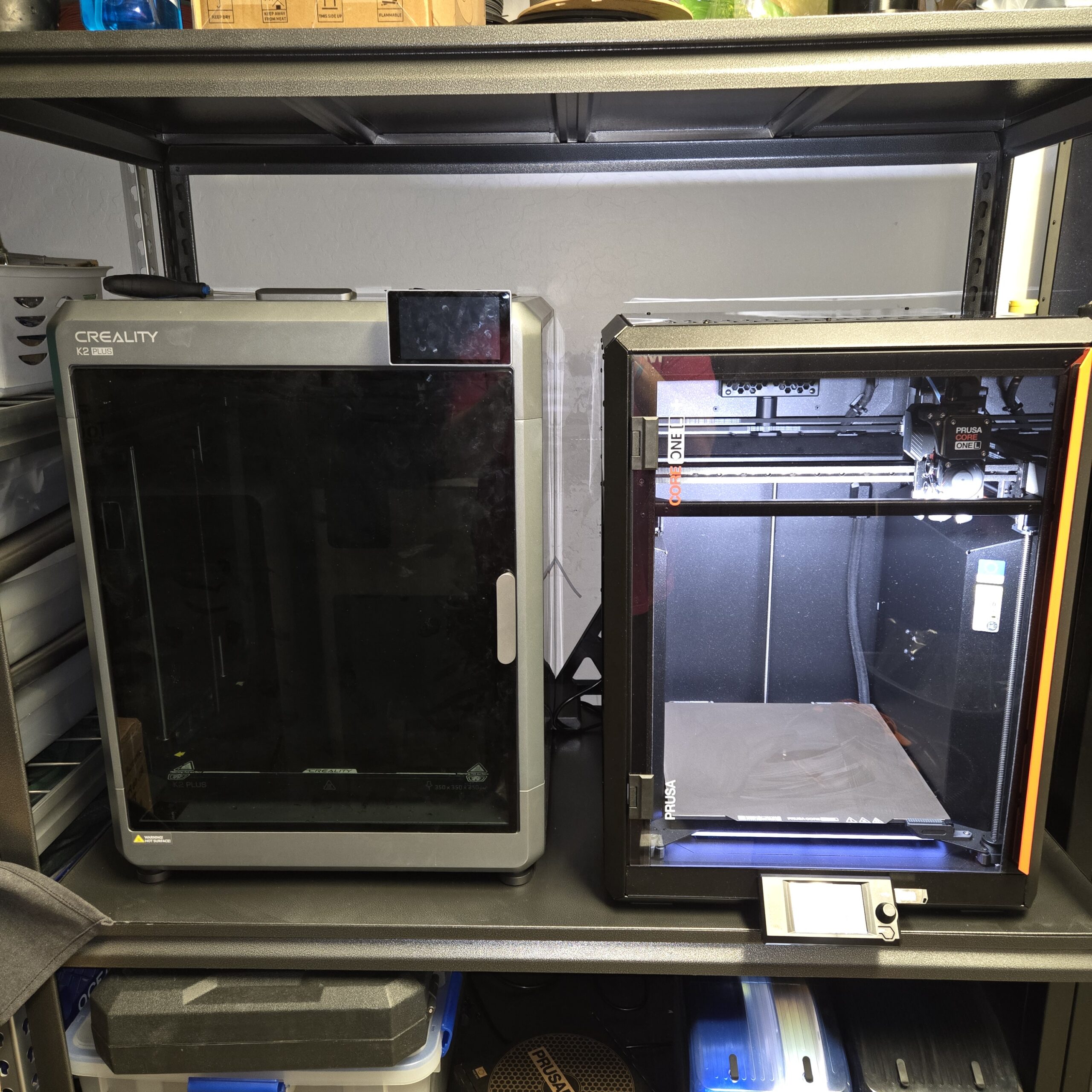
The Prusa3d Core One L+ has exceptional build quality, excellent packaging, and robust hardware improvements over the original Core One, including a larger 300x300x330mm volume and a thicker aluminum print bed. Over the last month of intensive test printing across various technical materials, the Core One L+ demonstrated remarkable speed, high accuracy, quiet operation, and a 100% success rate with no print failures. While the user interface feels somewhat dated compared to competitors and the price tag is higher at $1,999, the software and slicing options, including offline privacy options, remain highly intuitive and capable. Ultimately, the Core One L+ is an outstanding, production-ready prosumer machine whose long-term value lies in its focus on repairability and future upgradeability.
Personally, this is my go-to printer right now for batch prints and large prints. And I am eagerly waiting for INDX to come to the Core One L+!
Featured image courtesy of Prusa3d
Subscribe to Our Email Newsletter
Stay up-to-date on all the latest news from the 3D printing industry and receive information and offers from third party vendors.
Print Services
Upload your 3D Models and get them printed quickly and efficiently.













You May Also Like
3DPOD 315: Dirk Simon, from BASF to Farsoon to FKM, and now Square New Business
Dirk Simon had already spent years in the chemicals industry before joining and pioneering BASF‘s 3D printing effort. We get to hear how that firm looked at 3D printing and...
The Frankenservice Part 2: Have Your Cake and Eat it Too
This series of articles delves into a thought experiment. What if we let go of using a few machines very optimally, but instead use lots of different machines to meet...
3D Printing Financials: New Money Flows Into Medical, Industrial and AI 3D
Money continued to move into 3D printing in the second half of August. Hike Medical raised $22.5 million as it grows its 3D printed custom medical device business. Swiss additive...
3D Printing Financials: Aerospace and Defense Help Materialise Manufacturing Rebound
Materialise (Nasdaq: MTLS) grew revenue and profit in the second quarter of 2026, as its Medical business continued to expand, and stronger aerospace and defense demand helped its Manufacturing segment...























































