The SLS Market, Game of Trucks: Part 2


With the release of the new HP 1200 and the Formlabs X1, we can see real competition from very different segments. From several million dollars to just $20,000, the laser powder bed fusion market is going to be a much more competitive place over the next twelve months. In the first part of this series, we looked at the largest systems; now we focus on the mid-market, where most systems are sold. The idea behind this series is to, through the lens of trucks and commercial vehicles, find an analogous differentiation in products that is currently slowly underway in the SLS market.
Light Trucks/ Commercial Vehicles: Mid Market
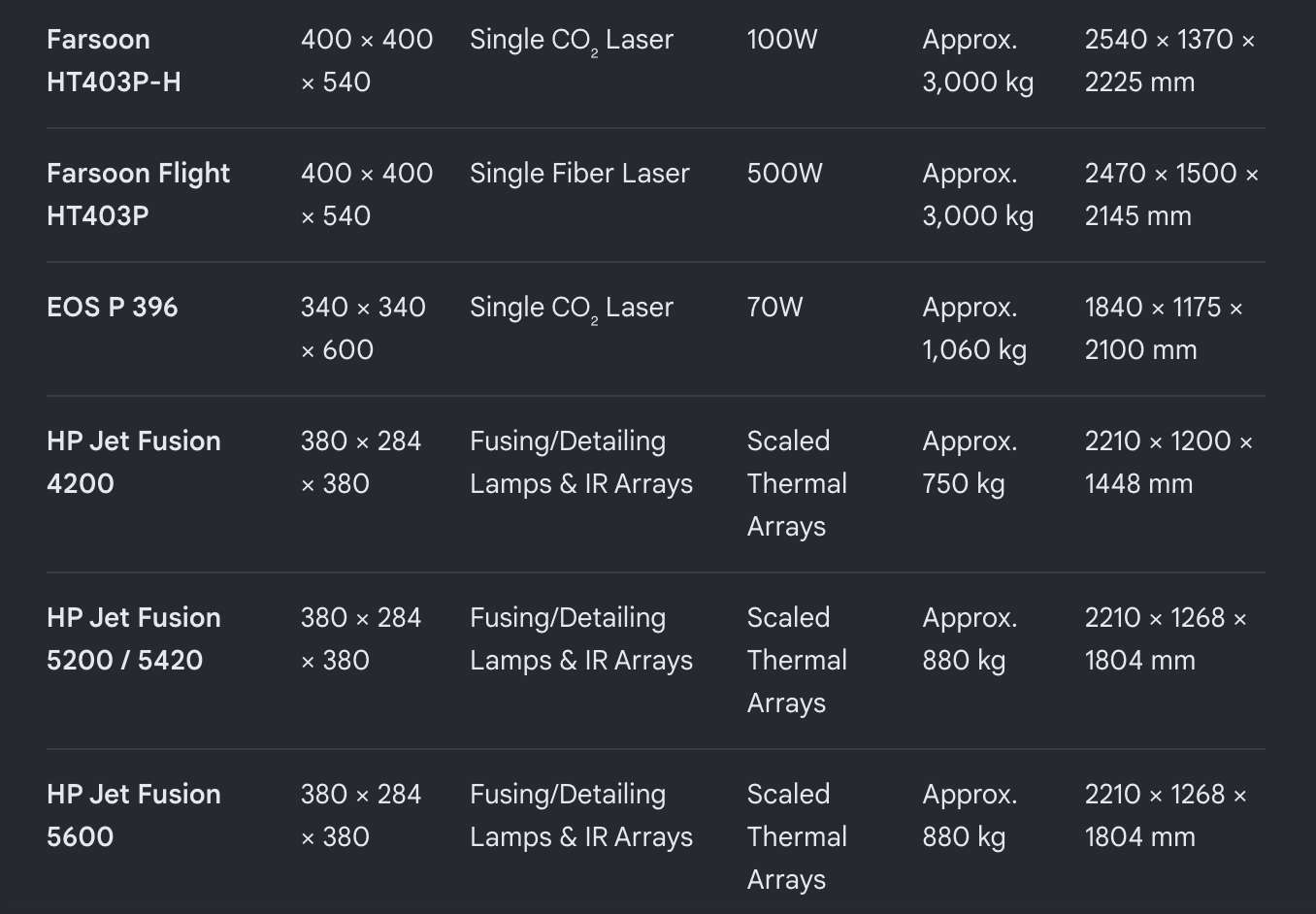
Comparison of several established industrial polymer powder bed fusion systems. Image courtesy of 3DPrint.com/Joris Peels.
In the light truck and light commercial vehicle segment, there are many different setups, but the predominant one is the van-like setup, with four exemplars: the Ford Transit, the Mercedes Sprinter, the Dodge Ram ProMaster, and the LDV. LDV is a budget brand, and its quality will probably improve over time. Traditionally, however, LDV vans have been cheap but have come with quality and longevity issues, frequently breaking down. For now, the LDV is not a good choice. The Dodge Ram is no frills, simple, but easy and cheap to convert into the van of your dreams. It’s simple to repair and maintain. The Transit is techier and more comfortable, with easy-to-love features that make it a good choice. Pricier and more expensive to service, the Sprinter feels better and is more comfortable,
LDV: Low Investment
We’re seeing this in metal a lot, with crappy metal printers all over the place. Happily, the polymer segment has, for the most part, escaped the slyest, most lying of vendors who make shaky machines that will last only as relics of bad choices. I call this segment the prison tattoo segment.
ProMaster: Low Part Cost/Low Investment/High Customization
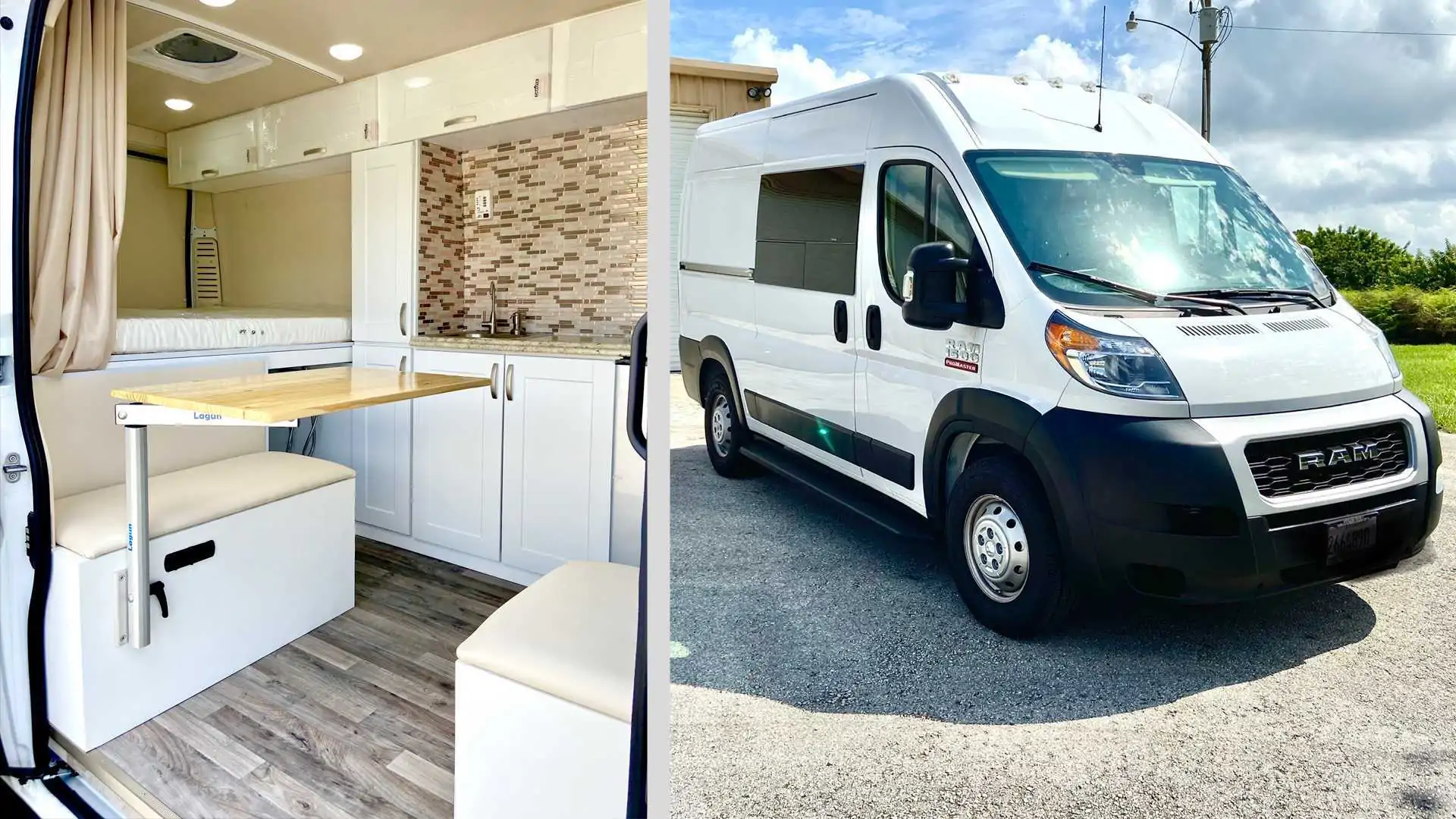
Skala Conversions Turns Ram ProMaster into the Ultimate Camper Van. Image courtesy of Skala Conversions.
I expect another system to emerge as well. This is a commoditized, inexpensive, large system. It may have a big 1000 × 500 × 450 mm build volume, but the optics will be so last year, and lasers will be cheaper. It will have none of the finesse of the other systems, will not be continuously productive, nor will it have the level of detail and repeatability. But it will be just good enough. It will be low-cost to maintain and easy to customize. By reducing capex and being productive enough, this kind of machine will enable low part cost. Rather than buy a finished machine, maybe you buy most of it and then add expensive lasers, change the optics somehow, make your own controls, optimize it for one material, etc. People will buy a good enough system and then invest in the parts that matter to them, similar to what Jason at Next Chapter Manufacturing is doing. They’ll develop specific manufacturing solutions for themselves, as he has done.
Transit: Low part cost, commoditized The Allrounder
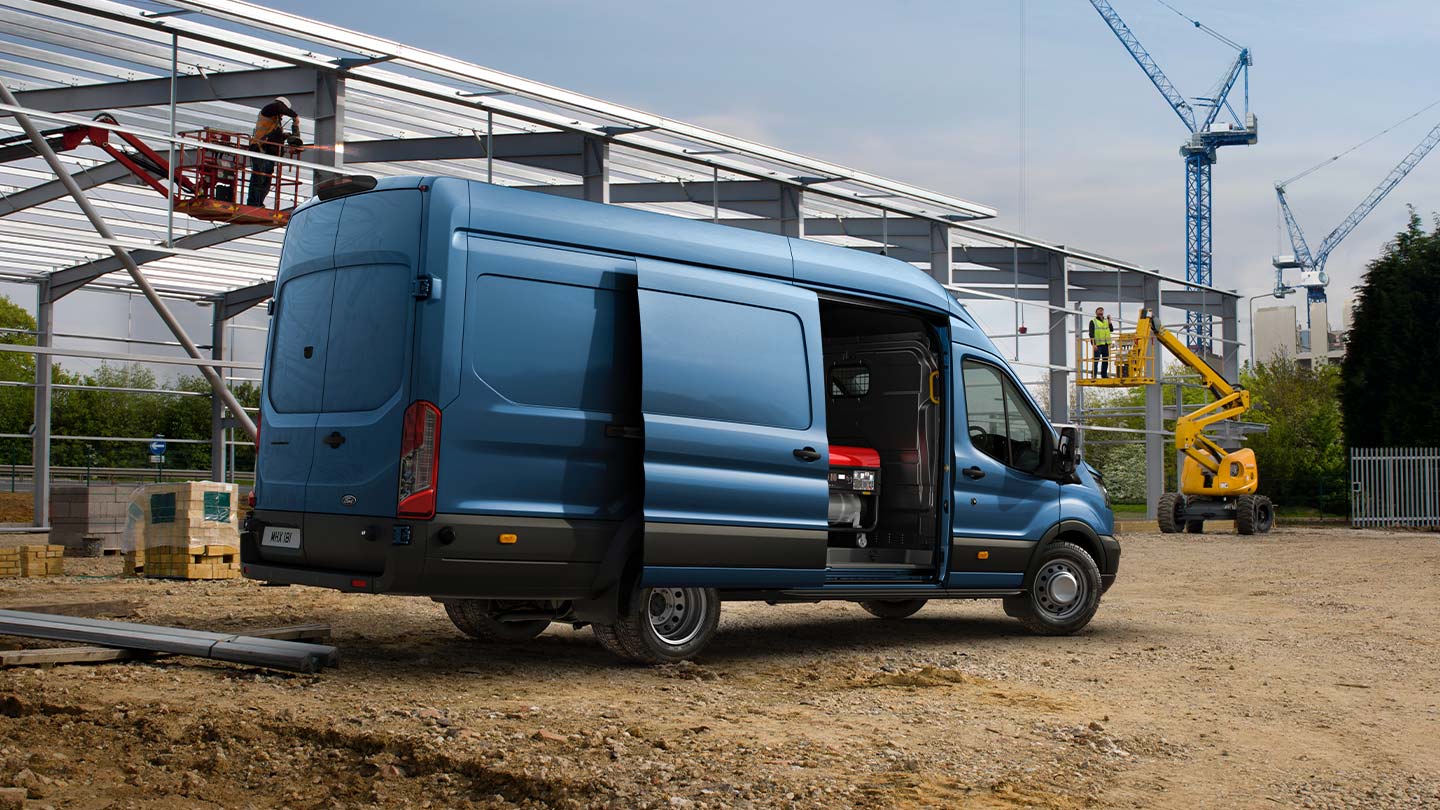
Ford’s e-Transit Custom van. Image courtesy of Ford.
Here is the largest segment in this part of the market, the one that will be the largest overall in value. Relatively easy to use, not too expensive, and low in maintenance and service costs. Productive, long-lasting, reliable. An obvious segment, but sadly one without any real participants at the moment.
Sprinter: Your Premium Choice for Keeping the Market Smaller
That is because everyone is piled into this segment right now. Your premium choice is what everyone wants. This leaves a huge gap in the market for an OK system that is well-built and can be upgraded with better optics, or a truly value-conscious system.
Entry Level: Ludospace
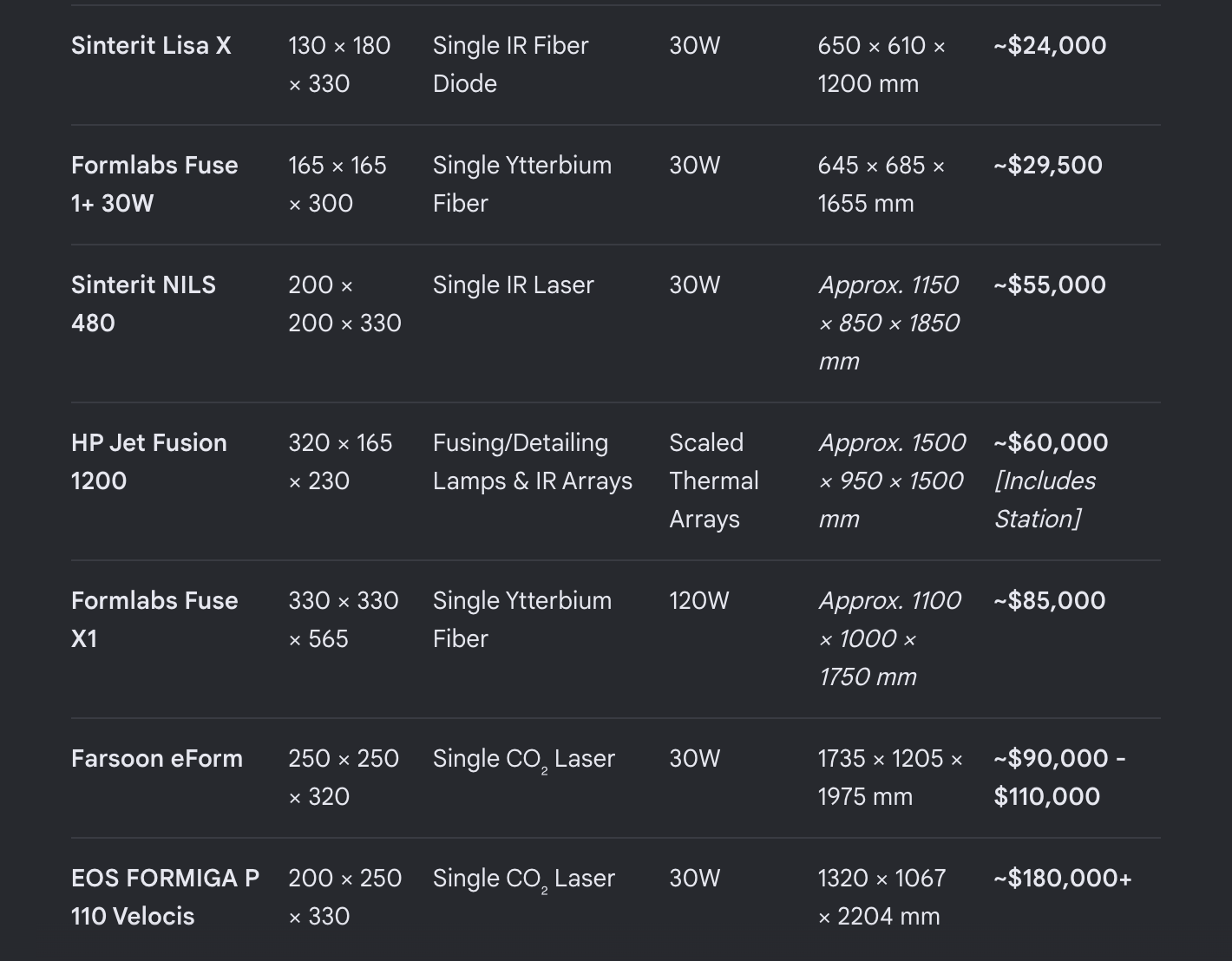
A comparison of entry-level and mid-market polymer powder bed fusion systems. Image courtesy of 3DPrint.com/Joris Peels.
Now, I’ve never heard the term Ludospace (which is used in France to denote “leisure activity vehicle” or “multi-purpose vehicle” and comes from ludique and monospace) before, but apparently it’s French and is used to describe playful minivans. A small panel van, a car-derived van, and a light commercial vehicle are among the other versions in this segment. We’re talking about a utilitarian, car-like panel van that usually seats four. They are often used in Europe by plumbers and the like. The Volkswagen Caddy, Kangoo, Berlingo, Tourneo Connect, and Peugeot Partner are some versions of these van-like cars.
In powder bed fusion, these systems usually serve a business purpose. They need to do actual work, actual production. But the systems should be easy to maintain and low-cost to buy. To me, this is the space of the individual inventor. Patricia, who starts her own sunglasses label, produces parts in her own garage. Or Simon, the audiologist who comes up with high-end custom hearing aids made in the Upper East Side. These systems will be made to work day in and day out and be cheaper to buy. People will want to tweak materials and buy their own powder or buy lots of different powders. To me, the HP 1200 stands to completely dominate this segment. Only it will need to either enable PA 11 or lots of materials and settings. The 1200 has a killer purchase price and should be a productive, low-cost system. You could easily use it along with the Magics integration day in and day out. And let’s say that every day you print 25 pairs of sunglasses, you could be doing 750 a month, perhaps? You’d pay off the system in four months. I think that they should offer it for lease for $2000, this will be an amazing proposition for inventors, startups and new production businesses. To me it’s a printer for people who want to sell things directly. Things like, hearing aids made in the store, glasses, custom hearing protection, headphones, custom bike seats, custom tennis racket grips, mouth guards and the like. To me this kind of thing was always impossible because the printers were too sucky, had too little yield or were too expensive.The economics could be the killer part of the 1200. I also would as a print service buy like 4 for every niche material that is important to key customers. So have a black one set up for BMW, TPU for Nike and PA 12 FR for the rail customer. I also think that this could be a machine to sell to print farmers who run thousands of Material Extrusion machines and would want to branch. I think as well that this could enable new localized services that run the 1200 and a few small SLA machines and Material Extrusion machines. Together with workflow solutions this could also be used for spare parts production and distributing digital warehouse products. It may be a great fit in hospitals too. But, the machine is limited in build volume so for some markets with larger parts than the 12 liter, 320 × 165 × 230 mm box can other printers will be better alternatives.
The Minivan: X1

Chrysler Pacifica 2026. Image Courtesy of Chrysler
Now in America, you used to have the much-maligned minivan. More luxurious than a Kangoo, it’s more expensive to maintain and buy. You can’t customize it as much, and it will be set up in the same way for everyone. To me, this market segment is the university (parts production) and the in-house prototyping shop. If you were an architect who wanted to easily print things in your office, you could be a part of this segment. To me, the Formlabs X1 is in this segment. It’s convenient. It will work well with the powders that they provide and consistently spit out parts. But, it will be less durable, less reliable, and cost more per part than the mid-segment. Capex will be significantly less, but materials costs will be higher. You’ll use their software and be happier for it. For the thousands of universities worldwide, the hundreds of university prototyping labs, and architects worldwide, this could become a standard system. The fact that is fits through a normal door is a real winning feature
Formlabs is good in terms of experience and software. So, overall, the experience will be the key thing for the X1. It will be more expensive than the 1200, and you could probably get two fully loaded 1200s for the price of one X1 with all the accouterments. But if you’re at Nike, you’ll like the experience. And to me this is the key thing, livability, experience.Thats what is so different about the Minivan category. So going forward, in this category think about how you can make the experience better for the user, can we unpack with less hassle, can we create less mess. Think Nespresso, yes it’s horrible coffee but theres no clean up. And I think that this category will be completely different than the preceding and the succeeding one in the future. The minivan is an easy to live with SLS machine while the other two categories are workhorses, durable with high OEE. I think that in the future no one that buys this category of printer will even know what OEE means. But, they’ll love the one click auto unpack shake station.
If you have a bunch of college kids using it, probably use this one but if you’re going to be making a lot of stuff then the 1200 will be able to make more stuff. But, if you need bigger parts then the X1 will be your choice. Now, if they open it up and it is indeed reliable and repeatable, then this system could also compete in another category, the Vito. The proviso of course is that it is rugged and reliable and stands up to intense use. This remains to be seen.
Vito: The Workhorse
To me, this is the category that could end up dominating the entire market. Players would have to significantly reduce the overall system cost for this market to grow. Short-term greed is therefore what is keeping people from this segment. Sinterit is actively trying to make these workhorse systems, but so far has lacked the heft and marketing prowess to do so.
A sub-$75,000 complete system that is open-powder, open-settings, and has a build volume similar to the X1. The HP 1200 is currently too small. So HP would have to make it bigger but would cannibalize its existing line up if it did so, so probably won´t. Formlabs will have to demonstrate the reliability, repeatability, and longevity of its printers while opening up its materials and settings. As a friend of mine said, ¨the X1 sure looks impressive but it may be a bit Harbor Freight.¨ To the non-Americans Harbor Freight is a company that sells tools to people who don´t use tools or makes tools for those who don´t like tools. Or it’s kind of like a Faux tool. It sure looks like a wrench, has the shape of a wrench but doen´t quite feel wrenchy enough and when you use it, it just doesn´t properly wrench. Its kind of a 3D Trompe l’œil: On the spec sheet the X1 is formidable, we don´t know if it will be so after three years of intensive use.
Who Wins the Mid-Market Race?
I believe that for inventors’ small-parts manufacturing, the HP 1200 could be a breakthrough system. Meanwhile, the X1 could push SLS deep into universities and prototyping labs. With some tweaks, these systems or the latest Sinterit offering could become a true industrial workhorse that will make the current SLS industry far, far bigger than it is today. Crucially, in the affordable mid-market and workhorse segments, we see few players active. On the one hand, it’s always easier to be more expensive, and of course, you’d opt to be premium if you could. In the long run, however, a true workhorse machine will be the one that sells the most, and a true allrounder will do the most in revenue. Will companies go that way? Or will the Game of Thrones Trucks Edition have everyone sticking to their guns, keeping the market needlessly small?
Subscribe to Our Email Newsletter
Stay up-to-date on all the latest news from the 3D printing industry and receive information and offers from third party vendors.
Print Services
Upload your 3D Models and get them printed quickly and efficiently.













You May Also Like
3D Printing News Briefs, August 29, 2026: Prosthetics, Pelvic Implants, Capillaries, & More
In this weekend’s 3D Printing News Briefs, America Makes announced the winner of its GOTHAAM Project Call. Then it’s all about healthcare 3D printing news, with Stratasys and Limbitless Solutions...
3D Printing News Briefs, July 11, 2026: Fundraiser, Strategic Guide, Dentures, & More
In this weekend’s 3D Printing News Briefs, we’re starting with relief efforts for the earthquakes that hit Venezuela last month. Then we’ll move on to a new white paper from...
3D Printing News Briefs, June 4, 2026: Anniversary, Maritime, Marine Organisms, & More
In today’s 3D Printing News Briefs, Snapmaker is celebrating 10 years with a series of updates. XJet is collaborating with eqops for sales and support across the UK and Ireland,...
3D People Case Study Details Development of 3D Printed POV Camera Rig
A POV, or Point of View, camera rig, is a wearable support system that helps filmographers capture first-person footage, making the images more immersive. Some good examples of movies shot...