
Australia’s AMCRC Funds Titanium 3D Printing R&D

In terms of the global economy’s presently existing state, there is no realistic path to economic resilience that doesn’t start with critical minerals security. This is a problem for pretty much every country other than China and its preferred trading partners.
Notably, the heart of the problem lies more in a lack of processing capabilities than it does in a lack of mining activity. This is why the US, the EU, Japan, Australia, etc., are forming partnerships surrounding plans to build shared pools of critical mineral processing infrastructure. The general thrust of these efforts involves ensuring that no one nation in the overall alliance develops monopolistic control over any one of a growing list of minerals designated ‘critical’.
Australia, which has recently started funding the first projects participating in the Additive Manufacturing Cooperative Research Centre (AMCRC), launched last year, should play a special role in this infrastructure buildup, given both its natural resource wealth and its location in the Indo-Pacific region. In demonstration of that potential, the AMCRC just announced support for an A$677,000 (~$467,000) joint research project between the University of Queensland and Aussie company Coogee Titanium, which leverages a patented method for processing titanium that requires less energy consumption than conventional methods.
Coogee’s TiRO process is also specifically tailored towards AM and other advanced metal production techniques, including Hot Isostatic Pressing (HIP), and that overlap is the focus of the AMCRC project. Coogee and the University of Queensland will evaluate how parts made with PBF and HIP from titanium produced in Australia perform by comparison with titanium parts produced using legacy techniques.
Titanium is something of a “sweet spot” metal for this kind of effort. While the titanium processing supply chain is dominated by China and Russia, control by the latter two nations is far less monopolistic than it is for materials like rare earths. This gives the NATO countries and their allies a less far-fetched opportunity to move the needle with collective action than is the case with rare earths and certain other critical metals.
In a press release about Coogee Titanium’s collaboration with the University of Queensland on an AMCRC project surrounding titanium for advanced manufacturing processes including AM, Peter Duxson, Technical Director of Coogee Titanium, said, “This project is about proving that TiRO powder can meet the performance demands of advanced manufacturing while delivering cost and sustainability benefits. We’ve developed a unique production process and invested in multiple facilities here in Australia, and this research will help unlock its full commercial potential across both domestic and international markets.”
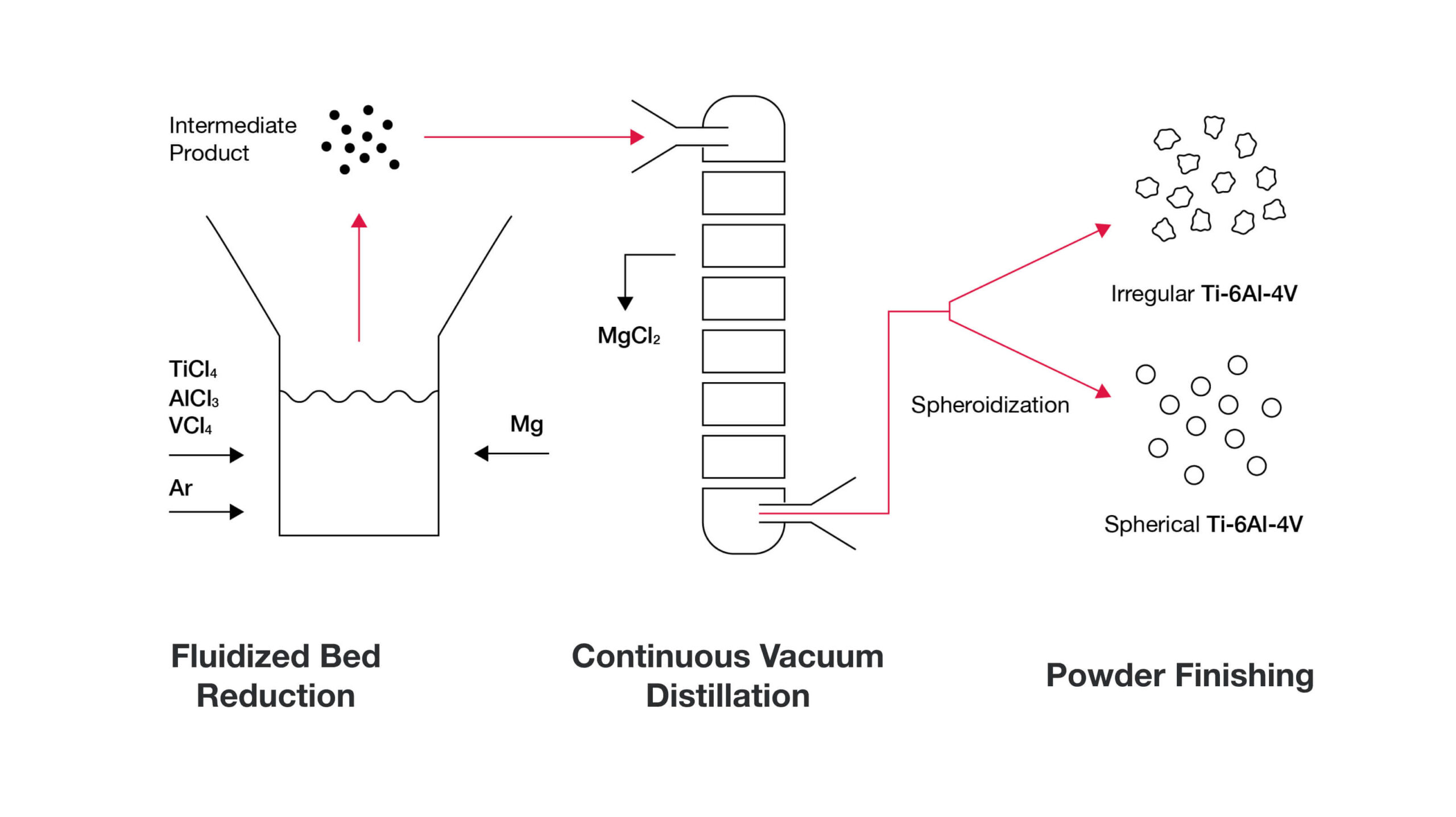
The CTO of SPEE3D, Steven Camilleri, recently wrote a paper for the Australian Strategic Policy Institute (ASPI) in which he recommended that the nation adopt a framework to measure economic resilience. As I wrote in my post on that concept, I think it should be adopted across all the nations currently attempting to localize/de-risk their manufacturing supply chains. And, for all the reasons discussed above, I’ll now add that critical minerals would be a perfect starting point for any such endeavor.
The thing lurking in the background of all the global geopolitical tension right now is the pause in the rare-earth dispute between the US and China, which is currently expected to end in November. That’s less than six months away, but that’s still a long enough timeframe where, under current conditions, it is essentially impossible to guess how everything will shake out.
However, I think it would be unwise to place too much faith in the assumption that it will all just work out. This probably doesn’t mean that, come November, Western nations and their allies will suddenly find themselves completely cut off from Chinese critical mineral sources. But the days when you can just wait around for a few months and a given supply shortage will largely correct itself — I think those days are dwindling.
Australia could be more indispensable than ever under those circumstances, though, as I repeatedly point out on this sort of topic, national resilience has to be a group effort, or it can’t succeed. The US, the EU, Japan, etc. need to step up their efforts to assist the buildout of Australia’s national manufacturing capabilities.
Images courtesy of Coogee Titanium
Subscribe to Our Email Newsletter
Stay up-to-date on all the latest news from the 3D printing industry and receive information and offers from third party vendors.
Print Services
Upload your 3D Models and get them printed quickly and efficiently.













You May Also Like
Why the AM Industry Should Pay Attention to Schneider Electric’s $22.6B PTC Acquisition
By late 2024, there was already enough signaling of the additive manufacturing (AM) industry opportunity in the data center infrastructure market for AM Research to write a report on the...
How Does Nike’s 3D Printing Approach Fit Into Its Restructuring Plan?
Shares of Nike stock hit all-time highs in late 2021 but have cratered in the years following, with the company losing nearly 80 percent of its market cap since peaking....
3D Printing News Briefs, October 1, 2026: Defense, Enclosures, & More
In today’s 3D Printing News Briefs, we’re starting with defense news, first from Massivit and then from AML3D. Then we’ll move on to U.S. manufacturing of a new large-format LPBF...
South Korea’s Lincsolution Lands Hanwha Defense Deal as Hanwha Invests Billions in US
I recently wrote about how the South Korean additive manufacturing (AM) firm Lincsolution is building an aerospace and defense hub, part of the company’s construction of “the largest AM facility in...
























































