Florida’s New Coastal Protection Law Opens Door for 3D Printing


Florida just gave a boost to a new kind of coastal protection, and 3D printing companies are right in the middle of it.
On March 19, 2026, Governor Ron DeSantis signed new legislation to support coastal protection, including Senate Bill 302, a measure focused on coastal protection and nature-based solutions. The law makes it easier to approve “living shoreline” projects, sets clearer rules for nature-based solutions, and connects them to funding through programs like the state’s Resilient Florida initiative, which has more than $200 million available for coastal protection projects.
“My administration has delivered historic investments to protect Florida’s 1,300 miles of coastline,” said DeSantis. “Today, I signed legislation to preserve the Terra Ceia Bay and to build on our work to promote coastal resiliency and water quality statewide. We are committed to protecting Florida’s environment for future generations to enjoy.”
This comes as Florida’s coastlines are under growing pressure. Rising sea levels, stronger storms, and ongoing erosion are starting to affect homes, infrastructure, and beaches across coastal areas. With millions of people living near the coast, the impact of these changes can lead to more frequent flooding and long-term damage.
It also opens the door to newer approaches, including 3D printed seawalls and hybrid structures, alongside more traditional methods such as mangroves and reefs. Overall, it seems the state is trying to make it easier and faster to build coastal protection that works with nature.
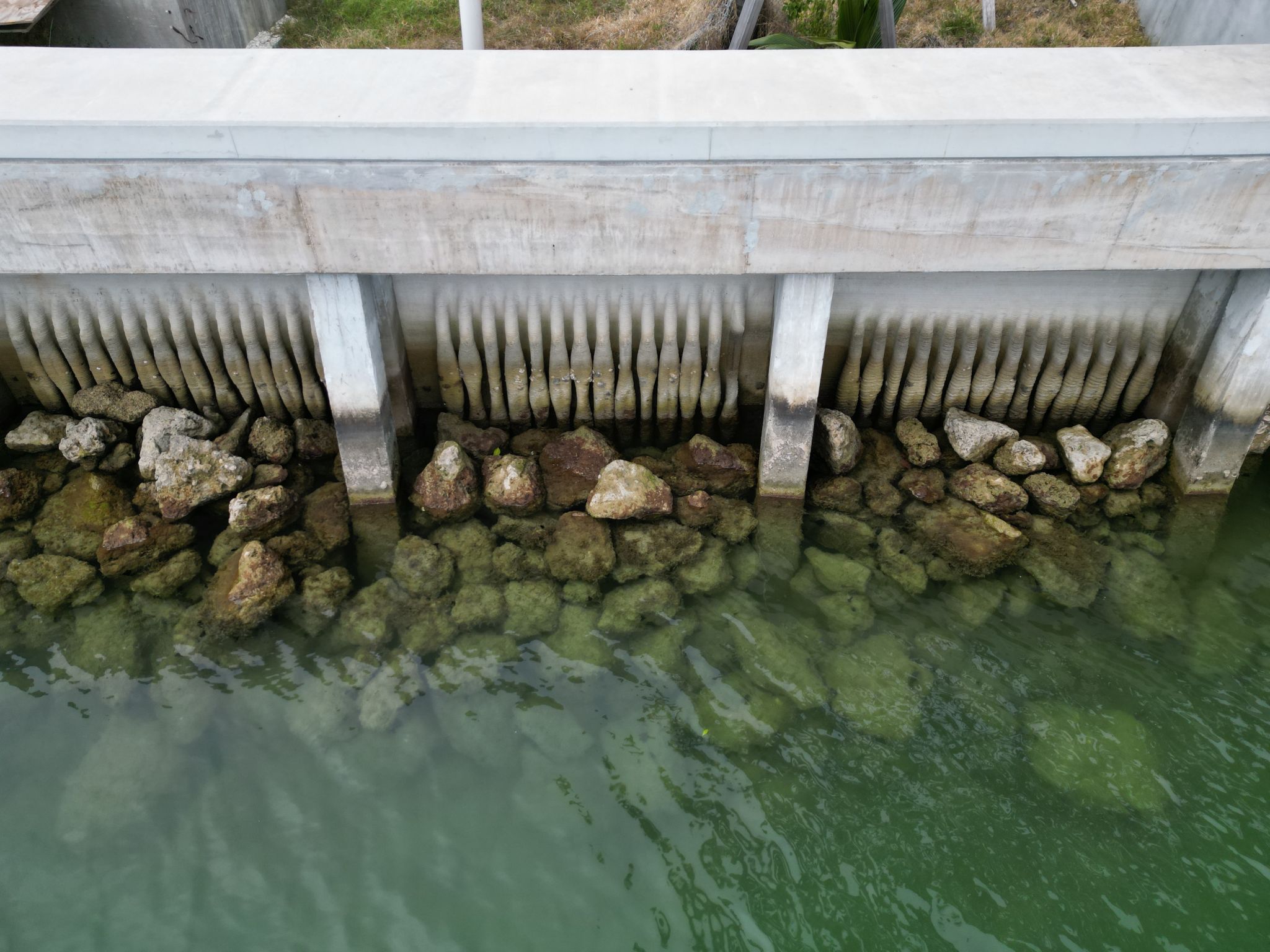
Kind Designs’ Living Seawalls are now all over Miami Beach and Miami. Image courtesy of KIND Designs.
This move is opening the door for a small but growing group of companies using 3D printing to rethink how coastlines are built.
One of the companies already working in this space is KIND Designs, a Miami-based startup that prints “living seawalls.” These structures are designed not just to stop erosion, but to act like artificial reefs, helping marine life grow while reducing wave energy.
However, existing rules can still limit how these designs are used. The Miami Herald cited Anya Freeman, founder of KIND Designs, as saying current regulations often limit seawall extensions to around 18 inches, which can make it harder to use more complex, nature-based designs. She added that while the new law is a step forward, its real impact will depend on how it is implemented.
Their approach is already gaining traction. The company has been working with municipalities and coastal projects, and its systems are designed to be cost-competitive with traditional seawalls while also adding environmental benefits.
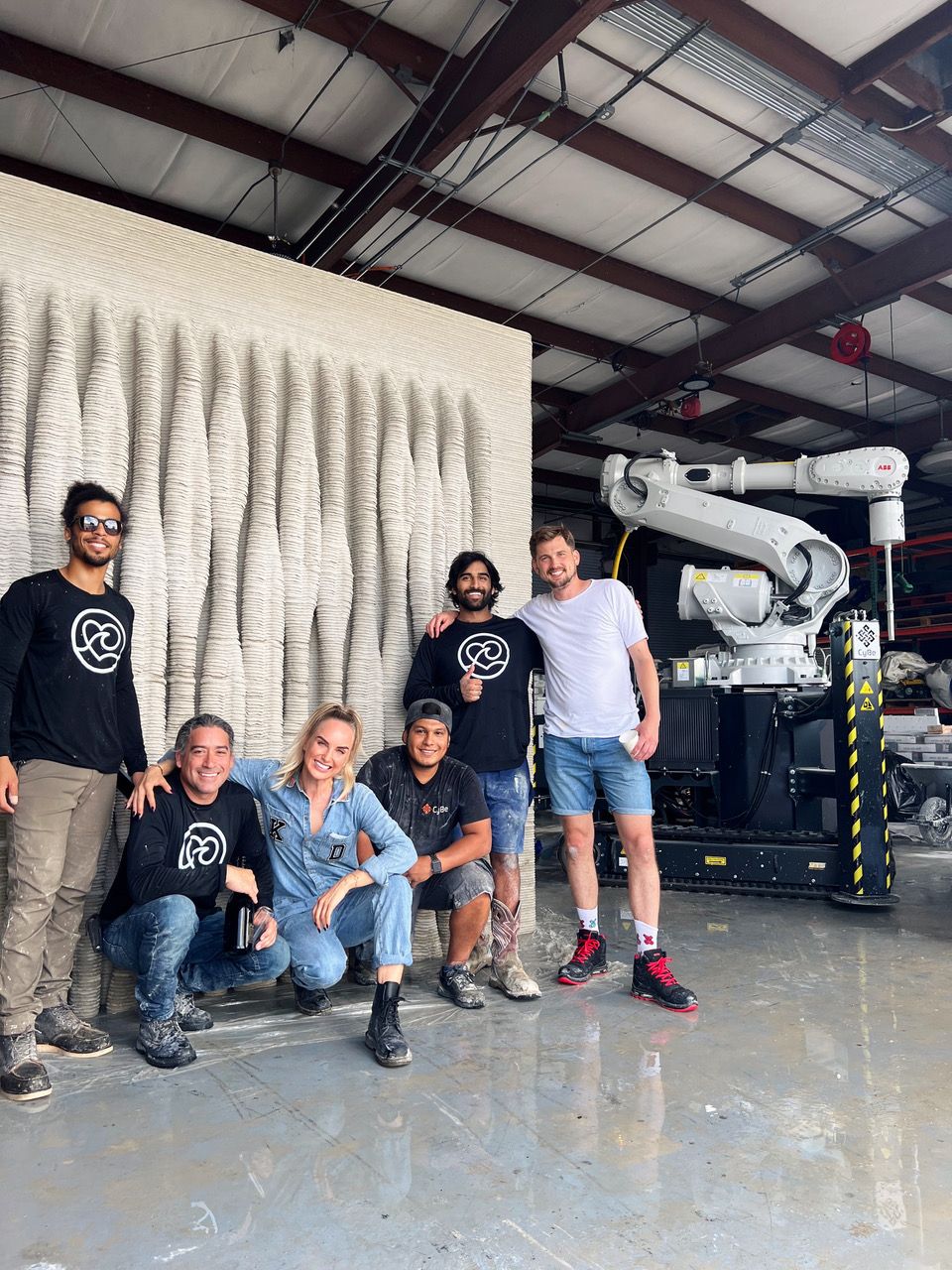
Anya Freeman and the KIND Designs team. Image courtesy of KIND Designs.
But Kind Designs is not alone. Florida is not starting from scratch. Several projects and companies are already working on nature-based coastal protection across the state. In South Florida, Reef Arches is developing engineered reef structures designed to rebuild shorelines and support marine life. In the Florida Keys, a state-backed artificial reef program is testing new ways to protect ecosystems and coastlines, supported by millions in funding. In Miami Beach, the REEFLINE project is building an underwater reef system as part of a larger coastal protection effort.
At the same time, universities like the University of Miami are developing advanced reef structures designed to absorb wave energy and protect shorelines. One example is the SEAHIVE technology, which is now moving toward commercialization, with 1Print acting as its exclusive commercialization partner.
Adam Friedman, co-owner of 1Print, said the company is working to bring the technology into real-world deployment and sees growing momentum around coastal protection in Florida. “We are very encouraged by Governor DeSantis’s recent announcements and legislation regarding this sector,” he said.
While not all of these efforts rely on 3D printing, taken together, they point to the kind of infrastructure Florida is now moving toward, one that spans research, commercialization, and deployment, with companies like KIND Designs and 1Print beginning to play a key role.

DARPA REEFENSE 3DCP X-REEFS SEAHIVE®, a University of Miami and 1Print DARPA project for hybrid reef breakwaters and coral growth, loading onto a truck (40k Pounds). Image courtesy of 1Print.
Why This Law Matters for 3D Printing
Governments are starting to fund what’s known as “nature-based infrastructure.” For example, in the U.S., programs from agencies like NOAA and state initiatives now support projects such as reef restoration, wetlands, and living shorelines to reduce flooding and coastal damage, and there is even a White House resource guide that has identified more than 100 funding programs tied to these types of solutions.
3D printing is one of the few tools that can actually build these kinds of structures. Traditional seawalls are designed to block waves, but they often damage surrounding ecosystems. Newer approaches are different. 3D printed systems can reduce wave energy, create habitats for marine life, and be customized for each location. Kind Designs, for example, prints structures that mimic mangroves and coral reefs, helping protect coastlines while also improving water quality.
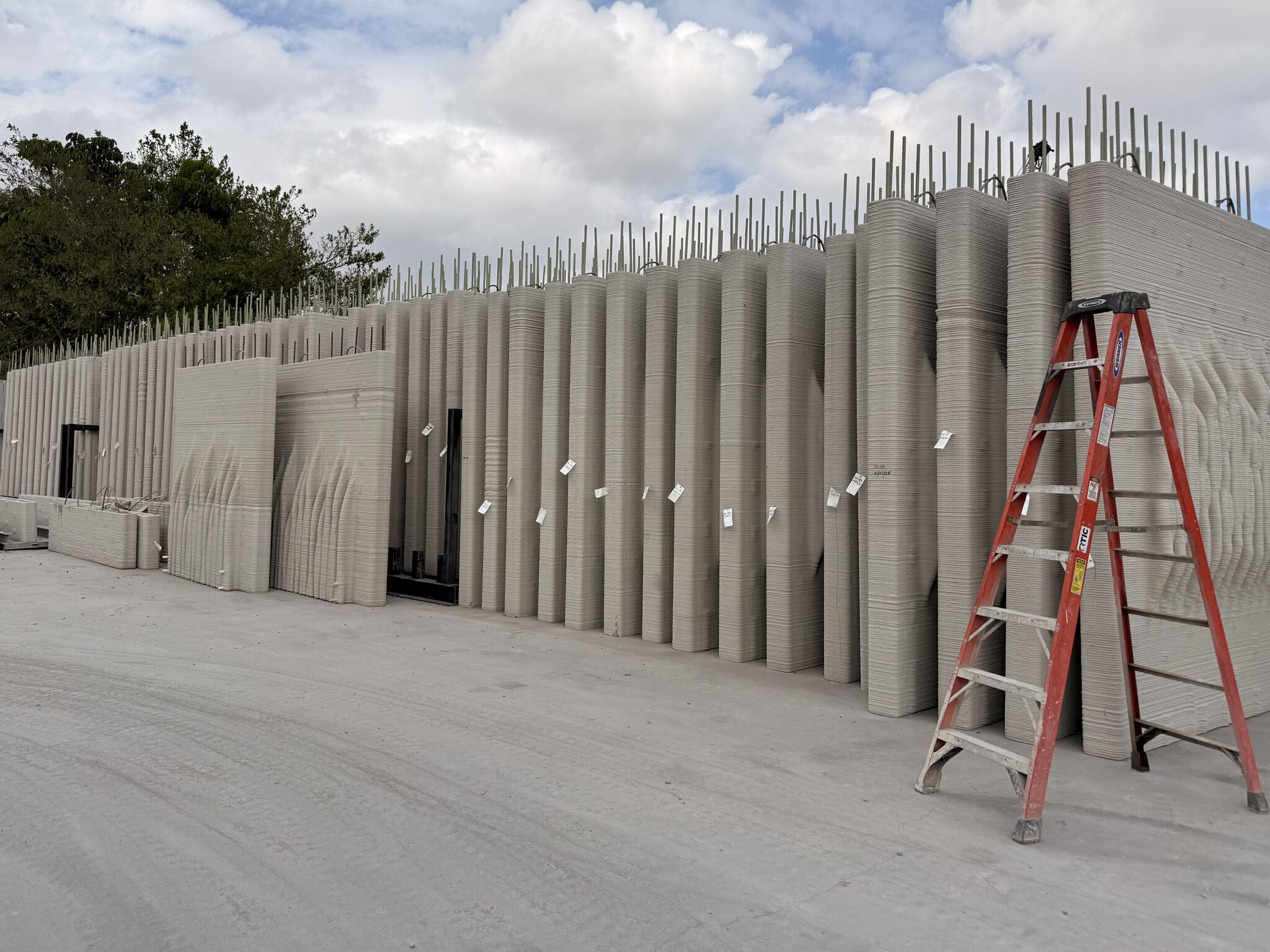
The seawall factory on the Miami River. Image courtesy of KIND Designs.
This is not just about one law in Florida. It points to a broader trend. Climate adaptation is becoming a real market, governments are starting to invest in it, and 3D printing is moving beyond prototypes into real infrastructure.
For companies like Kind Designs and others building reefs, seawalls, and marine structures, that could mean more projects, more deployments, and a path toward real scale.

Rendering: DARPA REEFENSE 3DCP X-REEFS SEAHIVE®, a University of Miami and 1Print DARPA project for hybrid reef breakwaters and coral growth, will be deployed in April 2026. Image courtesy of 1Print.
What Still Needs to Happen
Most of these solutions are still early. Even with strong concepts and pilot projects, large-scale deployment is limited, long-term performance is still being tested, and funding cycles can be slow. But with policy now backing these approaches, that could start to change.
Florida’s new law is doing something important. It’s turning 3D printed coastal protection from an idea into a potential industry. And companies that can combine engineering and ecology with manufacturing may be the ones that benefit most.
Subscribe to Our Email Newsletter
Stay up-to-date on all the latest news from the 3D printing industry and receive information and offers from third party vendors.
Print Services
Upload your 3D Models and get them printed quickly and efficiently.













You May Also Like
3D Printing News Briefs, October 21, 2026: Digital Twins, AI CAD Service, AR Smart Glasses, & More
In today’s 3D Printing News Briefs, America Makes announced the winners of its MIAMI Project Call, and AM Europe released a new report. Artec 3D launched its new Artec Twins...
3D Printing News Briefs: October 17, 2026: Affordable Housing, Bone Implants, Rubber Gloves, & More
In this weekend’s 3D Printing News Briefs, we’re starting off with quality assurance in metal additive manufacturing (AM), a new 3D printer, and 3D printed housing. We’ll finish up with...
3D Printing News Briefs, October 14, 2026: Bolus, Aerospace Tooling, Water Filter, & More
In today’s 3D Printing News Briefs, we’re starting with medical news, as Myrava has received FDA 510(k) clearance for its 3D printed bolus. Moving on to aerospace and metals, AML3D...
Can India’s AM Push Help Make it a Viable Supplement to China?
Diversifying manufacturing supply chains to locales outside of China has nothing to do with actually cultivating “substitutes” to the Chinese economy. The real stakes are these: China is an irreplaceable...