Intergalactic Turns to Velo3D to Accelerate Aircraft Heat Exchanger Development

A new aviation project shows how metal 3D printing can dramatically shorten the time it takes to turn a design into a working aircraft component. Velo3D announced that aerospace supplier Intergalactic used its metal 3D printing technology to produce critical parts for an aircraft heat exchanger system in just a few weeks. The components are designed for a cabin-air heat exchanger to be used in a mass-produced commercial aircraft. This specific system helps control the temperature of air entering the cabin.
The parts were printed using Velo3D’s Sapphire XC system through the company’s Rapid Production Solutions (RPS) program. According to the company, the process allowed engineers to move from design to printed hardware in only a couple of weeks. That speed helped Intergalactic meet strict testing deadlines for the aviation program.
Plus, for aerospace programs, where development cycles are long, and testing schedules are pretty tight, moving so quickly can make a huge difference.
Complex Parts Made With No Redesign
The components printed for the program are microtube heat exchanger headers made from Inconel 718, a strong nickel alloy commonly used in aerospace. These parts help move air through the small tubes inside the heat exchanger that regulate cabin air temperature.
And they are not easy to make using traditional methods. Their design features wide curves and shallow angles, which can be difficult to produce with conventional metal powder bed fusion machines. In fact, many systems require support structures or design changes to print these shapes. But Velo3D says its system bypasses some of these limitations by “using a non-contact recoater” that allows complex geometries to be printed with fewer supports.
This meant the heat exchanger headers could be printed exactly as they were designed, without needing to redesign the part for manufacturing.
“Customers with aggressive program timelines rely on Rapid Production Solutions to get hardware fast without redesign and without lengthy development cycles,” said Michelle Sidwell, Chief Revenue Officer at Velo3D. “RPS embodies Velo3D’s mission to remove friction from innovation and give our customers a true competitive edge.”
3DPrint.com spoke with Sidwell at the Military Additive Manufacturing Summit (MILAM) earlier this year, where she also highlighted the growing role of additive manufacturing in helping aerospace and defense programs move faster, reduce development delays, and build more flexible supply chains for critical components. This latest project reflects that broader shift.
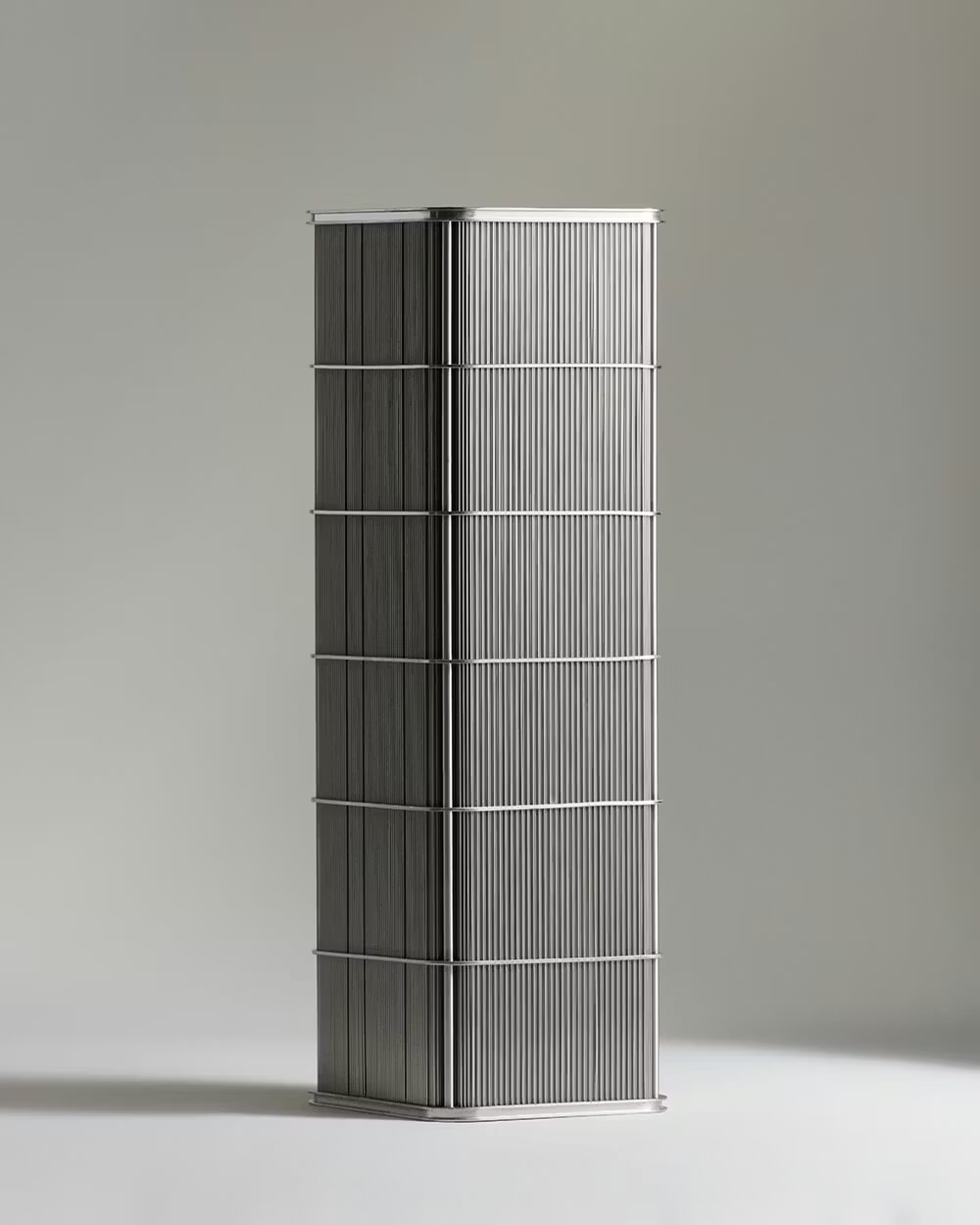
Intergalactic’s microtube heat exchanger technology is used in aerospace thermal management systems for aircraft and space platforms. Image courtesy of Intergalactic.
Faster Testing, Faster Development
Producing the components quickly allowed the aerospace program to move faster toward system-level testing. Instead of waiting months for tooling or specialized manufacturing setups, the team was able to produce working parts almost immediately after finalizing the design.
According to Intergalactic’s supply chain leader, Rhett Burton, the goal was to keep the project on schedule while preparing for future production.
“Building these heat exchanger headers on the Sapphire XC supported Intergalactic’s goal to meet its system-level test schedule and established the groundwork for a scalable path to a distributed supply chain for future production,” Burton said.

Patented curved design for Intergalactic’s microtube heat exchangers. Image courtesy of Intergalactic.
The project also shows how additive manufacturing makes it possible to produce the same part in different locations. Because the parts were printed using standard settings on the Sapphire XC platform, the same design could be produced on other Sapphire machines without having to recreate the process. That opens the door to what the industry often calls a digital inventory, where designs are stored as files and parts can be manufactured wherever production capacity is available.
For aerospace companies, this approach could help build more flexible supply chains while reducing the time needed to scale production.
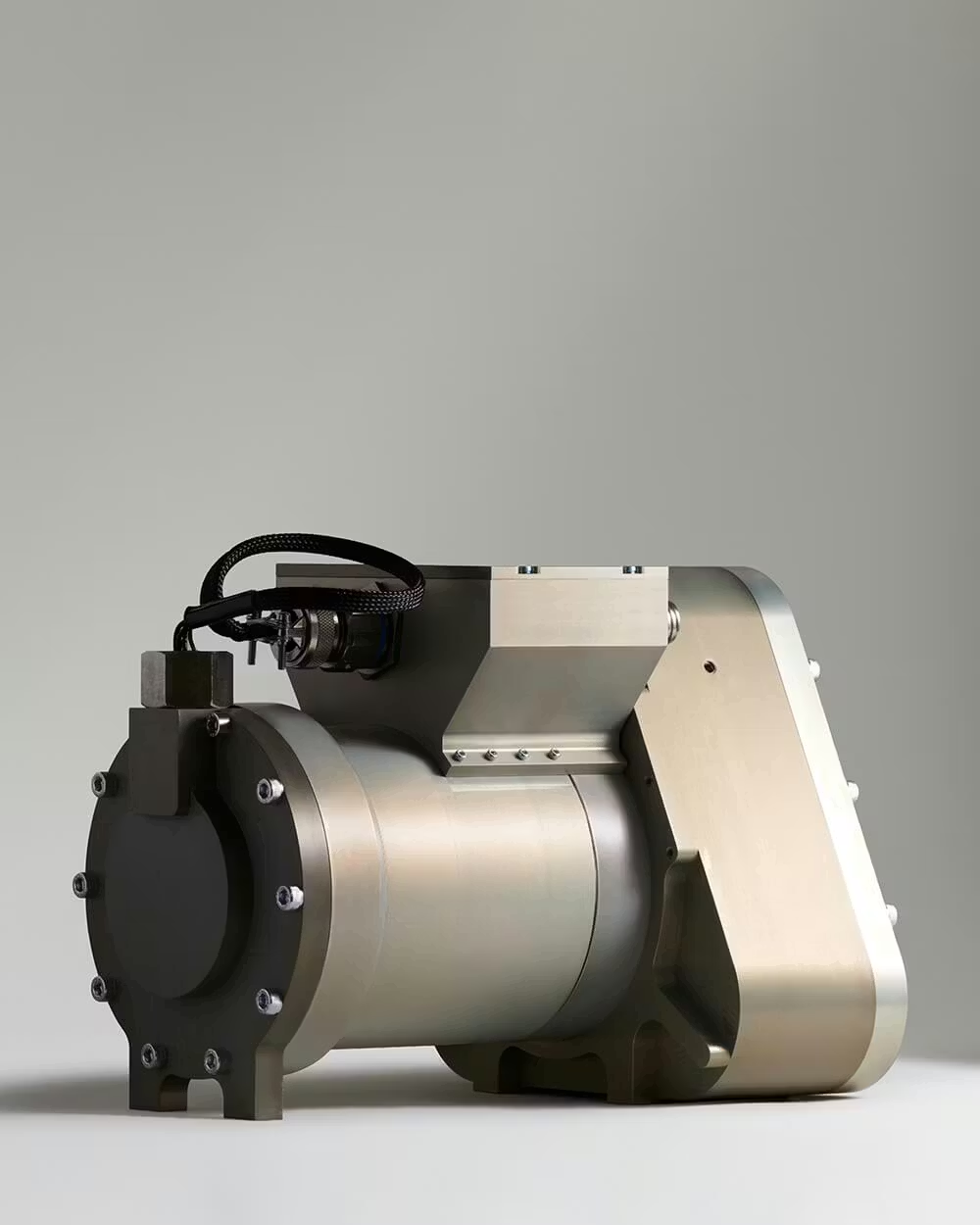
Vapor cycle thermal management systems. Image courtesy of Intergalactic.
Metal 3D printing is becoming more common in aerospace as engineers look for faster ways to produce complex parts. Components like heat exchangers are a right fit for the technology because they tend to contain small internal channels and shapes that are difficult to machine or assemble using traditional methods. By removing many of those manufacturing limits, AM allows engineers to focus more on how a part performs rather than how it has to be made. For programs that need to move quickly, the ability to go from design to working parts in just a few weeks can speed up testing and development. The work between Velo3D and Intergalactic shows how manufacturers are starting to use these capabilities to move new aerospace components toward testing and production more quickly.
Subscribe to Our Email Newsletter
Stay up-to-date on all the latest news from the 3D printing industry and receive information and offers from third party vendors.
Print Services
Upload your 3D Models and get them printed quickly and efficiently.











You May Also Like
3D Printing News Briefs, May 9, 2026: Financials, Large-Format Printer, Steels, & More
In 3D Printing News Briefs this weekend, 6K Additive has appointed a new COO and released its Q1 financials. Rolls-Royce opened a new AM Development Cell, and MODIX launched its...
LOOP 3D Reveals 3D Printer Designed for Industrial Uptime
LOOP 3D has released the LOOP PRO X+ TURBO Gen2. This version has been improved to meet the needs of manufacturing clients. The printer is meant to be a production unit...
3D Printing News Briefs, April 25, 2026: Competition Winners, AI Platform, X2D Printer, & More
In this weekend’s 3D Printing News Briefs, AMUG announced the winners of its Technical Competition, and Authentise launched AI platform Whisper at RAPID. Bambu Lab wasn’t at RAPID, but launched...
HP Continues to Lower Barriers to Adoption with Compact MJF 1200 & Other RAPID + TCT Announcements
This week at RAPID+TCT in Boston, HP Additive Manufacturing Solutions is celebrating ten years in the AM market. The company launched its Multi Jet Fusion 3D printing technology in Barcelona...