Takeaways From MILAM 2026: Defense’s Growing Role in Driving 3D Printing – Part I

The annual Military Additive Manufacturing Summit & Technology Showcase (MILAM 2026) once again brought together the defense sector’s top technologists, military leaders, and additive manufacturing (AM) innovators for three days of industry discussions about the role of 3D printing in shaping the future of U.S. and allied defense capabilities.
Held at the Tampa Convention Center from February 3-5, MILAM emphasized the Department of Defense’s push to “operationalize additive manufacturing,” from weapons systems and sustainment to logistics and expeditionary readiness.
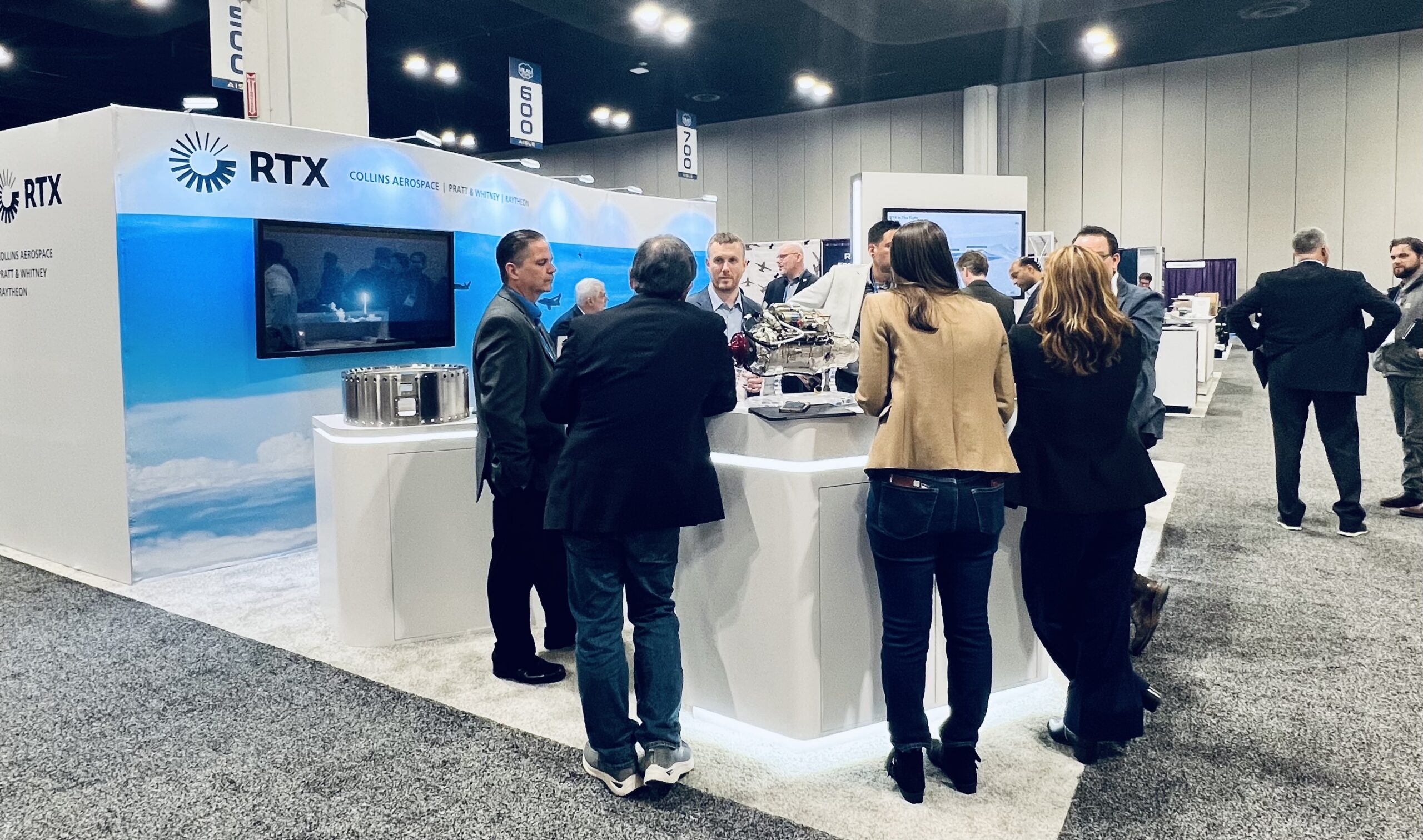
RTX booth at MILAM 2026. Image courtesy of 3DPrint.com.
What the Defense Sector Is Asking For
The message from MILAM was clear: the defense sector isn’t just looking at additive for low-volume or pre-production parts. It wants additive manufacturing that can scale, deploy rapidly, and integrate into existing production flows.
And in 2026, this comes as no surprise, as industries from aerospace and energy to industrial equipment and automotive are asking for the same thing: faster qualification, repeatability, and real production output from additive technologies.
Stratasys‘ Vice President of Industrial Business, Foster Ferguson, said the past year has marked a shift in how companies are using additive manufacturing. While low-cost printers have found a place in basic prototyping, he said organizations focused on qualification and scalable production continue to rely on industrial-grade systems. That shift, he noted, is beginning to drive consolidation across the industry.
That evolution doesn’t mean the challenges are solved. Nikon AM Synergy’s Pedrum Sodouri, VP of Business Development, outlined what’s holding adoption back:
“Defense wants additive manufacturing to move a lot faster than it’s progressing today. AM has potential barriers around part applicability and qualification that still need to be broken down before the technology can truly serve the heavy lift of thousands of parts needed across the Army, Air Force, Navy, and other services. I consider that tools like AI-driven evaluation or material substitution specifications could help shrink the evaluation timeline for what’s printable.”
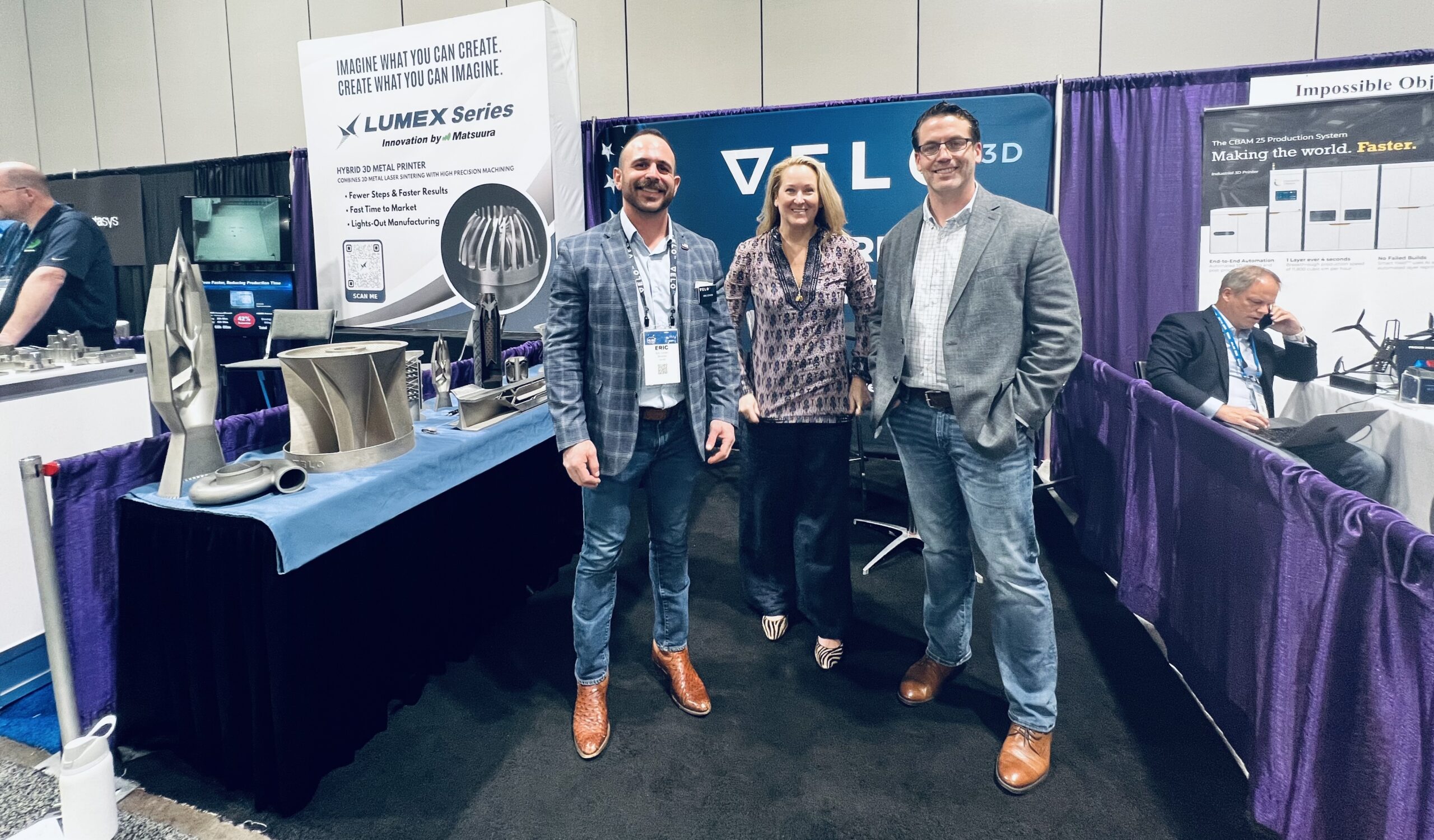
Velo3D team at MILAM 2026: Eric Cohen (Sales Director), Michelle Sidwell (CRO), Brice Cooper (VP of Defense).
Similarly, Michelle Sidwell, Chief Revenue Officer (CRO) at Velo3D, said the focus is now on production: “We’re now at that tipping point where we’re really getting into production and how do we go faster? And scaling repeatable, qualified processes needs to happen faster than before to meet defense needs in sustainment and field use.”
Brice Cooper, Velo3D’s Vice President of Defense and Government Relations, added, “It’s encouraging to see the level of attention defense leaders are giving to additive manufacturing and advanced manufacturing more broadly. There’s growing interest in how the industrial base can help move modernization faster. The focus on autonomous systems is especially important because it gives additive manufacturing a chance to be used and proven in real operating environments with less risk. That kind uinds of experience helps build confidence in the technology over time.”
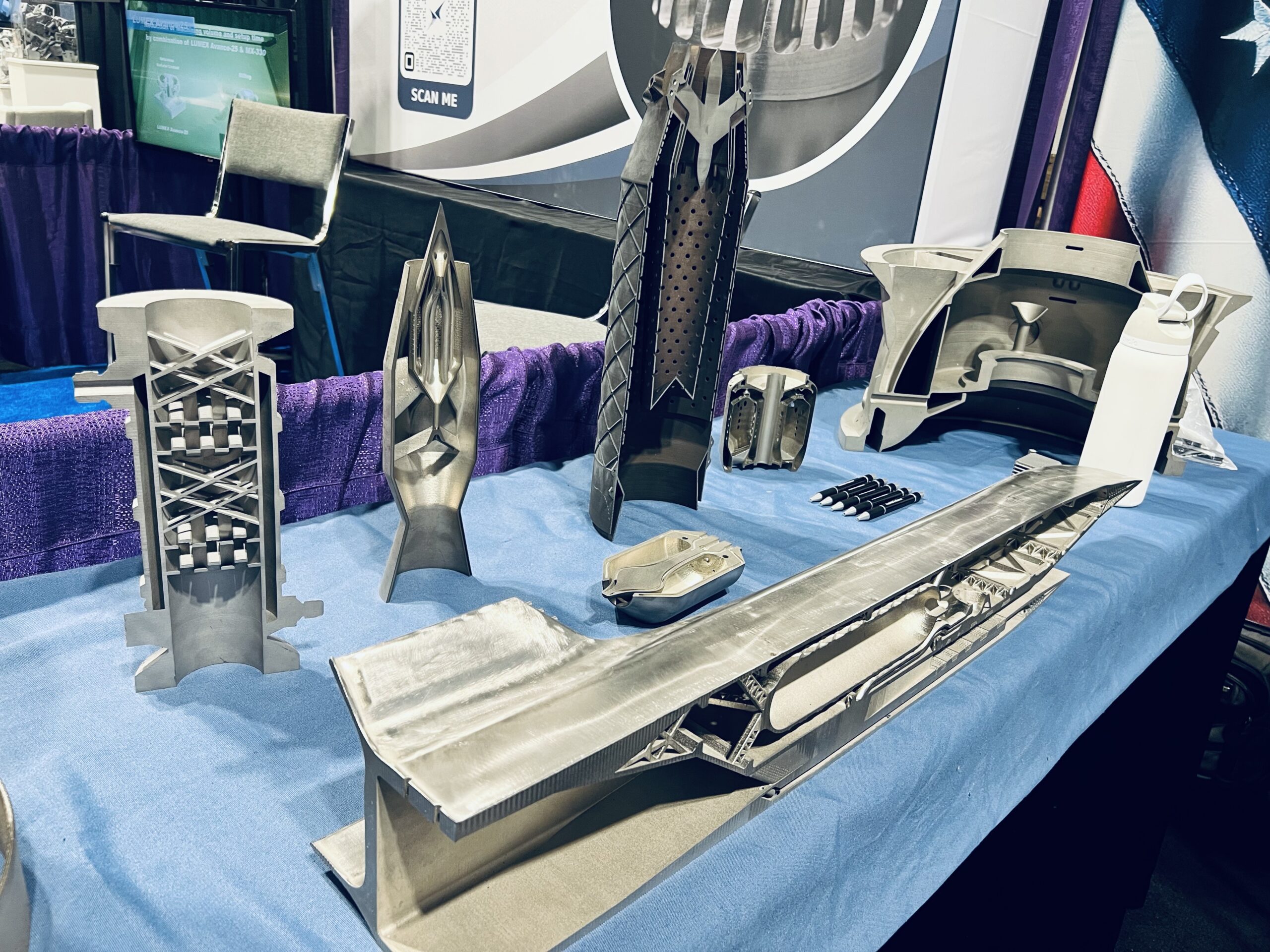
Velo3D’s booth at MILAM 2026.
Production Applications on Display
Companies at the event pointed to applications that are already in use. At Azoth 3D, Mechanical Engineer Luke Bristoll pointed to a fuel manifold that shows how additive manufacturing can replace complex assemblies with a single part. Bristoll showed me the part, which was originally made from 43 separately machined pieces, but can now be produced as a single component using metal binder jetting. The result is a lightweight part designed for use in the field, capable of powering soldiers’ electronics for about a week without the need to carry large numbers of batteries, which add too much weight.
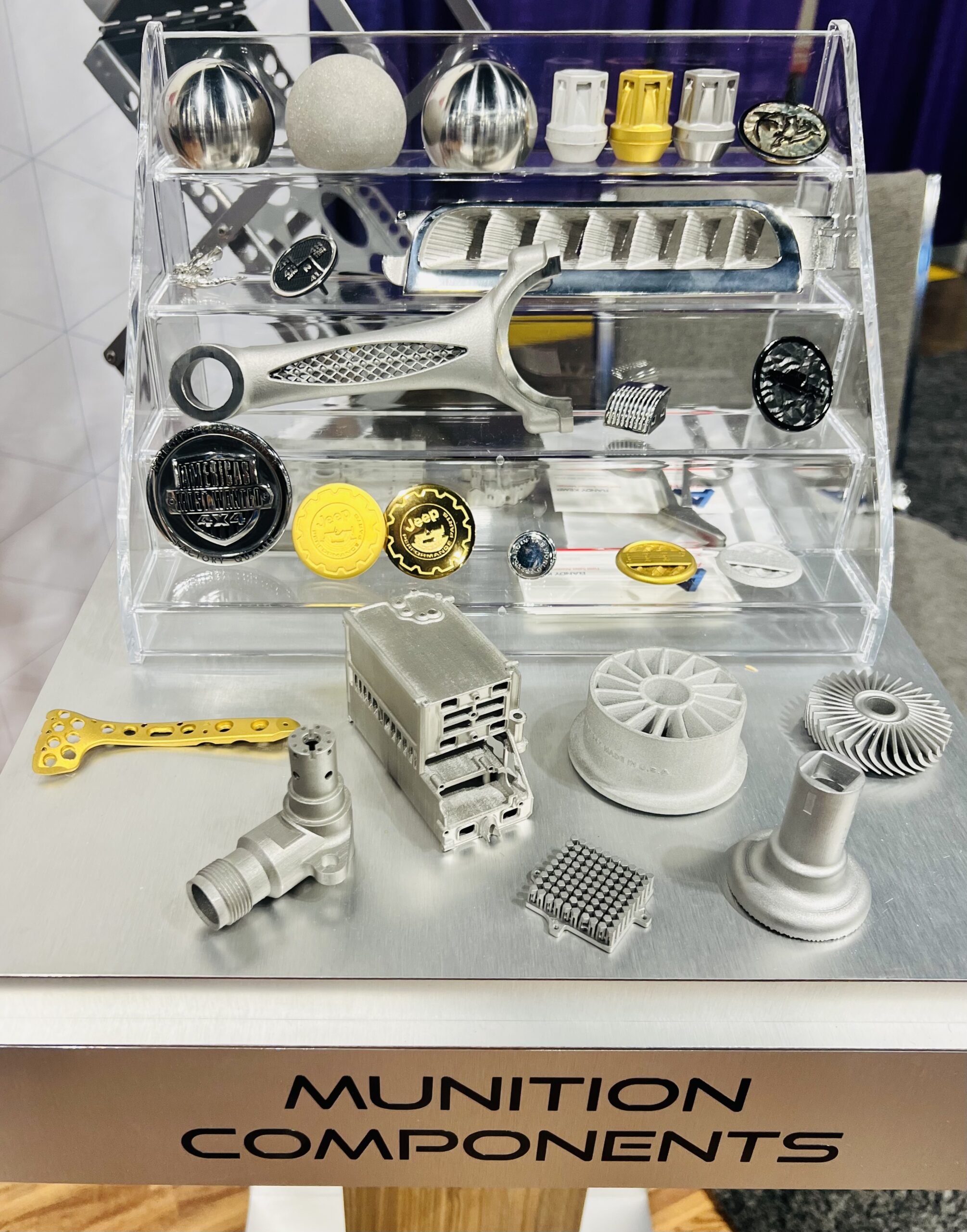
Munition components by Azoth 3D showcased at MILAM 2026. Image courtesy of 3DPrint.com.
Meanwhile, at the REM Surface Engineering booth, CEO Justin Michaud described work done with the U.S. Air Force to address another production challenge: fully blocked internal channels in complex parts.
“We developed a way to selectively target the powder with minimal wall removal, allowing parts such as heat exchangers to be finished or recovered without damaging their internal structures. Together, these examples show how defense needs are pushing additive manufacturing beyond prototypes and toward production-ready solutions that could also apply to aerospace, energy, and industrial equipment,” Michaud said.
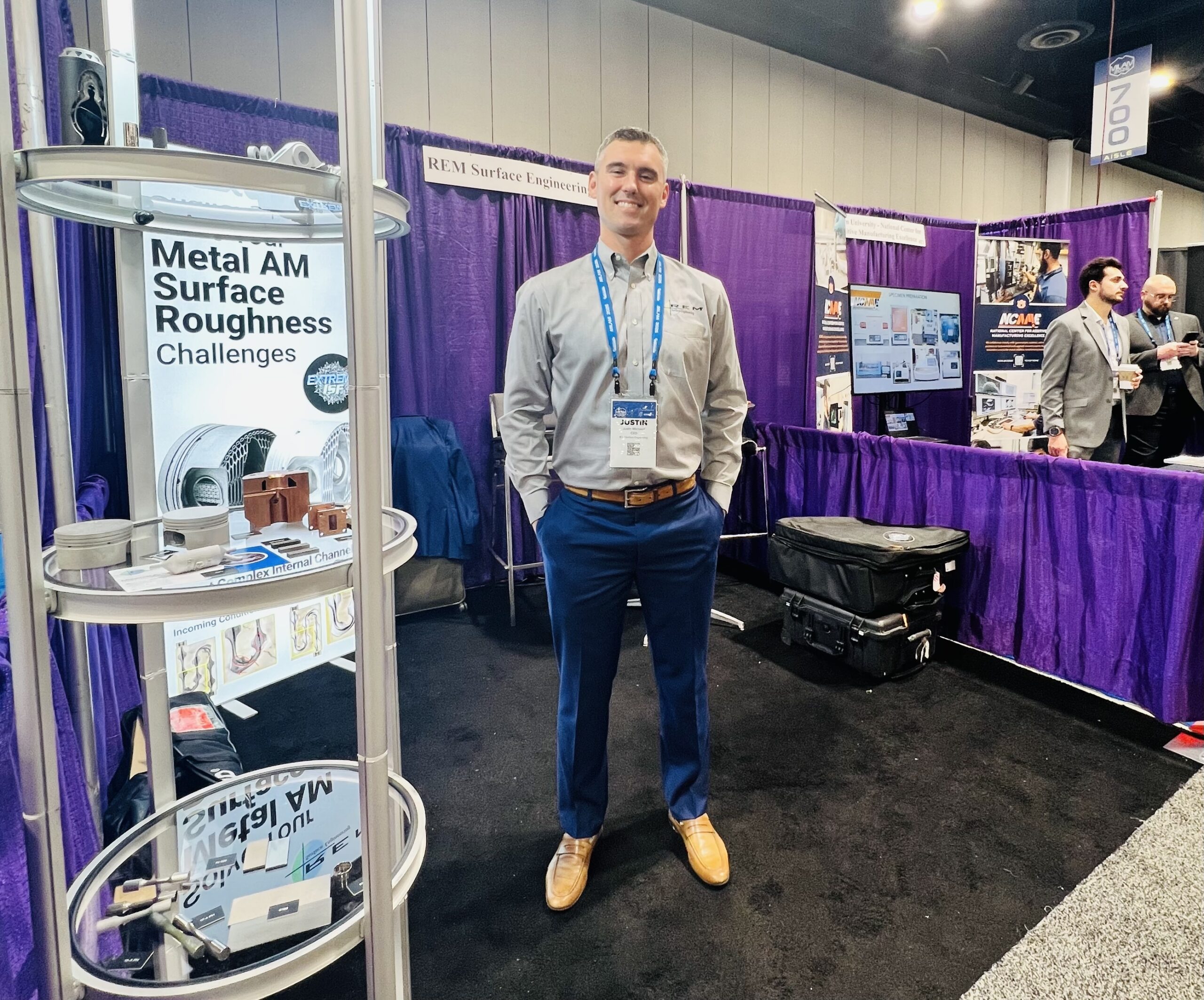
REM Surface Engineering booth, CEO Justin Michaud.
If there was a central theme at MILAM 2026, it’s that defense is accelerating additive manufacturing from innovation into implementation. Instead of focusing on what might be possible someday, defense is using additive manufacturing for real applications today. That sets a high bar for the technology and helps show where it can work in other industries as well.
Images courtesy of 3DPrint.com
Subscribe to Our Email Newsletter
Stay up-to-date on all the latest news from the 3D printing industry and receive information and offers from third party vendors.
Print Services
Upload your 3D Models and get them printed quickly and efficiently.













You May Also Like
The Manufacturing Race Behind the Drone Revolution
We are in the middle of a major manufacturing shift focused on the production speed and payload capacity of uncrewed aerial systems (UAS), or drones. A recent Manufacturing Dive article...
ADDMAN to Buy Up to $10.8M in Nickel 718 Powder from 6K Additive Over 30 Months
After years of buildup, we’re finally starting to see what the US metal additive manufacturing (AM) market could look like at scale. To be sure, it’s still not quite there,...
Metal AM in a Multipolar World, Part 2: How PBF and DED Could Change by 2035
The first decades of PBF development were heavily shaped by machine capability: more power, more lasers, larger build volumes, better recoating, and improved process monitoring. These developments will continue, but...
Advanced Manufacturing at IMTS 2026: 3D Printing and AI and Drones, Oh My!
Last week’s International Manufacturing Technology Snow (IMTS) in Chicago welcomed over 90,000 attendees to the jungle that is McCormick Place. With over 1.17 million square feet of exhibit space, and...