Additive Drives Raises Funding as Electric Motor Makers Look Beyond Rare Earths

Nordic Alpha Partners has invested in Additive Drives. This will help accelerate the company’s mission to develop better 3D printed electric motors. Through making lighter, rare-earth element-free engines, Additive Drives offers a more sustainable, higher-performance alternative to traditional engines.
As well as Nordic, the initial investor, AM Ventures, doubled down again in this round. The round was not specified, but could be over $20 million or so. Things are looking good for Additive Drives with Airbus, Audi, Schaeffler, BMW, and Amazon among its early customers. The company claims that its engines have “98% energy efficiency, lowering overall energy loss by 70%.
The company says its engine “means tremendous gains in energy efficiency, lower total cost of ownership, and improved sustainability performance in high-demand applications” and that it has the “highest thrust-to-weight ratio, opening up for entirely new types of innovation and applications.” What’s more, these motors can be prototyped in 21 days, speeding up implementation.
Additive Drives could play a significant role in a green industrialization movement. Local manufacturing, energy storage, cars, and automation could become more attainable if efficiency can be effectively implemented. New designs, new efficiency, and new manufacturing could be key to a broad wave of industrial renewal. This renewal would not be powered by idealism, but by new numbers and new productivity unlocked through Additive Drives and other firms. Here, specifically, the reduction of the rare earth elements plays an additional role with less dependency on these materials.
REE are not rare; they just used to be difficult to spot. We can now easily find them, but mining and refining them are challenging. As we’ve mentioned before, 2000 kilos of toxic waste and one tonne of radioactive materials are produced per tonne of rare earths. These materials are advantageous and perform better in phones, stators, and other key components of the new energy future. But if their true economic or environmental costs are to be taken into account, no one would use them. China is effectively subsidizing the creation of millions of tonnes of toxic waste by making it economically attractive to do so. If the areas of extraction and refining were cleaned up or the cleanup costs were to be taken into account, these materials would not be affordable. Continued uneconomical rare earth mining is increasing the relative performance of some of China’s products and will motivate others to do the same. We can not be sure how many people are dying of cancer because of rare earth element usage, but it could be in the tens of thousands of cases. Again, there is no real need for these materials, and they do not make economic sense; they just skew the playing field because costs are not taken into account. In one study, a small village in France of 6500 inhabitants, close to an REE site, had 20 kids with cancer, each with high concentrations of rare earth elements in them. The true exposure and deaths of many thousands across China will continue for decades, especially since sites are not being cleaned up. Using rare earth elements in industry is akin to skinning monkeys for shopping bags. Only REE’s lead to the deaths of thousands of humans.
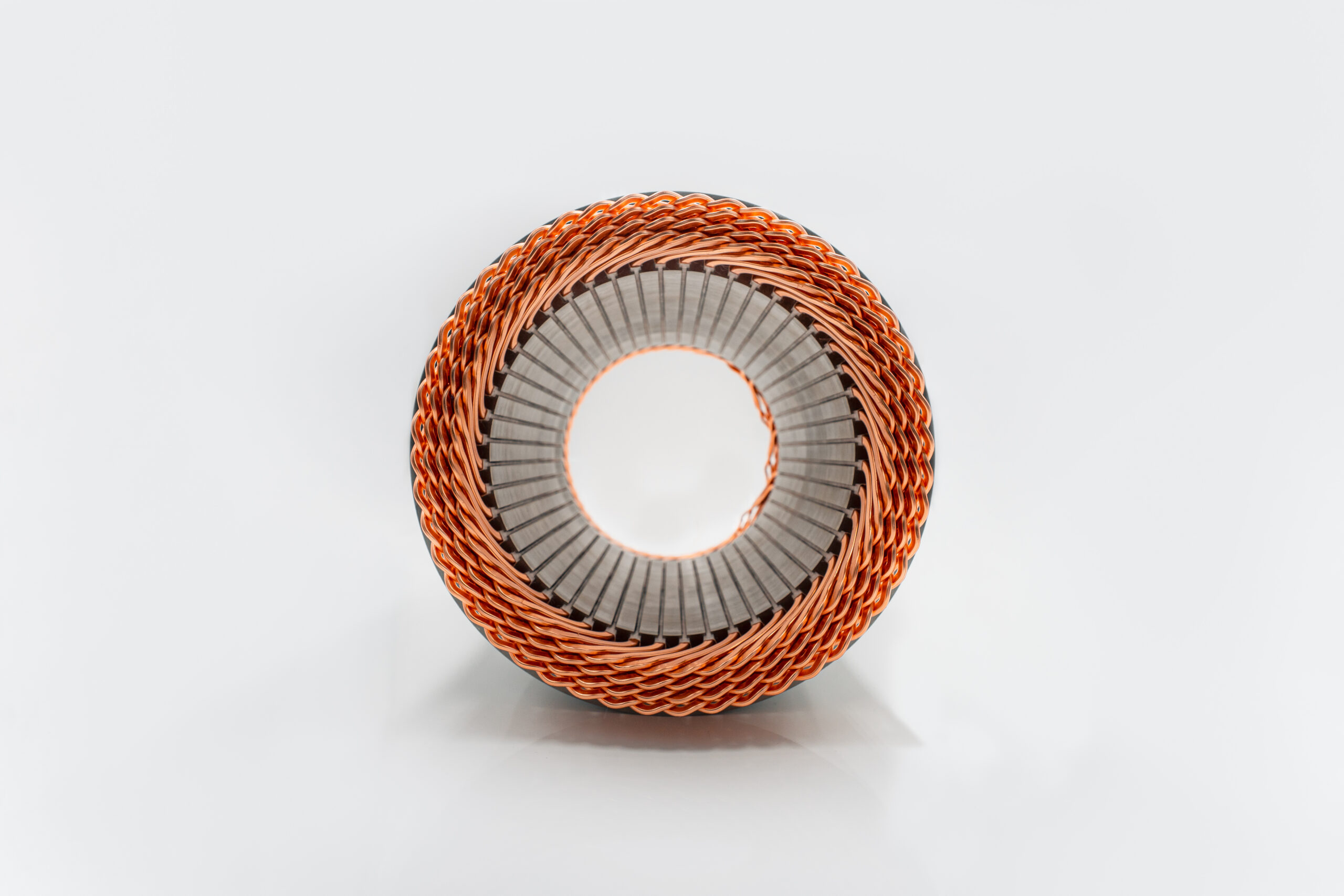
A hairpin stator. Image courtesy of Additive Drives.
A non-REE engine is therefore a big deal, especially since it releases customers from the responsibility of killing children.
Nikolaj Magne Larsen, Partner at Nordic Alpha Partners stated,
“It is truly rare to see a founder team build something so pioneering and at the same time have such a strong financial performance less than five years after inception. It requires them to make great decisions consistently, and that’s what they’ve done.”
Meanwhile, Additive Drives CFO Philipp Arnold said,
“We wanted to work with Nordic Alpha Partners because they have a unique toolkit for industrial scaling and navigating industrial transformations. We have been cash-positive from early on and we were looking for an operational partner that could really enable us to tap into hypergrowth and expand globally even faster.”
Nordic’s Laurits Bach Sørensen noted,
“Additive Drives is a great example of the fact that Europe is still leading the gamewhen it comes to highly advanced industrial technologies. They are already accelerating global electrification, and I’m sure we will see entirely new product categories emerge as a result.”
This scale-up path for a true leader in a fast-growing industry is a win for 3D printing. Additive Drives showcases how application dominance can lead to harnessing additive manufacturing to outperformance. Through a deep understanding of design, flow, 3D printing, and the target industry, companies can create superior geometries, assemblies, and products. True dominance can result in the company reducing switching costs, reducing risk to customers, and giving them an opportunity to win through the use of 3D printing. Many more companies should look at being the Additive Drives of their industry in order to win big.
Subscribe to Our Email Newsletter
Stay up-to-date on all the latest news from the 3D printing industry and receive information and offers from third party vendors.
Print Services
Upload your 3D Models and get them printed quickly and efficiently.













You May Also Like
Why the AM Industry Should Pay Attention to Schneider Electric’s $22.6B PTC Acquisition
By late 2024, there was already enough signaling of the additive manufacturing (AM) industry opportunity in the data center infrastructure market for AM Research to write a report on the...
How Does Nike’s 3D Printing Approach Fit Into Its Restructuring Plan?
Shares of Nike stock hit all-time highs in late 2021 but have cratered in the years following, with the company losing nearly 80 percent of its market cap since peaking....
3D Printing News Briefs, October 1, 2026: Defense, Enclosures, & More
In today’s 3D Printing News Briefs, we’re starting with defense news, first from Massivit and then from AML3D. Then we’ll move on to U.S. manufacturing of a new large-format LPBF...
South Korea’s Lincsolution Lands Hanwha Defense Deal as Hanwha Invests Billions in US
I recently wrote about how the South Korean additive manufacturing (AM) firm Lincsolution is building an aerospace and defense hub, part of the company’s construction of “the largest AM facility in...