Printerior Launches Circdal to Build a Sustainable Architectural Ecosystem with 3D Printing


Robotic arm systems gradually gained traction for years in the large-format additive manufacturing (AM) space, before experiencing a legitimate breakout year in 2025. Pellet extrusion has been the clear winner in this market segment, as burgeoning service providers branch out beyond traditional applications for large-format polymer, like tooling, and into consumer-facing areas like maritime and architectural components.
St. Louis materials supplier and AM contract manufacturer Printerior identified this wave at exactly the right time, establishing a large-format service in the summer of 2024. Printerior is now building on that momentum with the launch of Circdal, a large-format service specifically targeting the market for architectural components.
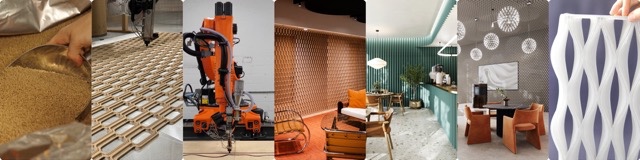
Circdal leverages the same circular printing philosophy that gave its parent company such a promising performance last year, with Printerior keeping its input costs low by making all its own feedstock from recycled material. Circdal will utilize that concept to provide customers with sustainably produced pieces like screens and panels for interior design, as well as customized components printed on-demand.
According to the company, its feedstock contains at least 97 percent recyclable material, with Circdal’s Circular Design Service program giving customers the option to return components so they can be reprinted into new pieces. Circdal represents the first step in what Printerior is planning to be a continued expansion via market-specific subsidiaries.
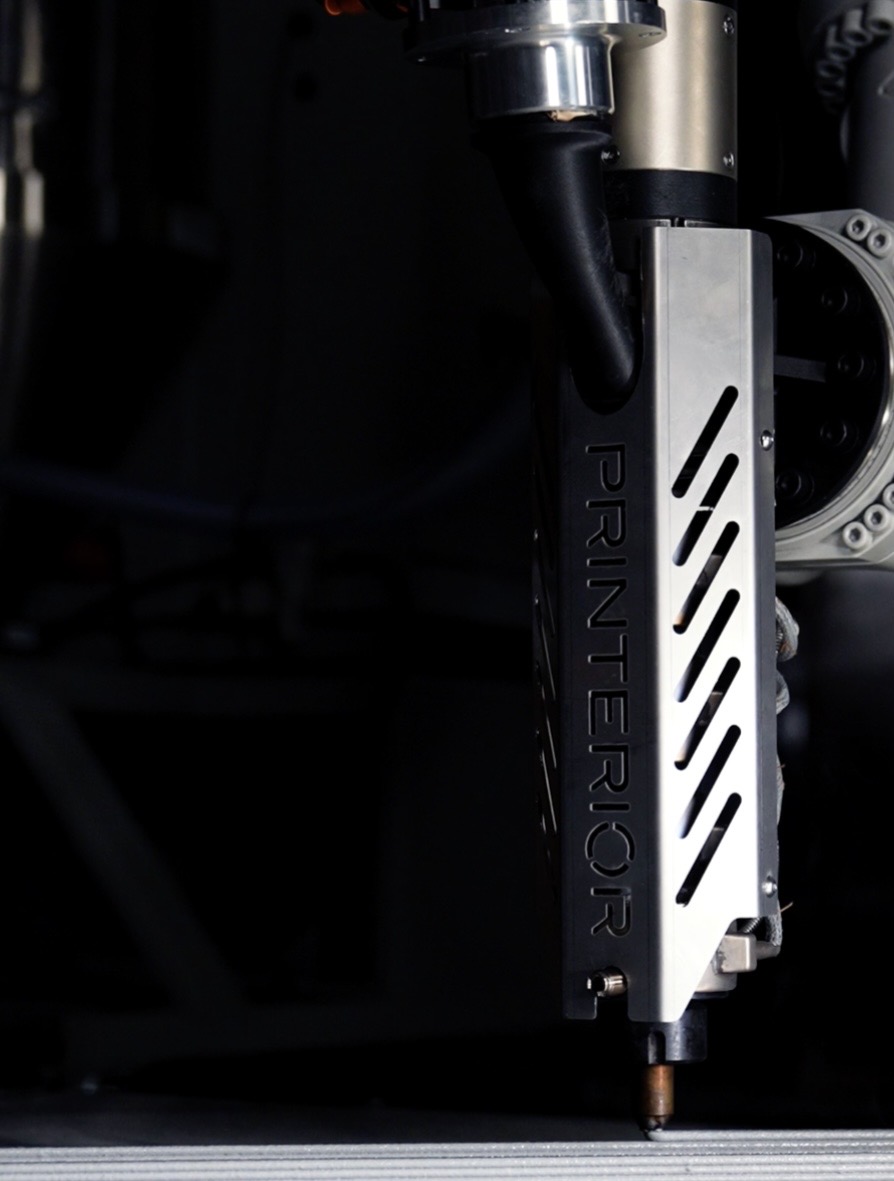
In a press release about Printerior’s launch of its first subsidiary, Circdal, Trent Esser, the CEO of both companies, said, “[AM] has largely stopped at prototypes or niche applications for years. But Circdal moves the needle. It shows 3D printing can operate at a high-end, mass scale — producing finished systems that meet the functional, aesthetic, and sustainability demands of real spaces.
“[AM] isn’t just about how things are made — it’s about rethinking what materials do over time. Circdal shows how circularity and large-scale 3D printing exist together.”
I visited Printerior’s office and production facility at the end of last year (article forthcoming). Aside from how impressed I was by the company’s ability to maintain such a high level of activity with such a compact footprint, the most striking thing about Printerior is clearly the level of control it’s cultivated over all its underlying operational phases. Amidst so much chatter about building end-to-end ecosystems, Printerior is one of the rare brands that is actually executing on that objective.
That operational excellence extends from producing its own materials and creating its own software to building its own robotic arm systems from off-the-shelf components. In addition to helping the company keep its costs low, as I already mentioned, I think this approach is also a key that will help the parent company succeed as it branches out with its market-specific brands.
In a recent story, I mentioned that the U.S. hasn’t been a doing very good job at reshoring thus far. This is a good place to reiterate that the stalled progress has mostly been a failure from the top, not a sign that the U.S. economy is incapable of managing growth in production capacity and an absorption of new technological processes. Companies like Printerior are the proof of that: a homegrown enterprise that’s hitting on all the right markers, indicative of revitalized manufacturing in the current global business environment, which has developed during precisely the same timeline when so many others have failed at the same goals.
Printerior is proof that you don’t need venture capital funding or a plan built entirely on selling things to the government in order to build a digitally-backed manufacturing business in the U.S. Perhaps the top-down federal policies should be designed to support the existence of this sort of business model, as opposed to the current scenario where countless startups form to fit the narrative designed by questionable public policy.
Images courtesy of Circdal
Subscribe to Our Email Newsletter
Stay up-to-date on all the latest news from the 3D printing industry and receive information and offers from third party vendors.
Print Services
Upload your 3D Models and get them printed quickly and efficiently.













You May Also Like
Polish Electronics 3D Printing OEM XTPL Sells 10 More Printhead Modules to First Chinese Customer
Smartphones, laptops, and all other such devices are only getting more expensive. As evidenced by Apple’s cautioning of higher prices for this year’s new iPhone line, the problem is largely...
Lyten’s Graphene Filaments Power Modovolo’s US-Made 3D Printing Platform
Drone manufacturer Modovolo has selected Lyten as the primary filament supplier for its industrial 3D printing platform, a move the companies say will strengthen U.S.-based manufacturing for aerospace, defense, and...
AM Research Data Shows 3D Printing Markets Increased from $4.29B in Q4 2025 to $4.35B in Q1 2026
Leading industry analyst firm Additive Manufacturing Research (AM Research or AMR) has been providing market reports for the 3D printing/AM sector since 2013. It recently published the “Q1 2026 3DP/AM...
3YOURMIND Demonstrates that Distributed 3D Printing is Ready at AM Village 2026
Given that additive manufacturing (AM) is so closely adhering to the classic industrialization blueprint whereby military adoption pushes a new technology to commercialization, I’ve thought for a long time that...