Lithoz Makes Aluminium Nitride Heat Exchanger

Lithoz has made an Aluminium nitride heat exchanger component. The endeavor forms part of the European Union’s (EU) Horizon Europe Research and Innovation Action TRIATHLON project, managed by Delft University of Technology (TU Delft) and the Materials Innovation Institute M2i. Other members of the consortium include Turkey’s Sabancı University, Dresden University of Technology, turbomachinery research company Ergon Research, German hydrogen-powered vehicle company Cryomotive, and Prague-based research firm AMIRES. Associated with the project are Safran, GE Aerospace, and Avio Aero.
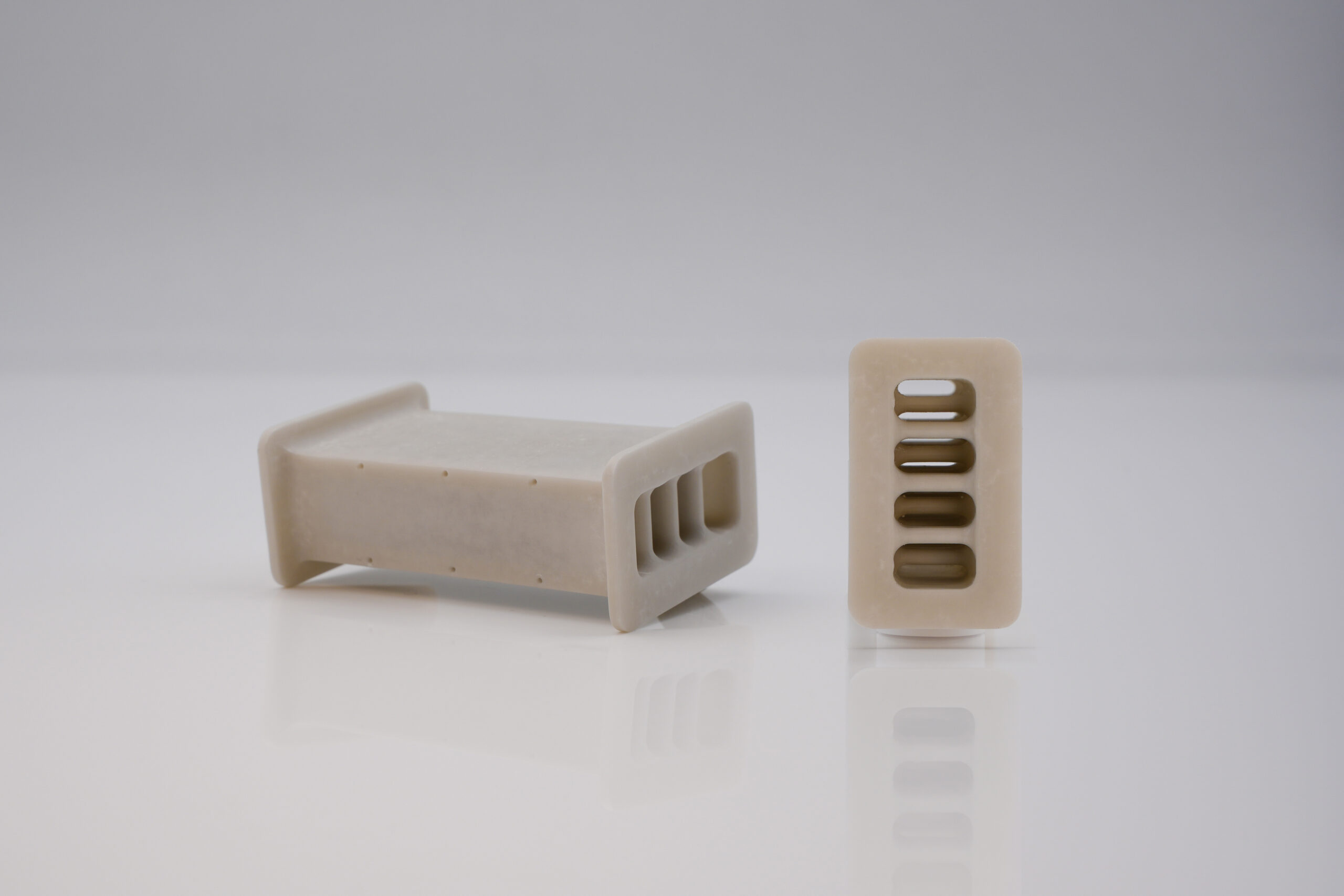
Lithoz Triathlon heat exchanger coupon. Image courtesy of Lithoz.
The goal of TRIATHLON, like many Horizon Europe projects, is ambitious: to make hydrogen propulsion for aircraft a reality. Hydrogen has long been promoted as a clean energy alternative. 900-kilometer-per-hour Hindenburgs weren’t exactly on my dystopian Advent calendar for this year, but I’ll take it in stride. The project includes better fuel distribution, lower nitrous oxide emissions, reducing the need for coolant through heatsinking, and optimized ceramic 3D printed heat sinks that reduce the overall power use of the engine.
The bigger picture is the emergence of the “megawatt-class aircraft,” which is cool, I guess, if you want to limit yourself to one single battery storage technology forever and subsidize all the fossil fuel companies to make that battery technology. Somehow, I think that over time, someone will come up with a better battery than hydrogen.
My skepticism should not detract from how great this innovation is, however. Lithoz and the team 3D printed heat sinks out of Aluminium nitride, specifically meant to eliminate the need for cryogenic hydrogen pumps for the engines. The thermal management in this case will make the engine much smaller, simpler, and more economical, and may let it last longer.
Lithoz CEO Dr. Johannes Homa said that,
“This is a breakthrough application of our ceramic 3D printing technology in a completely new field. Aerospace and sustainability are key growth areas for Lithoz, so achieving serial production with aluminium nitride is a significant milestone for these sectors. This material opens up design and application possibilities that no one else can currently realise, making a decisive contribution to a greener future in aviation through ceramic AM.”
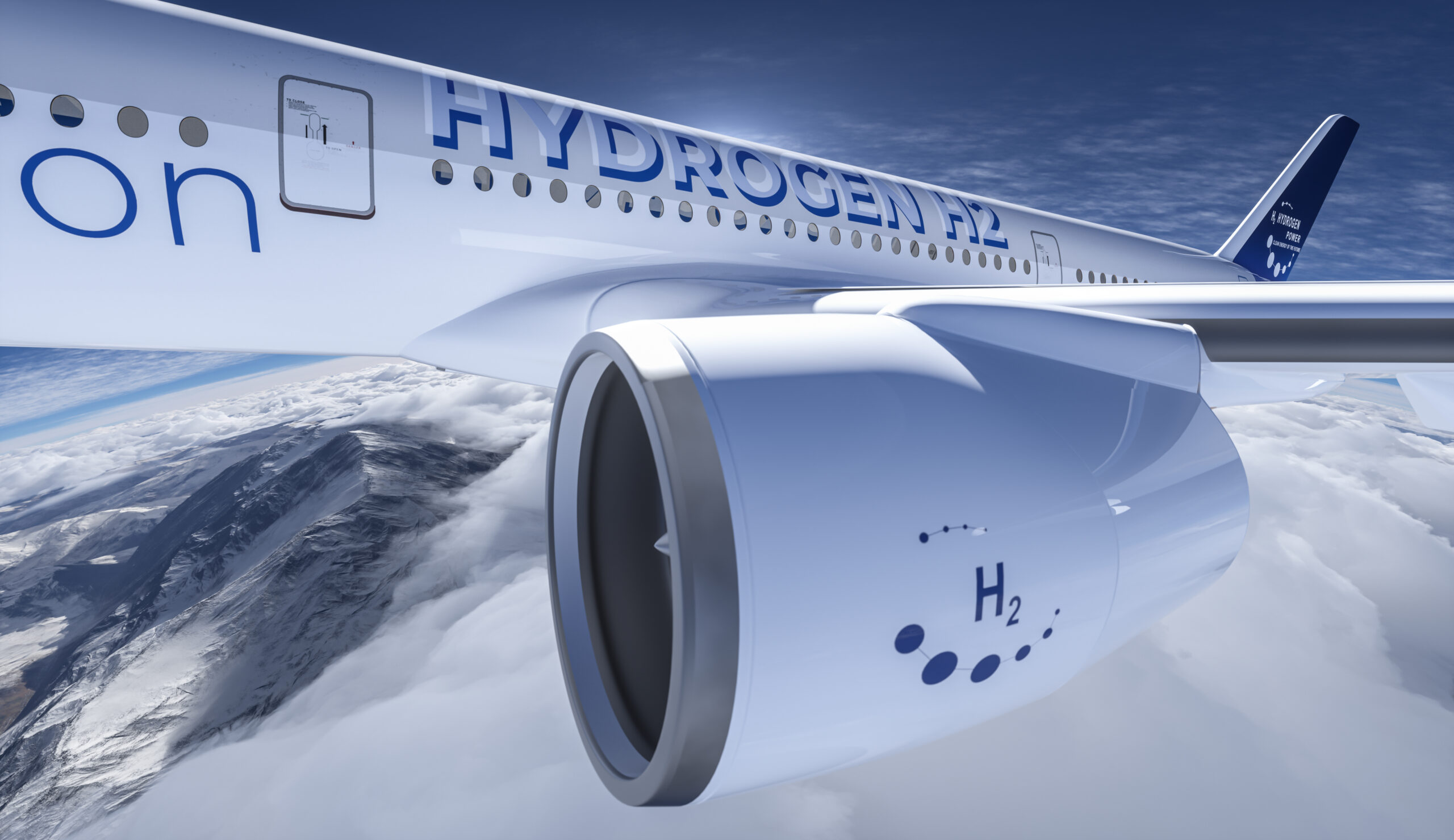
Hydrogen-filled H2 Airplane – future H2 energy concept. 3D rendering courtesy of Lithoz.
The heat exchangers were made with LCM, Lithoz’s Lithography-based Ceramic Manufacturing method, a vat polymerization slurry, and a sintering process coupled with digital light processing (DLP). The material has a thermal conductivity of 211 W/mK and is stable at 600°C surrounded by hydrogen, with the material being a good electrical insulator. The material is used widely in semiconductor applications, heatsinks for LED, and military radar components. We know that slurry SLA is probably the best technology for smooth internal channels that don’t have to be machined. Here, this is important with the company saying that the technology “offers unique design freedom, enabling the creation of ultra-precise, complex internal channels and geometry-optimised parts that ensure maximum heat exchange in minimal space.”
Indeed, there could be a lot of potential there in other heat exchanger needs. This is specialist stuff for right now, with applications in missiles, advanced drones, radar, microwave applications, laser weapons, lasers generally, integrated circuit (IC) packaging, power converters, and micro-electro-mechanical systems (MEMS). There could be scope in the future to make piezoelectric devices or more MEMS with Additive or more specific engines or small motorized components incorporating heat sinking and electronics. Ceramic heatsinks, more generally, could really use more exposure as an option. Light, strong, abrasion-resistant, and hard ceramic materials can deliver performance that other materials cannot match.
More projects should consider ceramics as a material in general, and ceramic heat exchangers could give unique performance in many cutting-edge applications. I’m intensely skeptical about hydrogen as a fuel source and about hydrogen-powered aviation specifically. But I’m very bullish about 3D printed heat exchangers, and I think that in a lot of applications, this is something that should be more top of mind.
Subscribe to Our Email Newsletter
Stay up-to-date on all the latest news from the 3D printing industry and receive information and offers from third party vendors.
Print Services
Upload your 3D Models and get them printed quickly and efficiently.













You May Also Like
AMAsia Pulse: AM Investment Picks Up Across Asia-Pacific
The first half of September brought fresh investment and expansion activity across Asia-Pacific’s additive manufacturing sector. China’s Xinjinghe secured funding for an aerospace AM hub, South Korea’s Lincsolution outlined plans...
3D Printing Financials: 6K Additive Sales Rise as Aerospace and Defense Demand Grows
6K Additive (ASX: 6KA) grew rapidly in the first half of 2026 as demand for its metal powders increased, particularly from aerospace and defense customers. The newly public company also...
3D Printing Financials: Aerospace and Defense Help Materialise Manufacturing Rebound
Materialise (Nasdaq: MTLS) grew revenue and profit in the second quarter of 2026, as its Medical business continued to expand, and stronger aerospace and defense demand helped its Manufacturing segment...
Amaero Builds U.S. Metal Powder Capacity for Additive Manufacturing
For metal additive manufacturing (AM) to grow in the United States, companies need more than printers. They also need a reliable supply of the powders that go into those machines....