Amaero Builds U.S. Metal Powder Capacity for Additive Manufacturing



For metal additive manufacturing (AM) to grow in the United States, companies need more than printers. They also need a reliable supply of the powders that go into those machines. Amaero is working on that part of the supply chain.
From its manufacturing facility in McDonald, Tennessee, the company produces titanium and refractory alloy powders for AM and other advanced manufacturing processes. These materials are used in demanding industries such as defense, aerospace and space, where parts may need to operate under extreme heat and pressure.
Amaero has made domestic production a major part of its strategy. The goal is to give U.S. manufacturers another source for materials that have historically been difficult to produce at scale. That is especially important for defense programs, as the U.S. pushes to secure domestic supplies of critical materials.
Bringing More Powder Production to the U.S.
At the center of Amaero’s operation are its Electrode Induction Gas Atomization, or EIGA, systems. The process turns metal into highly spherical powder that can be used in metal 3D printing and other powder-based manufacturing technologies. Amaero produces titanium as well as refractory materials such as C103, a niobium alloy designed for high-temperature applications.
These materials are important for newer defense and aerospace systems. Engines, propulsion systems, and other high-performance equipment are being pushed to work at higher temperatures, creating demand for materials that can survive those conditions.
Amaero has been expanding its powder production capacity in Tennessee. The company now operates three EIGA atomizers, including two dedicated to titanium and one to refractory alloys. Together, they give Amaero annual capacity of about 480 metric tons of titanium alloy powder and 200 metric tons of refractory alloy powder.
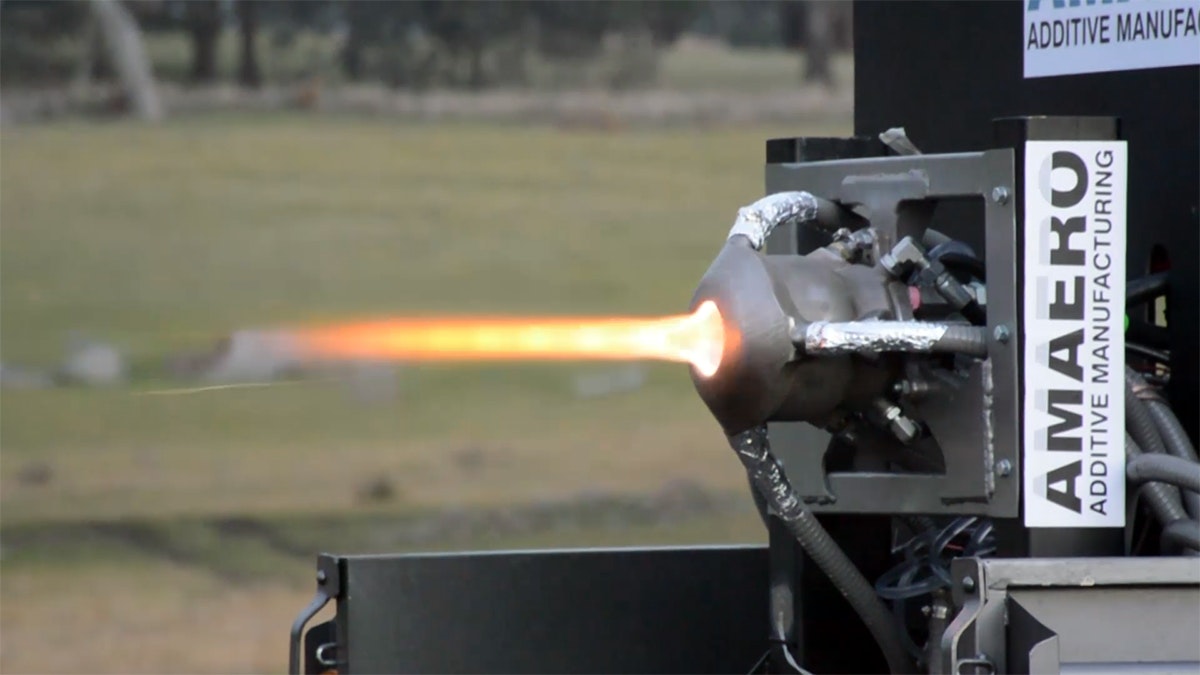
Amaero’s high-performance aluminum alloy enters final stage of patent approval. Image courtesy of Amaero.
Working with America Makes
Amaero has also been involved in work supported by America Makes. Through partner ADDMAN, Amaero supported the MATCHAS program, which focuses on making high-temperature materials more available and lowering the cost of producing parts from them.
As part of that work, Amaero rapidly qualified C103 powder. C103 is particularly interesting for AM because of its ability to handle very high temperatures. That makes it useful for applications such as rocket and defense propulsion systems. At the same time, producing the material as a consistent, high-quality powder can be difficult.
Amaero is also working with ASTM International on research involving Ti-6Al-4V, one of the most widely used titanium alloys in AM. The work looks at ways to improve powder production using EIGA technology, including powder yield and recycling. The goal is to make more usable powder, reduce waste, and help lower costs.
Beyond 3D Printing
But Amaero’s U.S. manufacturing strategy goes beyond AM. The company also produces components using Powder Metallurgy Hot Isostatic Pressing, better known as PM-HIP. With PM-HIP, metal powder is placed inside a shaped container and subjected to high heat and pressure. The powder forms a dense metal component with properties similar to those of a forged part.
For defense manufacturers, the process offers another way to make parts that would traditionally be cast or forged. That can be useful when conventional supply chains have long lead times or when only a small number of replacement parts are needed. Amaero is using PM-HIP to support areas including the U.S. submarine and maritime industrial base.
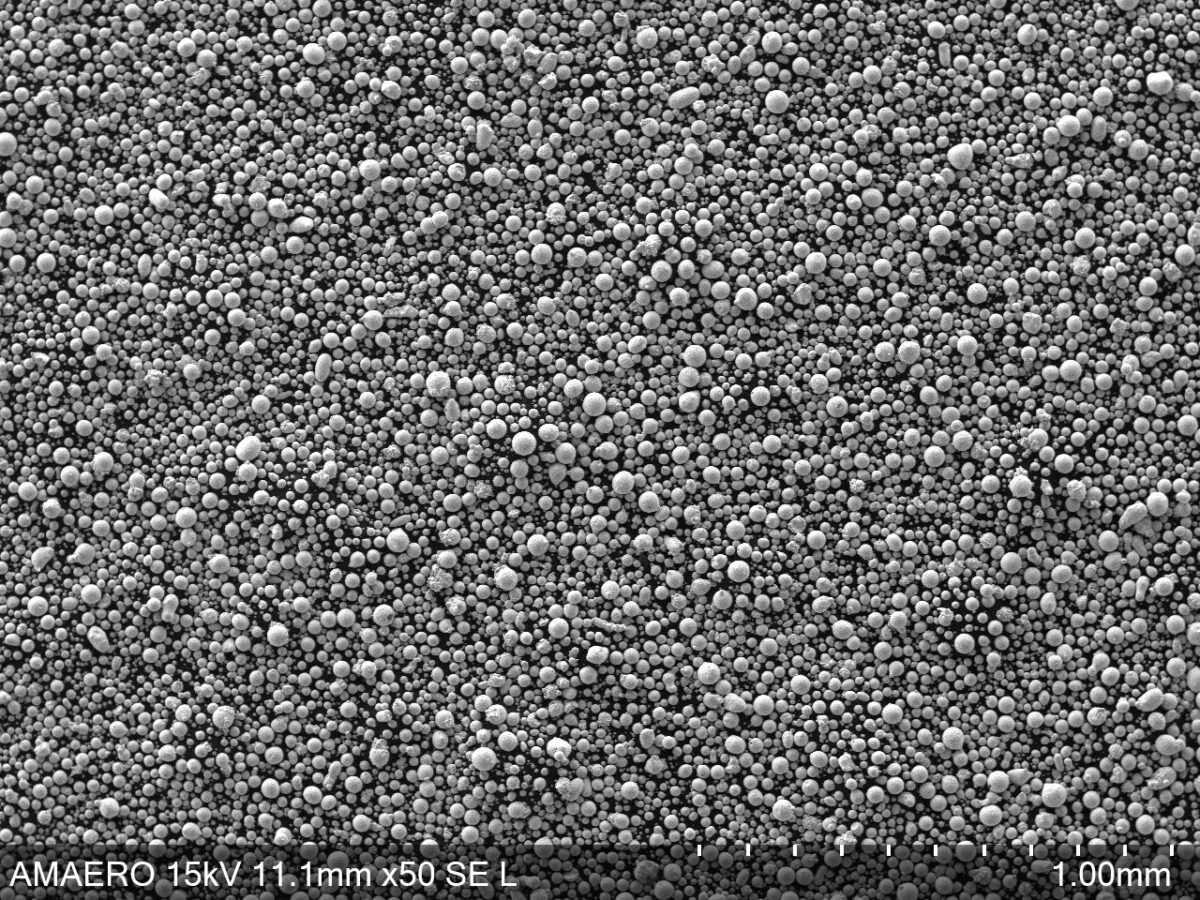
Amaero produces free-flowing, spherical C103 niobium (shown above), zirconium, molybdenum and other refractory alloys domestically using EIGA premium technology. Image courtesy of Amaero.
Where these materials come from also matters. The U.S. is investing heavily in AM for defense, aerospace, and other critical industries. But expanding the use of AM also means making sure manufacturers can get enough qualified material.
Amaero is trying to fill that gap by producing titanium and refractory alloy powders domestically and at larger volumes. For America Makes and the wider U.S. manufacturing sector, that domestic capacity is another piece of the effort to build a stronger AM supply chain. After all, having a domestic supply of these materials will be important as the U.S. expands its use of additive manufacturing.
Subscribe to Our Email Newsletter
Stay up-to-date on all the latest news from the 3D printing industry and receive information and offers from third party vendors.
Print Services
Upload your 3D Models and get them printed quickly and efficiently.













You May Also Like
Russia’s 3D Printed Missiles & Can NATO Get Its Act Together?
For most of US history, however much the two major parties differed on domestic policy (in some cases a lot, overall less than you’d think), there was always essentially a...
3D Printing News Briefs, October 21, 2026: Digital Twins, AI CAD Service, AR Smart Glasses, & More
In today’s 3D Printing News Briefs, America Makes announced the winners of its MIAMI Project Call, and AM Europe released a new report. Artec 3D launched its new Artec Twins...
3D Printing News Briefs, October 10, 2026: Drones, WAAM, Ceramics, & More
We have a packed 3D Printing News Briefs for you this weekend! First, America Makes celebrated the recent National Manufacturing Day with 3D printed drones, and then it’s on to...
The Manufacturing Race Behind the Drone Revolution
We are in the middle of a major manufacturing shift focused on the production speed and payload capacity of uncrewed aerial systems (UAS), or drones. A recent Manufacturing Dive article...