From Energy to Defense: Strengthening Supply Chains Through Dual-Use Additive Manufacturing

Dual-use technologies serve more than one sector, often bridging the gap between commercial and defense applications. Additive manufacturing (AM), once seen primarily as a prototyping tool, is now maturing into full-scale production for industries as diverse as defense and energy. Both depend on highly complex, aging assets and face costly downtime when critical systems fail. Both also rely on fragile supply chains that are vulnerable to disruption.
Dual-use AM offers a pathway to innovation and resilience by enabling faster, more flexible production of mission-critical tooling and parts. But it also comes with challenges, from navigating certification hurdles and cybersecurity risks to reconciling intellectual property and data rights across industries.
One of the greatest hurdles lies in qualification and certification. Defense systems must meet strict military standards, while energy is governed by its own industry-specific requirements. Each sector places high demands on process controls, inspections, and data integrity. However, their approaches diverge, with different pathways, standards, and verification methods used to meet the levels of assurance required for each unique sector.
As a result, approval by one regulator or manufacturer is rarely transferable to another. This creates redundancy, higher costs, and slower adoption. Overcoming these barriers will require a unified approach to standards and qualifications, one that builds trust across sectors traditionally siloed from one another.
Signs of Progress: Dual-Sector Case Studies
Despite these challenges, both industries are making progress. Below are just a few examples:
- Siemens Energy: Through AM, Siemens Energy has refined gas turbine production, accelerating innovation, advancing component design, and cutting carbon emissions. Siemens’ flagship SGT-9000 HL turbine is a driving force behind the UK’s Keadby 2 Power Station, achieving a world-record 18% efficiency and setting a new benchmark for sustainable energy.
- The Department of Defense (DoD) and America Makes: Projects like Delta Qual, led by the DoD in partnership with America Makes and several industry partners, have explored rapid and cost-effective AM material qualification. This project is working to accelerate and de-risk AM adoption by establishing a baseline for machine qualification in laser powder bed fusion, demonstrating how to extend that qualification across different machines, and enabling multiple vendors to reliably produce aerospace-quality Ti-6Al-4V parts to industry specifications.
- ExxonMobil and Louisiana State University (LSU): At ExxonMobil’s Baton Rouge Complex, a partnership with LSU reimagined the Machinery Anti-Wicking Device using laser powder bed fusion. The team applied design-for-AM principles to deliver a safer, more durable, and modular component that dramatically reduced lead times. The project not only enhanced performance in demanding environments but also showcased the power of collaboration between industry and academia, demonstrating how AM strengthens today’s industrial operations while preparing the next generation of engineers to drive the future of energy infrastructure.
Successes such as these are paving the way for scalable adoption.
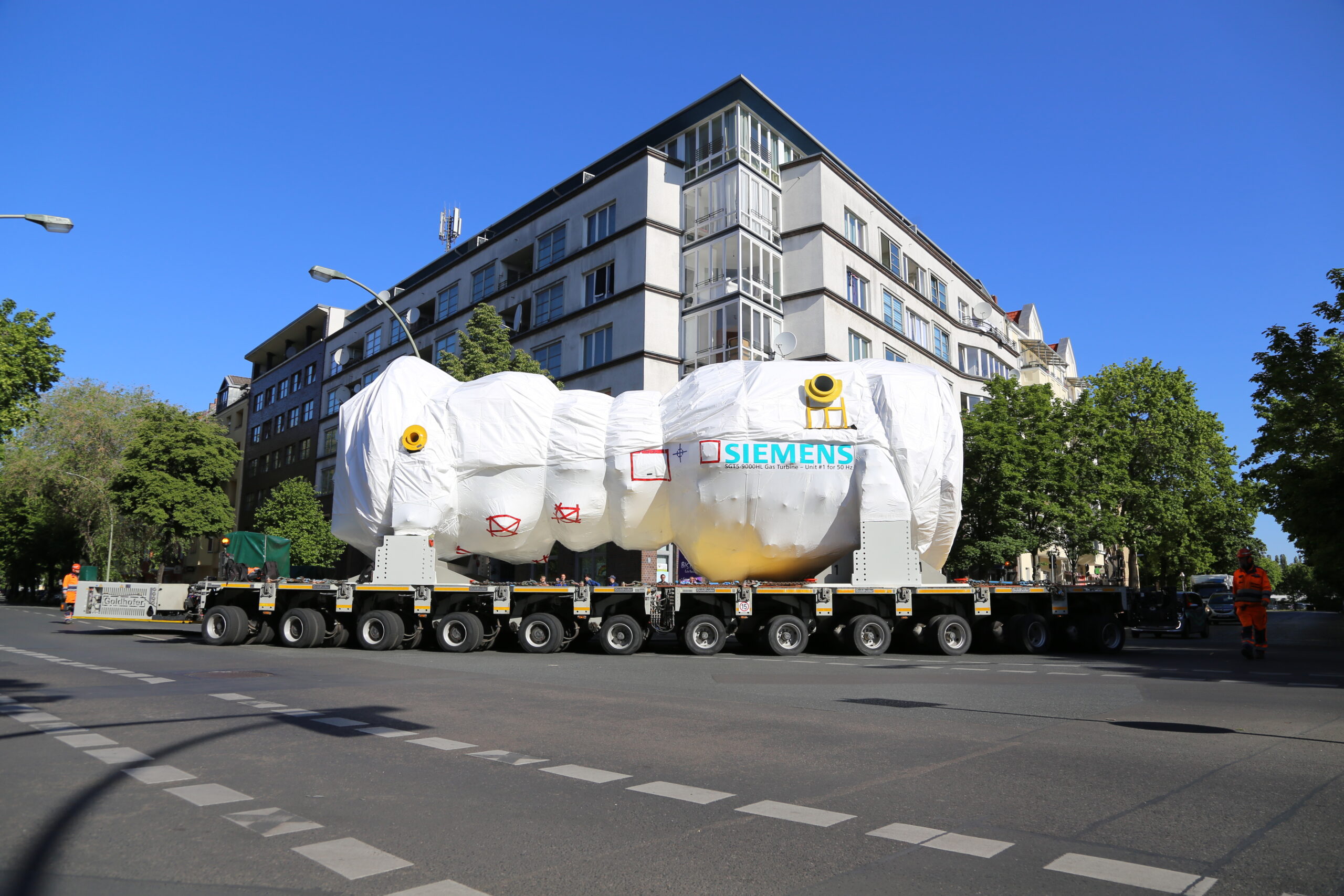
Siemens SGT5-9000HL-Exworks 5. Image courtesy of Siemens UK.
Strategic Synergies and Opportunities
At their core, defense and energy face strikingly similar demands: performance in extreme conditions, rapid response to disruptions, and reduced dependence on fragile supply chains. Dual-use AM helps address these needs by:
- Reducing lead times and costs: While castings and forgings can take over a year, AM delivers prototypes and parts in weeks.
- Enhancing performance in harsh environments: AM enables lattice structures, conformal cooling, and advanced alloys that boost durability against heat, pressure, and corrosion.
- Supporting distributed manufacturing: Point-of-need production reduces reliance on single suppliers and vulnerable logistics networks, especially valuable in remote or contested environments.
The Role of America Makes
As the nation’s Additive Manufacturing Innovation Institute, America Makes is uniquely positioned to advance dual-use AM. With its extensive network of government, industry, and academic partners, the Institute serves as a technical authority bridging gaps in standards and qualifications, a convener fostering collaboration across traditionally separate sectors, and a catalyst driving innovation that strengthens national security while fueling economic growth.
Unlocking AM’s full dual-use potential requires intentional collaboration between defense and energy stakeholders. The Ascentis Strategies Institute’s (ASI) upcoming Additive Manufacturing for Oil and Gas Summit, set for October 15-16 in Houston, Texas, will showcase how original equipment manufacturers, service providers, and end-users are advancing AM adoption in the O&G sector. This event promises to promote knowledge sharing for increased industry partnership and engagement.
By aligning roadmaps, sharing infrastructure, and demonstrating real-world applications, the two sectors can de-risk AM adoption, reduce lifecycle and ownership costs, and ultimately accelerate breakthroughs in materials, processes, and digital engineering.
The result is twofold: stronger U.S. supply chain resilience and improved readiness, safety, and performance for both defense and energy systems.
As AM continues to evolve, its dual-use potential offers more than just technical advancements; it represents a strategic opportunity to reshape how the nation responds to industrial challenges. By bridging the needs of defense and energy, AM can help create a more agile, secure, and competitive manufacturing base. The path forward will require persistence, partnership, and vision, but the payoff is a stronger, more resilient America capable of meeting the demands of today while preparing for the uncertainties of tomorrow.
About the Author:
Eartha Hopkins is the Content Coordinator for America Makes at the National Center for Defense Manufacturing and Machining (NCDMM), a role she began in 2024. Before joining America Makes, Eartha served as communications specialist for The Red Zone, leading its rebranding and marketing efforts, and as a communications consultant supporting organizations such as The Raymond John Wean Foundation and the Youngstown Neighborhood Development Corp. She holds a bachelor’s degree in Communications from The Ohio State University.
Subscribe to Our Email Newsletter
Stay up-to-date on all the latest news from the 3D printing industry and receive information and offers from third party vendors.
Print Services
Upload your 3D Models and get them printed quickly and efficiently.













You May Also Like
3D Printing News Briefs, October 10, 2026: Drones, WAAM, Ceramics, & More
We have a packed 3D Printing News Briefs for you this weekend! First, America Makes celebrated the recent National Manufacturing Day with 3D printed drones, and then it’s on to...
10 Years of Multi Jet Fusion: Onsite at HP’s Vancouver, Washington Facility
At this year’s RAPID event in Boston, HP Additive Manufacturing Solutions celebrated ten years in the additive manufacturing (AM) market. The company ushered in the milestone with several innovations, including...
PharmaTher Plans U.S. Network to 3D Print Medicines on Demand
3D printing medicines has often been tied to the idea of personalization, basically making a pill in the right dose, shape, or drug combination for a patient. PharmaTher is now...
3D Printing News Briefs, September 17, 2026: 3D Printed Boat, UAS Development, & More
We’ll start with maritime manufacturing in this week’s 3D Printing News Briefs, and continue on to defense 3D printing. We’ll end with funding for Tripo AI. Read on for all...