Bechtel and Sintavia 3D Print Impeller for Nuclear Sub with Curtiss-Wright


Bechtel Plant Machinery, Curtiss-Wright’s Engineered Pump Division, and 3D printing service Sintavia have collaborated to produce the first qualified metal 3D-printed part for a U.S. nuclear submarine. The part, an impeller for a pump, represents a significant breakthrough in metal additive manufacturing. Impellers, long regarded as a challenging and costly component to manufacture, benefit from 3D printing’s ability to reduce weight, minimize production errors, and streamline manufacturing processes.
Given the billions invested in the U.S. industrial base, particularly in submarine technology, such advancements promise substantial cost and efficiency gains. Additionally, the capability to manufacture these components rapidly, in remote locations, or even onboard other vessels, enhances their strategic appeal.

David Micha, Senior Vice President of Curtiss-Wright´s EMS Division, said,
“Sintavia has proven to be an invaluable industry partner, and we are excited about the opportunity to further solidify our partnership by increasing the number of additively manufactured parts for this application and other critical naval defense components.In addition, we are proud to be providing the first critical service equipment utilizing an additively manufactured component to the U.S. Navy’s submarine program and look forward to expanding these capabilities in the future to more efficiently serve our customer.”
Lindsay Lewis, Sintavia’s Corporate Vice President, said,
“We would like to thank both Curtiss-Wright and BPMI for the opportunity to leverage Sintavia’s additive technology in the production of this critical component. Leading-edge manufacturing processes such as AM will continue to be key differentiators in developing superior defense components in the years to come.”
Curtiss-Wright is a $2.5 billion revenue firm that makes actuators, valves and other components for aerospace and defense. Also active in MRO and spare parts this company´s interest in AM is more than validated by its activities. Indeed there are few companies that can be as impacted by 3D printing as Curtiss-Wright could be. If that storied firm, can harness 3D printing well it can produce more efficiently more parts for more revenue opportunities going forward. Their involvement therefore is of supreme importance to that group.
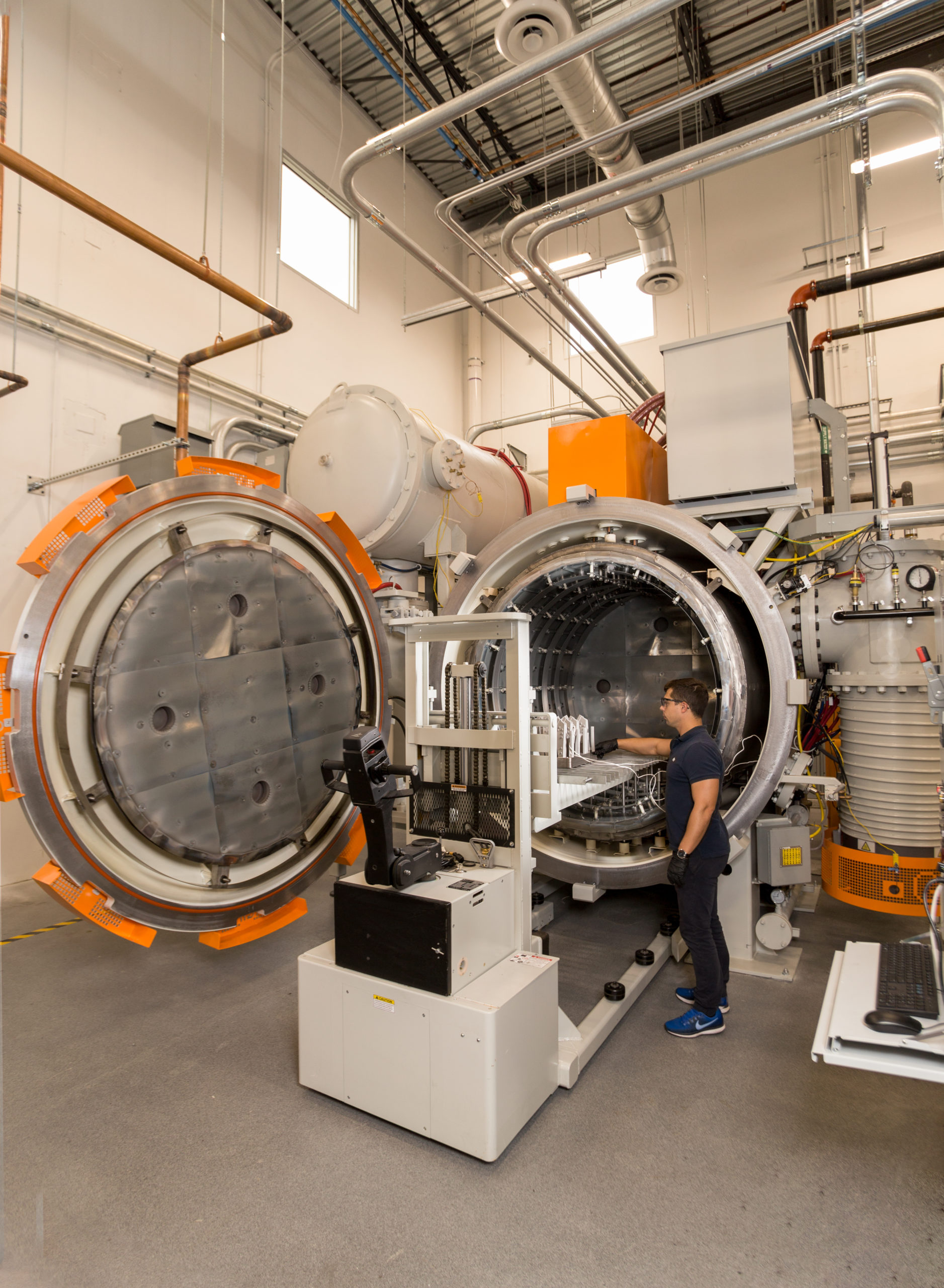
Sintavia is the only company in the world with Nadcap approvals for laser additive manufacturing, electron beam additive manufacturing, and in-house heat treatment. (Image courtesy of Business Wire)
BPMI is a lesser-known but highly influential firm integral to the U.S. Navy’s operational capabilities. Despite its understated online presence, BPMI oversees numerous critical programs, including spare parts management, fleet support, and the development of advanced manufacturing components for the Navy. The company designs instruments and controls, fabricates reactor vessels, and fuels the Navy’s nuclear fleet, making it a linchpin in naval operations. A subsidiary of the construction and engineering powerhouse Bechtel, BPMI stands out as a secure and strategic workplace, where every employee undergoes rigorous background checks and security clearance vetting.
As a key player in restoring the industrial base for submarines, BPMI is poised to lead efforts in modernizing and maintaining the Navy’s fleet. Meanwhile, Sintavia, a well-established name in additive manufacturing, complements this effort. With recent $25 million expansions, investments from Lockheed Martin, and contracts in hypersonic technology, Sintavia is strategically positioned to advance the Department of Defense’s ambitions for 3D-printed parts, ensuring innovative solutions for the defense sector.
In March 2023, Sintavia and Bechtel embarked on establishing a dedicated factory to 3D print parts for the Naval Nuclear Propulsion Program, underscoring the long-term effort, investment, and expertise required to achieve such milestones. This achievement represents a monumental win for Sintavia. Traditionally focused on aerospace and heat management, gaining a foothold in the submarine sector signifies a strategic expansion that could substantially elevate the company’s profile and market opportunities.
Having Bechtel Plant Machinery and Curtiss-Wright as partners brings invaluable expertise and connections to Sintavia, reinforcing its credibility and capabilities. Earning trust to produce a critical component for such a classified platform is a significant validation of Sintavia’s precision, reliability, and innovation. This accomplishment highlights the company’s ability to extend beyond its aerospace stronghold into the highly demanding and secretive underwater domain, demonstrating versatility and collaboration.
This is a fantastic achievement for Sintavia. On top of this it can be a huge portend for business over the years to come. Tens of billions of dollars are at stake in the submarine industrial base. We need just a few thousand part numbers to double our entire industry. All aboard!
Subscribe to Our Email Newsletter
Stay up-to-date on all the latest news from the 3D printing industry and receive information and offers from third party vendors.
Print Services
Upload your 3D Models and get them printed quickly and efficiently.












You May Also Like
3DPOD 302: Digital Inventory for AM with Mikhail Gladkikh, Würth Additive Group
Mikhail Gladkikh has worked in oil and gas for many years. With this background, we obviously talk about energy market turbulence and the adoption of AM in oil and gas....
Spectrum Filaments Gets Investment: How They Could Win in Filament
Spectrum Filaments is a long-time high-quality filament supplier based in Poland. With good tolerances, roundness, and consistency coupled with affordable pricing, the firm has been a mainstay for makers, industrial...
NX Atomics and Sciaky Collaborating to 3D Print Nuclear Components
For decades, the nuclear industry has quietly experimented with and implemented additive. Bouyed by the likes of ORNL, companies such as Westinghouse have 3D printed components serially. We have an...
Incodema3D Buys 14 Metal EOS Systems, Now One of the World’s Largest Metal 3D Printer Operators
Recently, a majority stake of 3D printing service bureau Incodema3D was purchased by AFM Capital. Under new ownership, the Freeville, New York company is now using its cash-rich parent for...