Advanced Manufacturing Equipment Sourcing Platform Diagon Raises $5.1M in Seed Round


Diagon, a Silicon Valley-based startup offering an AI-backed software platform for sourcing advanced manufacturing equipment, has raised $5.1 million in a seed round backed by firms including Valia Ventures and Techstars. Will Drewery, the company’s co-founder and CEO, has a decade of experience in managing supply chains for cutting-edge enterprises, including five years as Tesla’s Head of CAPEX Global Supply Management.
Diagon has built itself on a straightforward premise that could prove instrumental to one of the most complex tasks faced by contemporary industry: transforming the geography of global supply chains. Diagon’s contribution to solving that problem is to radically simplify the process by which manufacturing businesses source their equipment. One company familiar to those in the additive manufacturing (AM) industry that Diagon has already helped purchase capital equipment is Mighty Buildings.
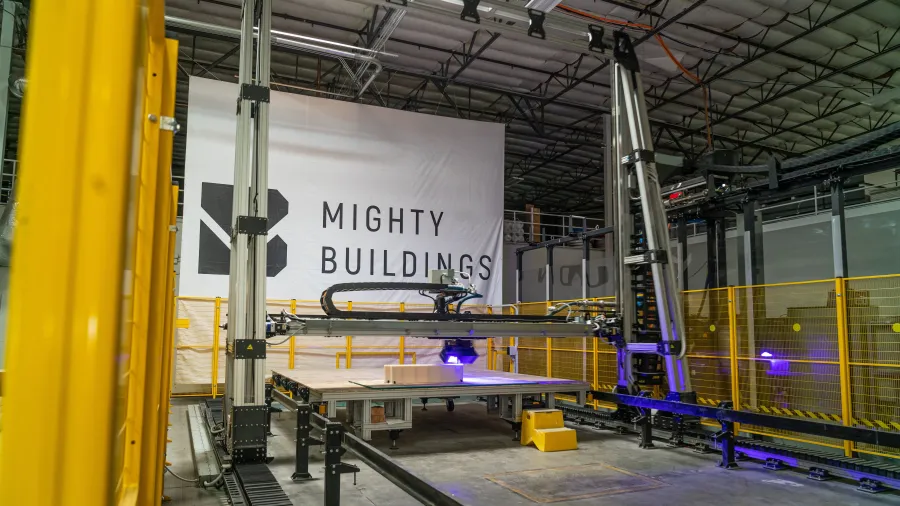
Mighty Buildings has already used Diagon to purchase equipment for its prefabricated homes. Image courtesy of Mighty Buildings
Diagon uses AI-backed software to drastically speed up that process, with the company arguing that it enables “procurement efforts that once took weeks” to be achievable in less than five minutes. Drewery first zoomed in on the business case supporting that application during his time at Tesla:
“…I was awestruck at how few tools there were to help me do that job,” Drewery told TechCrunch in a recent profile.
Drewery’s co-founding of Diagon directly led from his making the connection between that experience at Tesla, and the ambitious reshoring efforts nations including the US are currently undertaking: “I’d been hearing and seeing the trends towards nearshoring and reshoring of American manufacturing. As a supply chain manager, I’ve been taking a critical eye at how that’s actually going to happen. People intuitively understand that they want to source batteries for the cars they’re making in the US or near the US, but they have no idea that if that capacity doesn’t exist anywhere, then there’s no way you’re going to find a qualified supplier or have the right infrastructure to make those products.”
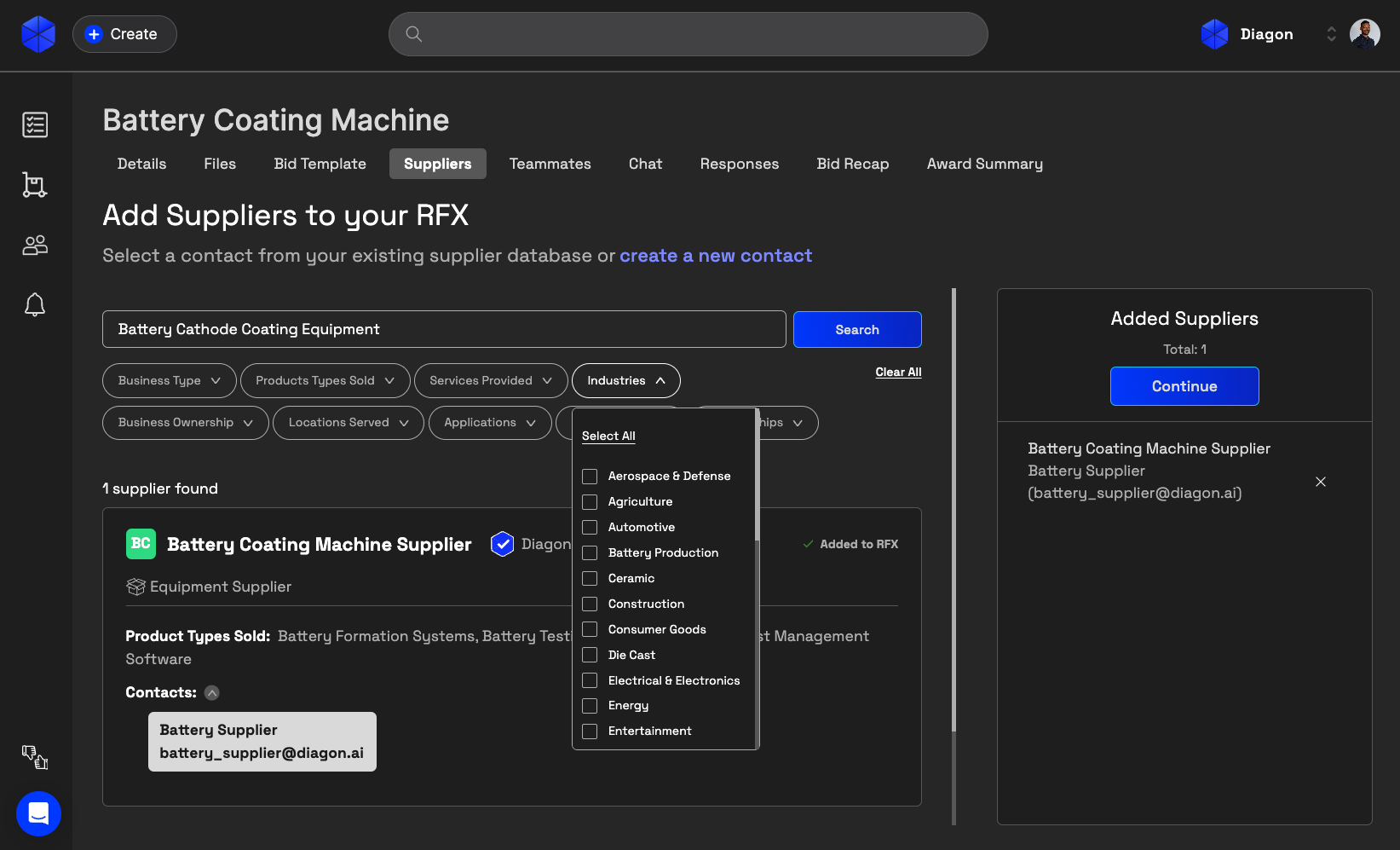
Diagon’s business model addresses one of the most important holes in US advanced manufacturing right now, which stems from the difficulty that original equipment manufacturers (OEMs) have in directly interfacing with prospective customers from small and medium enterprises (SMEs). In doing so, Diagon also demonstrates one of the most important roles that AI could play in industries like AM.
Especially in the near-to-intermediate term, AI’s most important jobs in AM will likely be outside of the factory floor, accelerating and streamlining all of the operations that allow business to optimize operational effectiveness. In addition to sourcing equipment, this will include tasks like selling parts and hiring employees.
“Middleman” is rarely a term used as a compliment, but in certain contexts middlemen aren’t just necessary, but are indispensable. This is one of those contexts, and I think we can expect companies like Diagon to make a big impact on the AM industry sooner rather than later. AM has a genuine opportunity to embed AI into the structure of the overall landscape, in such a way that the two technological fields can evolve synergistically.
Images courtesy of Diagon
Subscribe to Our Email Newsletter
Stay up-to-date on all the latest news from the 3D printing industry and receive information and offers from third party vendors.
Print Services
Upload your 3D Models and get them printed quickly and efficiently.













You May Also Like
$51 Million Revenue VMP Wants to Become a Leading Additive Manufacturing Metal Powder Producer
Chinese powder producers have traditionally had little impact on the additive manufacturing market. Typically, they offer low-cost powders without much in the way of settings or application support. But China’s...
SprintRay Releases Midas Restore
SprintRay‘s new U.S. Food and Drug Administration (FDA)-cleared Midas Restore is a material for restorative dentistry. The ceramic-doped resin is meant for definitive inlays, crowns, and veneers. The resin has...
Alibaba Selling Fiber Optic Military Drones for $200
Ukraine was saved by Turkish-made Baykar Bayraktar drones and many brave soldiers in the first stages of the conflict. Then hobbyists and their DJI Mavics showed how drones could be spotters...
The Formlabs Shuffle
For the latest development on 8/31/26, please see an update at the end of this article. Formlabs is doing a management shuffle, pointing the firm even more surely towards an...