Bechtel & ATI Tap Velo3D for US Navy 3D Printing Facility in Florida

As I’ve written about extensively over the last couple of years, the US Navy is at the forefront of US additive manufacturing (AM) innovation, especially when it comes to metals. One of the biggest confirmations of this trajectory was the 2023 announcement by Bechtel Plant Machinery Inc (BPMI), a subsidiary of the US’s second-largest construction company, that it would be working with metal powders supplier ATI to build an AM facility in the Ft. Lauderdale, FL area, in support of the US Naval Nuclear Propulsion Program.
Now, BPMI has pulled original equipment manufacturer (OEM) Velo3D (NYSE: VLD), the Silicon Valley-based maker of the Sapphire family of metal printers, into the fold. Velo3D announced that BPMI has selected the company’s Sapphire XC printer for deployment at the Florida AM facility. Notably, the eight-laser printer that will be delivered to the ATI-operated facility is the first Sapphire XC calibrated for stainless steel 415.
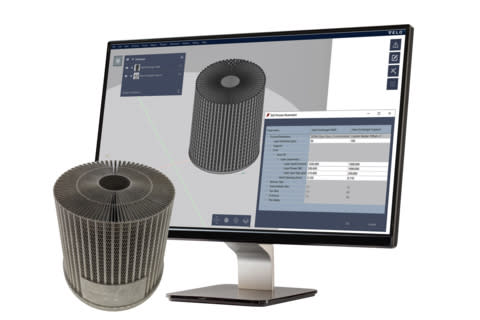
Velo3D’s “Developer” software tool.
In a press release about BPMI’s order of a Sapphire XC from Velo3D for the Ft. Lauderdale AM facility, the CEO of Velo3D, Brad Kreger, said, “BPMI and ATI’s progressive approach to 3D printing is extremely forward-thinking and this new, revolutionary facility will significantly augment the US Navy’s supply chain for maintenance, repair, and operations. Both companies are early adopters of metal 3D printing and innovators in the manufacturing industry. We look forward to working with them as they support the US Navy’s fleet, including its aging vessels.”
Joe Thompson, General Manager of ATI Additive Manufacturing Products, said, “ATI will be able to more easily additively produce complex parts with fewer support structures, at lower angles, and larger sizes than ever before. This enables us to broaden the scope of possible part designs for our defense and aerospace customers, enabling higher performance and better quality. The business opportunity represented by these previously unproduceable part designs is significant.”
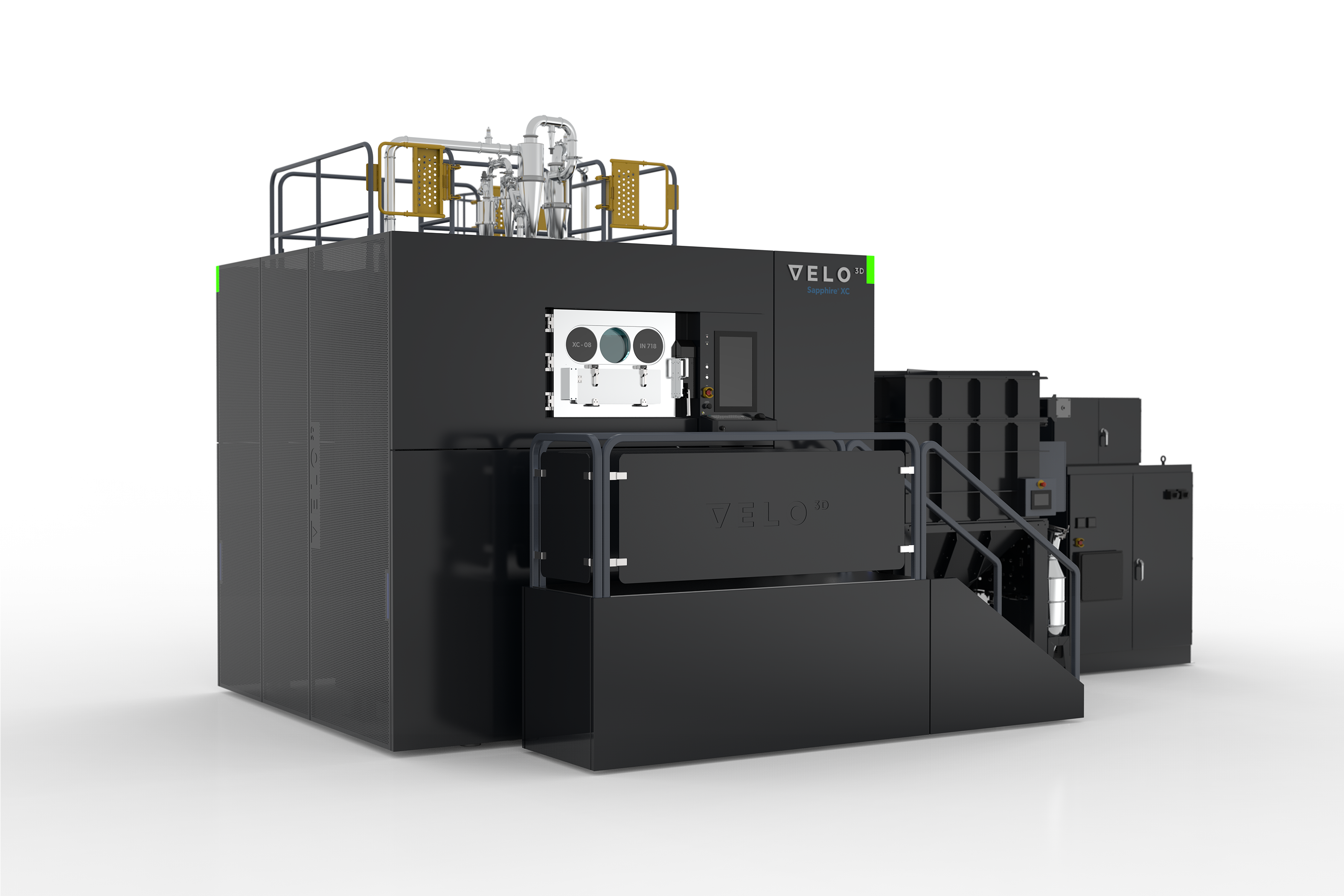
The Sapphire XC 3D printer from Velo3D. Image courtesy of Velo3D.
After the company’s founder, Benny Buller, stepped down as CEO in December, Velo3D has hit the ground running in 2024. Velo3D announced its “key strategic priorities for growth” in January, a five-year plan that revolves around leaning into its core competencies by obsessively focusing on quality control and customer satisfaction, and zealously chasing down the growing demand for mission-critical spare parts.
Getting into the US Navy supply chain is an ideal way to do exactly that, and the BPMI/ATI facility is about as big a win as you can get in that arena, at the moment. While the facility’s construction was announced last September, it was also announced, in December 2023, that BPMI received an $889 million contract from the Navy to produce nuclear propulsion components. The ATI facility is part of the deal, which runs through 2033.
This means that Velo3D has embedded itself into the federal procurement supply chain for up to a decade, strongly suggesting that the company’s updated business strategy has serious legs. Velo3D also recently announced a new tool, Developer, for its Flow software, which includes Ursa Major Technologies — the much-touted manufacturer of 3D printed rocket motors — as one of its first adopters.
All of these moves highlight the hard-to-pin-down quality that makes Velo3D unique: coherence. By only trying to do exactly what it does best, the company is in a position to maintain the operational coherence of its platform, and by extension, its brand, for the long run.
Images courtesy of Velo3D
Subscribe to Our Email Newsletter
Stay up-to-date on all the latest news from the 3D printing industry and receive information and offers from third party vendors.
Print Services
Upload your 3D Models and get them printed quickly and efficiently.











You May Also Like
Formnext 2025: New Metal PBF 3D Printer, Serial Production Applications, & More
It’s Day 2 of Formnext 2025, where over 800 exhibitors from around the world have converged in Frankfurt for Europe’s premier additive manufacturing (AM) trade show. From exciting new printers...
3D Printed Interlocking Earthen Bricks Create Microclimates to Support Tree Growth
In some places, especially arid landscapes, tree saplings and crops need a little protection from the elements in order to grow. An interesting new project called TreeSoil was designed to...
Italy’s WASP Debuts CUBO HDP, Turning Shredded Plastic into Large-Scale Prints
Italian 3D printing company WASP has introduced its latest machine, the CUBO HDP, a large-scale pellet 3D printer built for industrial production and sustainability. The debut took place last week...
LibWork 3D Prints Residential Home in Japan with Soil & Crane WASP
Construction firm LibWork has 3D printed a home using WASP 3D printers and soil in Japan. The home is roughly 100 m² and was made using a Crane WASP printer....