LibWork 3D Prints Residential Home in Japan with Soil & Crane WASP


Construction firm LibWork has 3D printed a home using WASP 3D printers and soil in Japan. The home is roughly 100 m² and was made using a Crane WASP printer. These printers have either a 50 or 100 square meter build volume and start at €160.000, with the printer measuring 550x580x420 cm. The Crane WASP pumping system is capable of pumping 250 liters an hour, and prints at a speed of 200 mm/s.
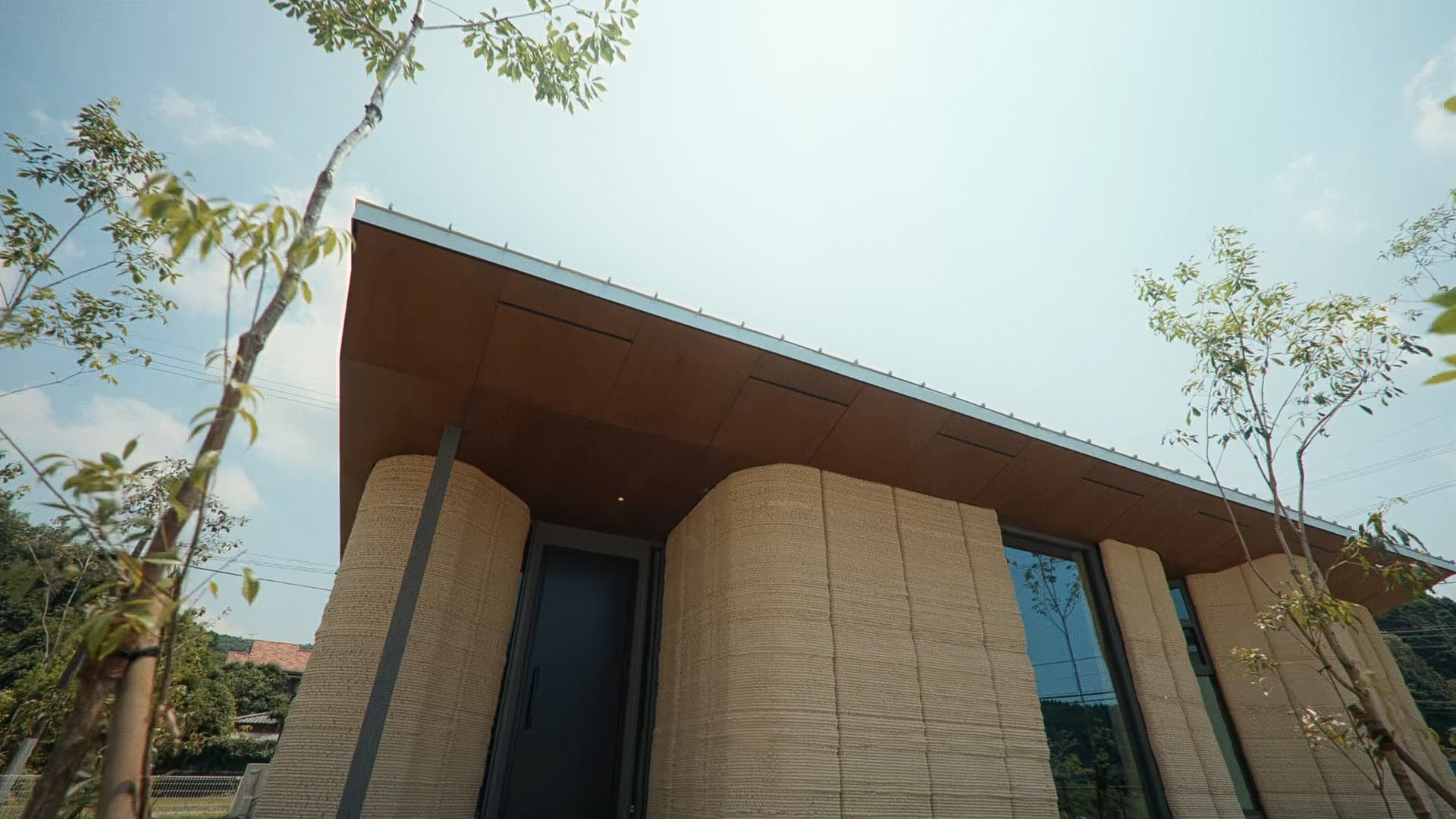
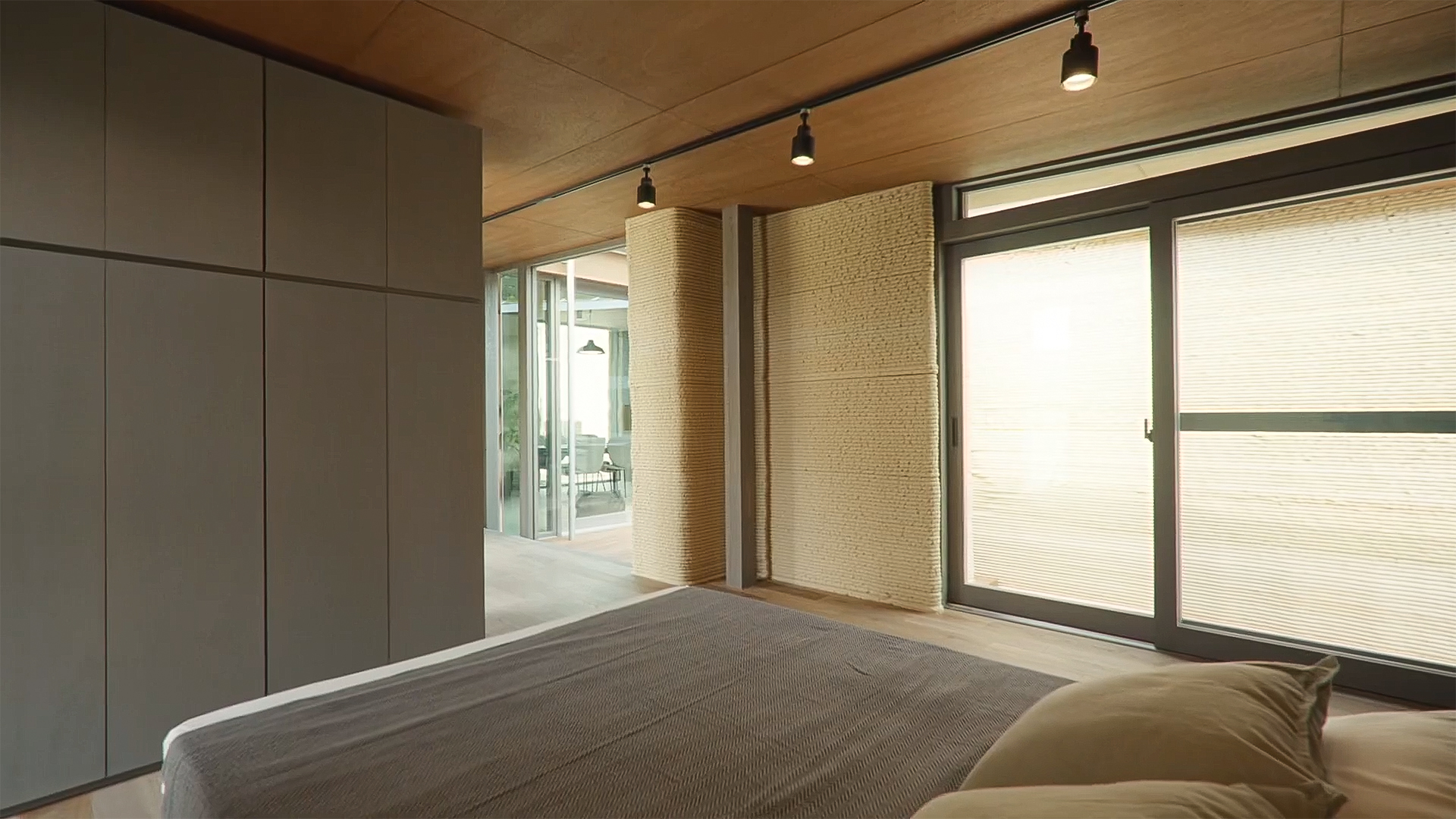
The single-story house, which does have a wooden frame, is called the Lib Earth House Model B, and is meant to be fully circular, incorporating solar power, batteries, and soil. In addition to Lib Work, construction engineering firm Arup, ogawaa design studio, and Kyotani Architectural Design Office were involved. I love the idea of Arup, the London-based company behind a lot of the large buildings in the world coming to grips with soil 3D printing.
WASP founder Massimo Moretti said,
“We heartily congratulate the Lib Work team for their wonderful interpretation of combining 3D printing with natural materials.I am honored to collaborate with organizations like Lib Work that share our vision of fusing technology, natural materials, and sustainability. This is a concrete example of international cooperation and cultural exchange contributing to a more sustainable and conscious future.”
And in concrete lies the major difference in what WASP is doing. Most other additive construction (AC) companies are typically all using cement and other unsustainable materials that come with huge environmental costs. 3D printing concrete is more sustainable than regular cement construction, but if we 3D printed all the buildings in the world, it would still make the planet unlivable. WASP is promoting something altogether more radical in using a composite of soil and other materials in construction.
Will soil 3D printing become a viable alternative to regular construction? If we look at some of the large cement companies, Holcim has revenues of over $33 billion, while Heidelberg has $26 billion, Anhui has $16 billion, Cemex has $16 billion, and the Siam Cement Group has $16 billion. So, given the wealth and influence of these firms, and how corrupt the construction industry is globally, I don’t think that soil construction will replace cement in any significant way. There’s just too much money relying on cement. But, perhaps for a niche group of consumers—those that can build their own homes and are eco-conscious—it could become an alternative.
Specifically in Japan, temples and houses are often replaced with wood and other materials being reused, and the structure is redone with new wood. Japan also demolishes most of its homes after 30 years or so. Many homes, perhaps around 15%, are also prefab in Japan. As per this article, Japanese houses depreciate, with a new home losing 20% of its value after being purchased; after three decades, the home is worth the cost of the land, minus the costs of demolishing it. Those unique elements of the Japanese market would make it a much more promising territory for soil 3D printed housing than other markets. If earthquake norms can be passed, and the Japanese like the idea of soil homes, then soil 3D printing could become more prevalent there.
Rural homes or luxury dwellings elsewhere could also become infused with a new kind of sustainable status through soil construction. Or perhaps we will see a broader mentality change that would have many more people wanting the very place they live to not be a symbol of waste and destruction, but rather something more in keeping with the nature we all profess to love. It will probably all, however, come to naught. But now, for some people willing to be the change, soil 3D printing has shown that it is possible to make a residential home that they may aspire to live in one day.
Subscribe to Our Email Newsletter
Stay up-to-date on all the latest news from the 3D printing industry and receive information and offers from third party vendors.
Print Services
Upload your 3D Models and get them printed quickly and efficiently.













You May Also Like
50,000 Orders and Counting: EPlus3D & Chinese AM Services Provider Are Scaling Liquid Cooling Solutions for AI Servers
An under-appreciated story driving the additive manufacturing (AM) industry this year has been the divergence between what’s driving the market in China and what’s driving it everywhere else. Let’s start...
Seven Trends Reveal What’s Next for 3D Printing at TCT Shenzhen 2026
TCT Shenzhen 2026 opened on October 14 in Hall 15 of the Shenzhen World Exhibition & Convention Center in Bao’an, and ran through October 16. The event brought together equipment...
With Increased Aerospace & Defense Focus, CORE Industrial Partners Buys More Manufacturing Firms
Private equity’s march into manufacturing continues with CORE Industrial Partners’ latest acquisitions. CORE purchased Fathom a few years ago, and later bought 3DXTECH LLC, Triton 3D LLC, and Gearbox3D. It...
Can India’s AM Push Help Make it a Viable Supplement to China?
Diversifying manufacturing supply chains to locales outside of China has nothing to do with actually cultivating “substitutes” to the Chinese economy. The real stakes are these: China is an irreplaceable...