California Energy Commission Awards $5M to 3D Printed Homebuilder Mighty Buildings


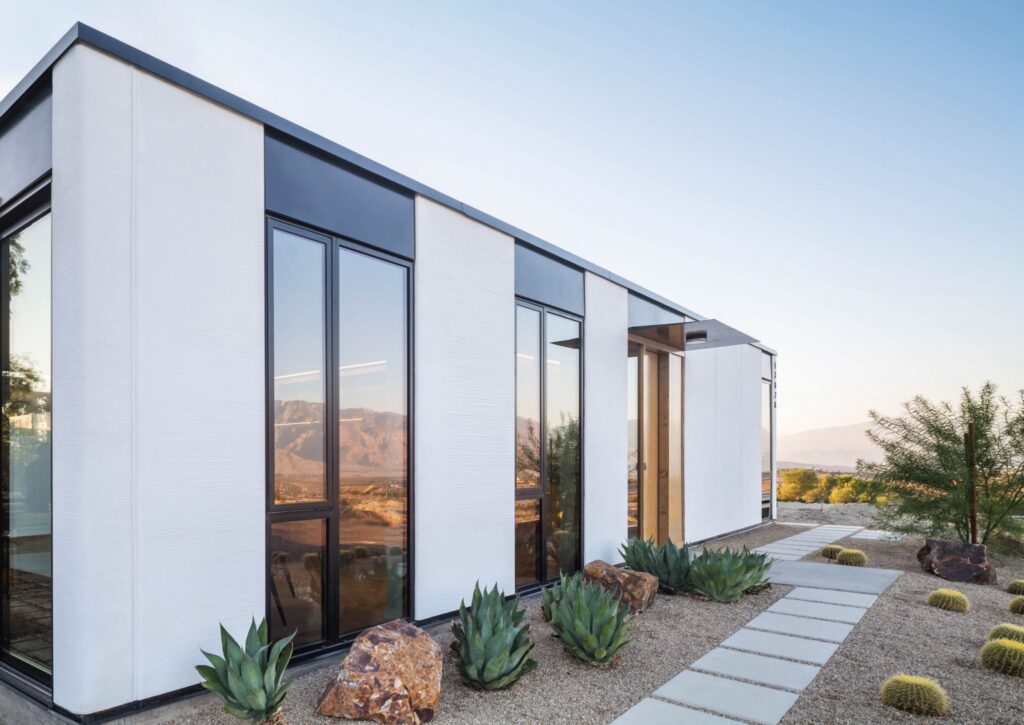
Mighty Buildings, the Oakland-based additive construction (AC) firm specializing in prefabricated, climate-resilient homes, has been awarded a $5 million GFO-22-305 grant from the California Energy Commission. In partnership with Lawrence Berkeley National Laboratory (LBNL) and Habitat for Humanity, Mighty Buildings will deploy the funds to develop, test, and demonstrate the use of its AC technology to provide cost-effective, zero-carbon or near-zero-carbon homes to under-resourced communities.
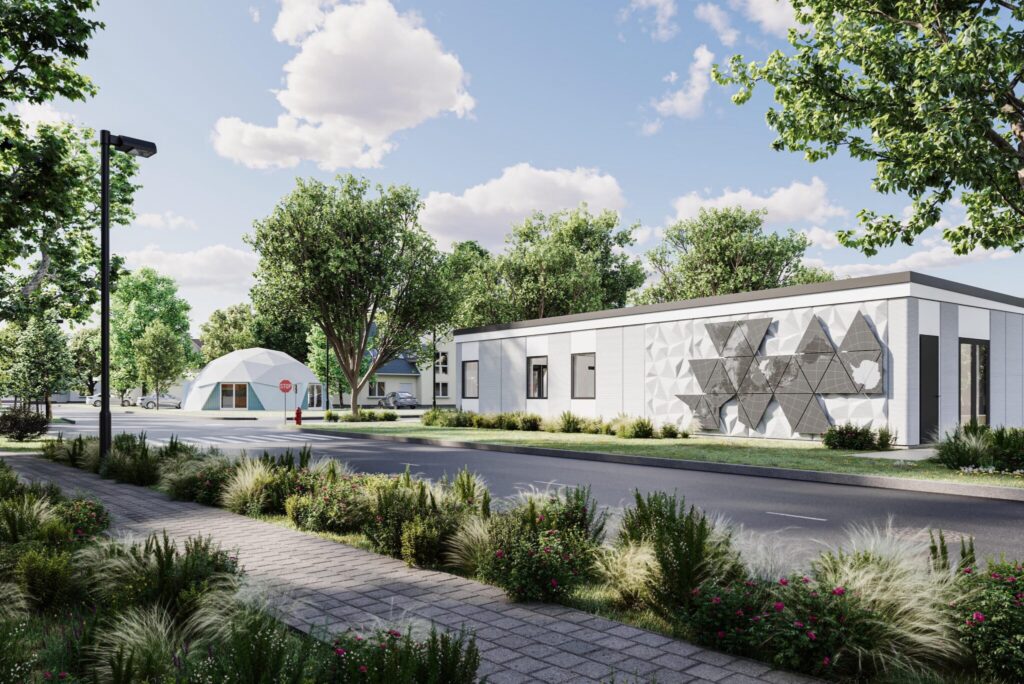
Mighty Buildings plans to develop and construct three prefab townhomes, which upon completion will be located in Bay Point, California, in the San Francisco Bay Area. The homes are intended to go to low-income families, defined as those making 80% or less of the area media income (AMI).
The project’s details include a number of specific objectives that Mighty Buildings and its partners aim to achieve, in order to exhibit advantages that are unique to the company’s core tech. These include plans for Habitat for Humanity to create a workforce training program that combines in-person and digital training, the introduction of new offsite 3D printing techniques intended to maximize the portion of construction done offsite, and the incorporation of new, on-site structural/waterproofing test kits for the completed homes.
As has become expected when Mighty Buildings is involved, the most exciting features of the project are the aspects surrounding clean energy. Each home will come equipped with the combination of solar photovoltaic (PV) panels and a small battery, enabling “cool rooms” designed to shift peak loads from one concentrated evening period to “multiple scattered peak periods through the day”.
In addition to increased climate-resilience, the purpose of the cool room concept is to help lower the homes’ 10-year total cost of ownership (TCO). LBNL will also develop a novel model based on assessing the cost of manufacturing and energy of Mighty Buildings’ prefabs, with the goal of applying that model for modular prefabs on a larger scale.
In a press release about the $5 million grant from the California Energy Commission, the CEO of Mighty Buildings, Scott Gebicke, said, “We are thrilled to embark on this groundbreaking project. Our collaboration with [LBNL] and Habitat for Humanity reflects our commitment to innovation, sustainability, and our community. The support provided by this grant goes beyond building three townhomes; it’s actively shaping the future of construction in California. We envision a future where affordable, resilient, and energy-efficient homes are the standard, not an exception.”
After completing the world’s first net zero energy 3D printed home and naming Scott Gebicke its CEO in Q4 2022, Mighty Buildings has — somewhat quietly — had a big 2023. The company built a new factory in Mexico, landed a $52 million funding round that will help it expand into the Gulf region, and announced a project to construct a visitors’ center/museum at the R. Buckminster Fuller and Anne Hewlett Dome Home in Carbondale, Illinois.
Mighty Buildings’ business model should give it a major edge in the AC market, especially when it comes to the company’s potential for scaling up quickly. Don’t be surprised if you hear about even more ambitious projects from Mighty Buildings in 2024.
Subscribe to Our Email Newsletter
Stay up-to-date on all the latest news from the 3D printing industry and receive information and offers from third party vendors.
Print Services
Upload your 3D Models and get them printed quickly and efficiently.













You May Also Like
The Two Paths to AM Print Services Market Growth
AM Research New market research: AM Research is building its new Additive Manufacturing Services Market 2.0 model. Learn more about the report and preorder here → Things continue to heat...
Additive Manufacturing Has a Major Growth Opportunity; Trust Will Decide Who Captures It
After years of overpromising, the next phase of AM growth will be won by companies that consistently deliver what they say. When I entered additive manufacturing in 2014, after 15...
10 Years of Multi Jet Fusion: Onsite at HP’s Vancouver, Washington Facility
At this year’s RAPID event in Boston, HP Additive Manufacturing Solutions celebrated ten years in the additive manufacturing (AM) market. The company ushered in the milestone with several innovations, including...
ADDMAN to Buy Up to $10.8M in Nickel 718 Powder from 6K Additive Over 30 Months
After years of buildup, we’re finally starting to see what the US metal additive manufacturing (AM) market could look like at scale. To be sure, it’s still not quite there,...