Mighty Buildings Completes World’s First Zero Net Energy 3D Printed Home


These days, leaders in additive construction (AC) are often quick to point out that the market segment is not a monolith. If you regularly follow the latest developments in AC, you’ll hear things like, “Construction printing is not just for houses”, or, “Cement isn’t the only material for printing buildings.”
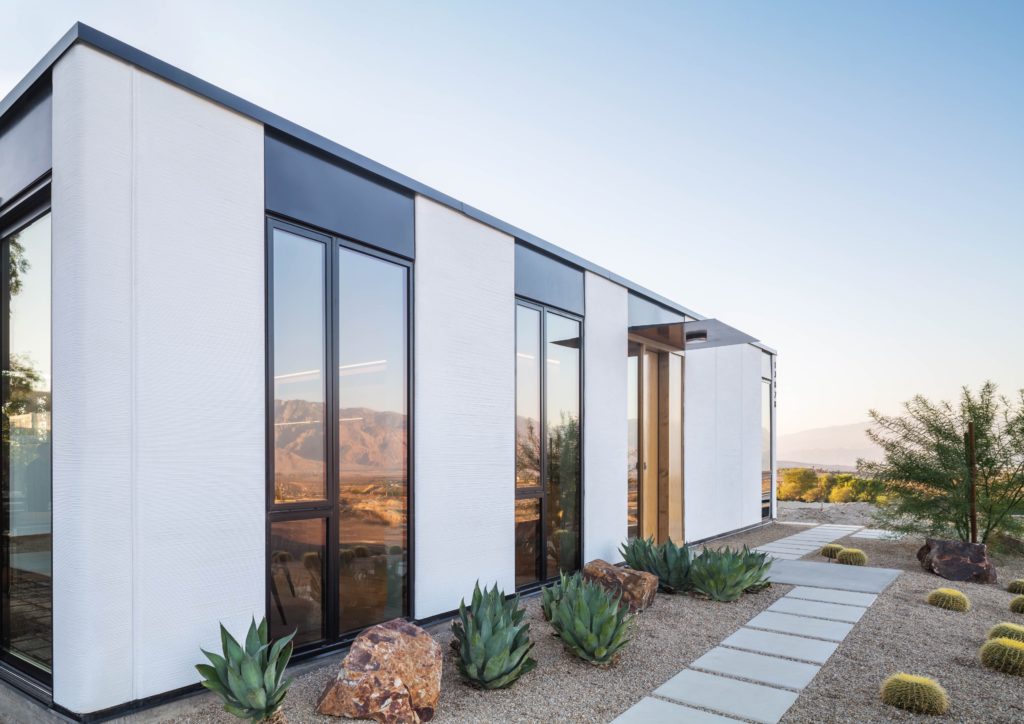
One company that is emblematic of the surprisingly wide range of manifestations for construction printing is Mighty Buildings. A manufacturer of prefabricated, concrete-free homes that are largely printed, Mighty Buildings delivers its product in kits to the local developers it partners with. Today, the company has announced the completion of its first such prefab home that qualifies as “Zero Net Energy” (ZNE) — and, in fact, according to Mighty Buildings, the first 3D printed ZNE home in the world, which is located in Southern California.
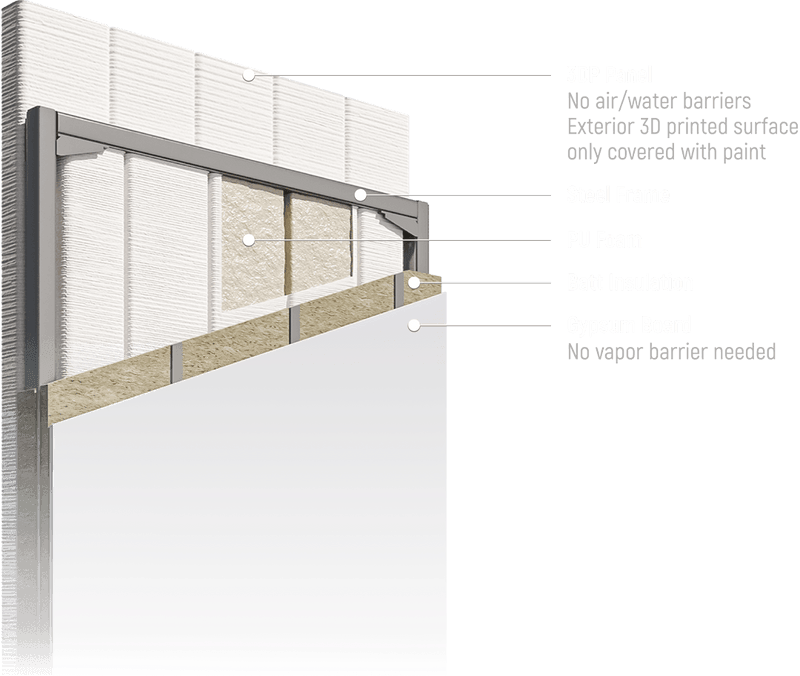
The idea of ZNE goes beyond the much more familiar concept of carbon-neutrality. Rather than “merely” canceling out the emissions of the build process during the course of its lifecycle, ZNE homes are designed and built to produce more energy than is used in the manufacture and distribution of their parts.
This is accomplished by achieving minimal waste in the supply chain and in the materials used, in combination with the homes’ utilization of renewable energy sources once they’re built. In Mighty Buildings’ case, the company builds solar panels into the roofs of its homes, and equips them with batteries for solar storage.

The company has also stated that, now that it has completed its first ZNE home, Mighty Buildings will focus on expanding its business-to-business (B2B) operations with developers, in an effort to accelerate its scale-up. And, in addition to Mighty Buildings’ inaugural ZNE home kit delivery/build and its increased B2B activity, the announcement also serves as news of a planned community of “40+” 3D printed units in Southern California — of which the home announced today is the first.
It is unclear if this community is a larger version of the same one that Mighty Buildings announced over a year ago, which was described as a 15 unit community in Rancho Mirage, CA, or if it’s a new project that was relocated elsewhere in Southern California due to the significant expansion of scale. In any case, now that the first home has been completed, Mighty Buildings has realistic potential to complete the entire project much faster than might be expected: its business model of off-site manufacturing, which saves cost, time, and energy.
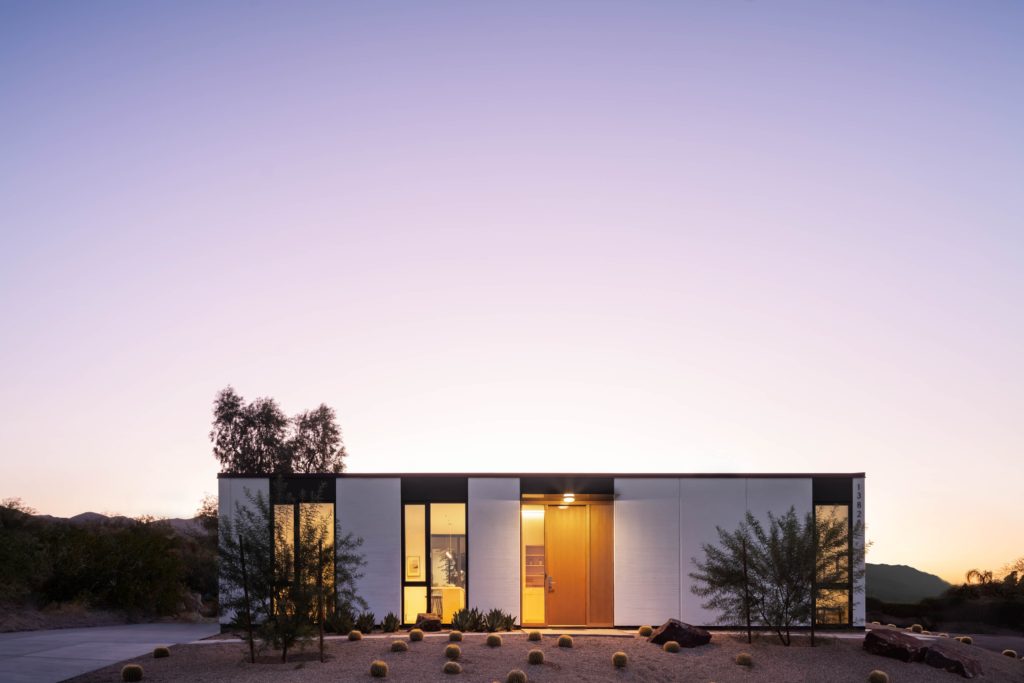
As small as the market segment might still be, the rate at which AC’s realistic potential has grown, just over the last couple of years, shouldn’t be overlooked. The fact that more actual American residences have been printed, and are in the process of being printed, since the first one was completed by Habitat for Humanity in Virginia last Christmas, already begins to suggest the extent to which that first build wasn’t simply a novelty.
Moreover, along with virtually everything else that costs money, rents have skyrocketed in 2022. And even if they temporarily stabilize, also along with virtually everything else that costs money, they will probably continue to stay high for the foreseeable future. The only way to make a dent in that will be to meaningfully increase housing supply, and AC could obviously be a useful tool towards that end. In terms of companies other than industry-leader COBOD, the fact that Mighty Buildings technology doesn’t put it up directly against the former — among all its other aforementioned assets — could give it a distinct edge as the market segment continues to grow.
Subscribe to Our Email Newsletter
Stay up-to-date on all the latest news from the 3D printing industry and receive information and offers from third party vendors.
Print Services
Upload your 3D Models and get them printed quickly and efficiently.













You May Also Like
Bedrock 3D Gets Investment from 819 Capital
After Bedrock 3D split from BASF, the company was independent but still a little unsure about its future. The former Innofil3D operation, later dubbed Forward AM Technologies Netherlands, was BASF’s main...
The State of the Desktop Filament Market 2026, Part 4: An OS for Reality
OK, so in this four-part series, we used a cutting-edge stealth mode AI business intelligence tool that outperforms all commercially available LLMs. We then gussied up the data using Google’s...
The State of the Desktop Filament Market 2026, Part 3: Special Hamburger Meat
Essentially, I used a cutting-edge stealth-mode AI tool that goes far beyond the capabilities of commercially available LLMs to conduct deep research into the desktop 3D printing filament market. I...
The State of the Desktop Filament Market 2026, Part 2: AI is a Fitful Day Drinking Intern
In this series, we’re using cutting-edge AI research tools, including an unreleased deep research tool to look at the desktop 3D printing filament market. We’re then comparing it with our...