Stratasys & Automation Intelligence Open North American Tooling Center in Flint


Stratasys has opened the North American Stratasys Tooling Center (NASTC) in Flint, Michigan, together with automation integrator and software firm Automation Intelligence. Stratasys wants the new center to help reduce costs, make supply chains more resilient, enable people to produce things locally, and make things without the need for stock. In the future, the company wants to spread these centers across the country. The NASTC can help scale production, as well as make new parts. End of arm tooling and North American Automotive Metric Standards (NAAMS) blocks are also targeted products that Stratasys wants to make at these centers.
Fadi Abro, Director of Global Automotive and Mobility at Stratasys, stated:
“This Center of Excellence will have a significant impact for manufacturers showing how additive fits into their production environment. With the launch of the NASTC, we are addressing real-world challenges at this new center. This incubator for advanced manufacturing is designed to enable teams to iterate, validate, and scale tooling applications rapidly. It sets the stage for designing solutions to meet the growing demand for localized, on-demand production solutions worldwide.”
Flint’s location is poignant, since it used to be an epicenter of the automobile industry and later symbolized the retreat of American manufacturing and all of its consequences for automobile manufacturing-centric communities. Perhaps some industry could flourish once again in Flint if it were more digitally centric and provided local value with an immediacy that China can’t match. Partially, of course, this is a fantasy; subsequent US governments applauded and looked on as an outsourcing trend expanded, hollowing out the US manufacturing base and reducing the number of good jobs on offer. Through exposure to joint ventures and outsourcing, China learned tooling, design, and manufacturing, and now masters these skills to a degree often unseen elsewhere. Now, Chinese firms are conquering the world, and competition is more diverse, cutthroat, and globalized than ever. The opportunity for the US to dominate global manufacturing has probably passed. But, some atrophied industrial capacity can perhaps be regrown, and some could find jobs making some things.
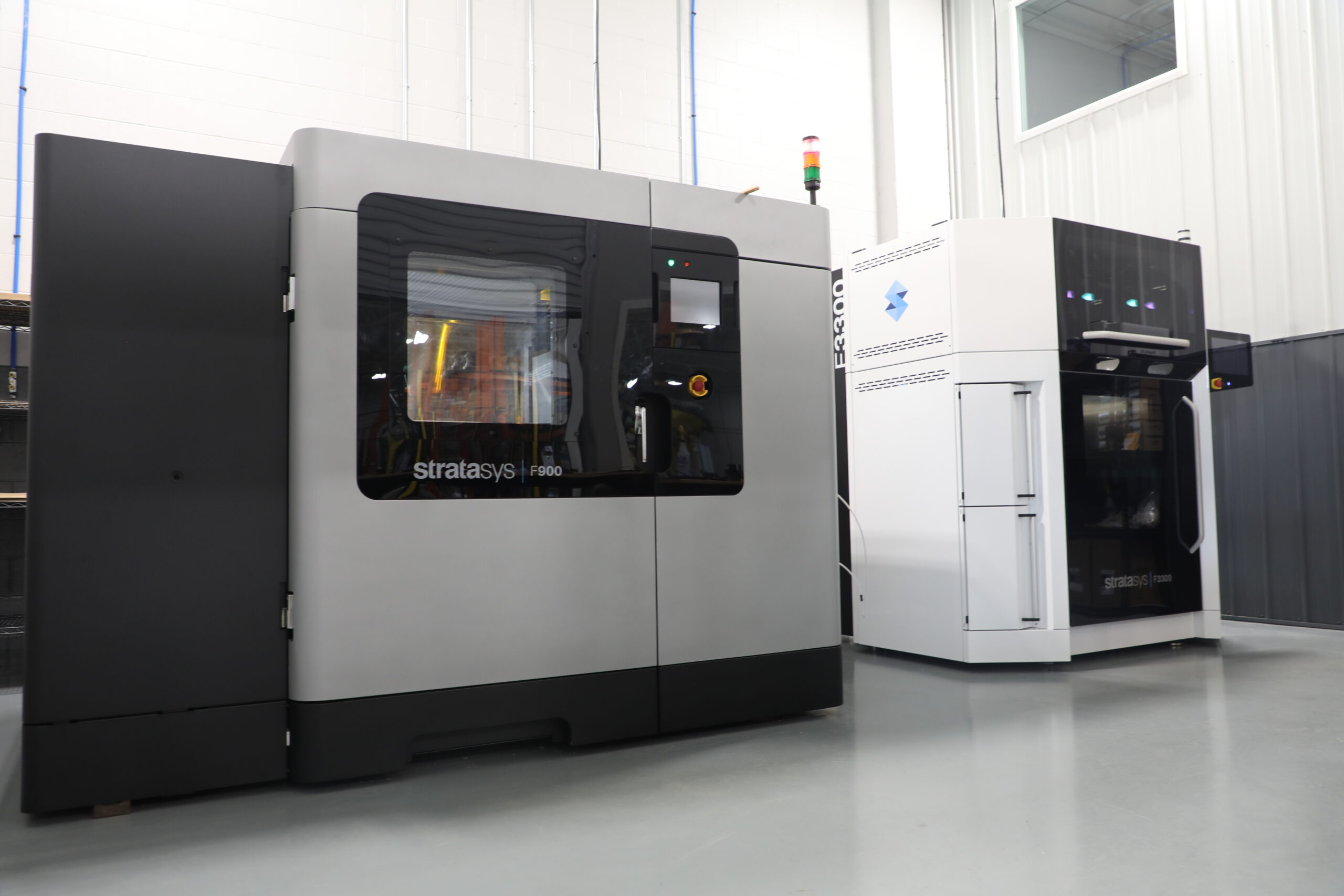
That in and of itself is not only a worthy goal, but would also be beneficial to Flint’s community. The NASTC has F3300 and F900 Material Extrusion 3D printers and is meant to enable quicker printing of jigs and fixtures. As more car models proliferate and are offered for shorter periods, there is an increased need for tooling, jigs, and fixtures at lower volumes. A longer-lasting metal tool is often not needed, and would be more expensive and possibly not ready in time. Polymer 3D printed tools are quicker to make and iterate, and generally more lean. Instead, many tools that could be improved are proliferating. Across manufacturing, the number of versions and SKUs is increasing, while products don’t last as long. Beyond automotive, therefore, this kind of setup could find a lot of customers.
Jeff McGarry, Managing Partner at Automation Intelligence, said:
“Tooling is the heartbeat of manufacturing. The NASTC offers an environment where manufacturers can see for themselves how additive tools can address today’s challenges with faster turnaround times, digital flexibility, and lower costs. We believe this partnership will demonstrate the positive impact additive can have across production.”
Customers can go to the center to evaluate the use of these tools, prove out business cases, test tools, and learn about additive. Examples of parts and tools could inspire leaders, and result in more additive use. I love this so much. This is exactly what a lot of companies need. You’re no longer selling boxes here, you’re showcasing possibilities. You don’t have to buy a machine up front and then take on all the risk. You don’t have to risk your career and take on the Capex first either. You can come in, check out what is actually possible, and learn. Then you can make a few tools and use them. Subsequently, you can use the center to learn more until you’re ready to buy a machine. Some clients may never buy machines, but instead would prefer for the center to make these products forever, which is fine and profitable. Others may, in this low risk way, learn faster and end up buying lots of machines. Overall, this approach will not only be less risky and expensive, but also faster. Everyone should do something similar to this to accelerate additive adoption.
Subscribe to Our Email Newsletter
Stay up-to-date on all the latest news from the 3D printing industry and receive information and offers from third party vendors.
Print Services
Upload your 3D Models and get them printed quickly and efficiently.













You May Also Like
Printing Money Episode 42: Q2 2026 Public Markets 3D Printing Earnings Analysis with Troy Jensen, Cantor
Welcome to Printing Money Episode 42. Troy Jensen (Managing Director, Cantor) returns, joining Danny Piper (Managing Partner, NewCap) to review Q2 2026 publicly traded 3DP/AM company earnings reports. Troy’s quarterly...
3DPOD 314: Debinding, Sintering, and Metal Binder Jetting with Stefan Joens, Elnik Systems and DSH Technologies
Stefan Joens of Elnik Systems sells ovens. Their debind and sintering equipment powers a lot of high-volume binder jet and MIM production. We learn about Elnik and its origins. But...
The Frankenservice Part 1: Print the Rainbow
So far, most service bureaus and manufacturing companies stick to what they know. Not only for OCD reasons, but gleaming lines of identical LPBF machines are also arrayed on impossibly...
3DPOD 313: Patient-Specific 3D Printing with Ruben Wauthle, Amnovis
Ruben Wauthle studied at Leuven University at a very serendipitous time. Through working with pioneering additive professors and surgeons, he entered into a specialty that was emerging. He joined pioneering...