Siemens Energy and DNV Automate Metal 3D Printing Quality Control and Certification

Global risk management company DNV GL has partnered with Siemens Energy to advance metal AM beyond the existing piecemeal solutions for quality control and certification. Siemens Energy’s experts in Finspång, Sweden, have created an automated quality control platform dubbed AM Cockpit which is being coupled with DNV’s Independent Quality Monitor (IQM) quality assurance tool. Together the two products are able to perform automated and remote certification that printed parts can be checked against an approved master print.
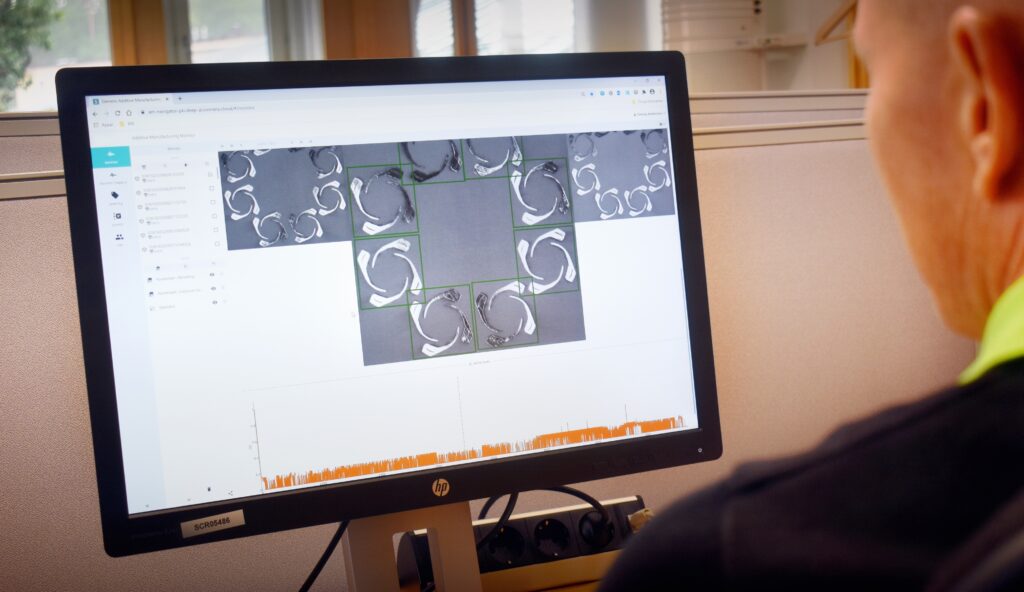
A screen shot from the AM monitor showing the printing in progress.
AM Cockpit collects sensor data streams and powder bed images from the manufacturing process in PBF systems, creating a digital summary of each printed part and highlighting problematic locations of a component. At the same time, IQM monitors data quality continuously via new algorithms and compliance logic. The IQM was developed within the EU-project InterQ project for zero-defect manufacturing.
Established Metal 3D Printing Track Records
As one of the earliest adopters of metal AM for industrial end-part production, Siemens has established itself as a leader in the space. Its newly separated Siemens Energy business went through the rigorous process of testing, qualifying, and achieving repeatability with metal laser powder bed fusion (LPBF) of gas turbine blades.
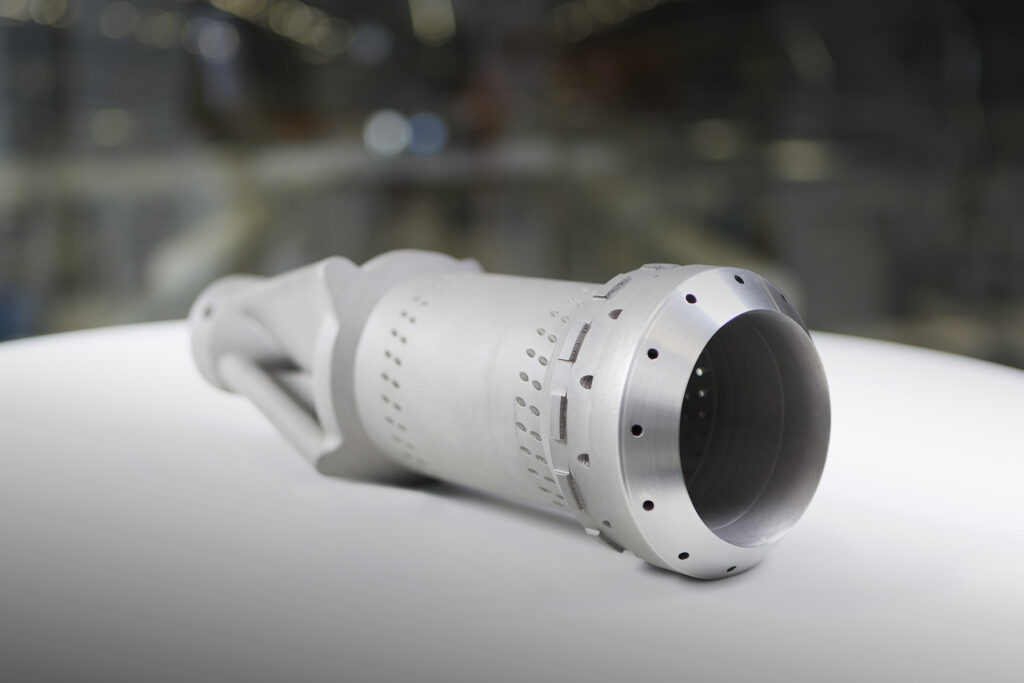
A 3D printed burner-front with about 8700 layers of high-temperature Nickel superalloy. The printing process takes about a week and is performed in a L-PBF machine with a quadruple laser system designed for serial manufacturing. The advanced geometrical shapes possible with 3D printing are particularly valuable for improved mixing of fuels and air, as well as for better cooling of the flame-exposed surfaces.
Now, it’s in the process of extrapolating that experience to the rest of the world. This included the launch of an industrial AM service network, MakerVerse, and the licensing of its data to Senvol. The latest move with DNV will see it participate in the inspection and certification of metal 3D printed parts. For its part, DNV has been leading the way in certification of 3D printed components, particularly for industries like oil and gas, as well as offshore and marine, having initiated its First-Class Approval program in 2014.
3D Printing in Decarbonization
The partnership gives both entities secure spots in not only the world of 3D printing, but in quality control for the energy 3D printing sector. As 3DPrint.com Macro Analyst Matt Kremenetsky explained in the first post in his AM Drilldown series, “The rise of AM is, above all, an energy issue, because the technology has the potential to affect humanity’s need to manage its energy consumption from both the demand and supply sides.”
Greater energy efficiency enabled through redesigned, 3D printed components will decrease energy usage and, as a result, greenhouse gas pollution (barring issues related to Jevons paradox). In turn, AM represents possibly the lowest-hanging fruit for decarbonization, explaining why so much government funding has been directed to the technology in the last year alone.
While DNV certifies these parts, Siemens Energy has focused on a key aspect of energy production that will is crucial for any number of energy generation techniques: gas turbines. Today, the majority of gas turbines rely on fossil fuels, but as hydrogen shifts to become a green technology, it will require the same improved efficiency that Siemens is applying to natural gas.
“Thanks to its design freedom, AM is the core technology that allows Siemens Energy to develop and modify gas turbines to run on green fuels, such as hydrogen,” said Hans Holmström, CEO of Siemens Energy in Sweden.
Images courtesy of DNV.
Subscribe to Our Email Newsletter
Stay up-to-date on all the latest news from the 3D printing industry and receive information and offers from third party vendors.
Print Services
Upload your 3D Models and get them printed quickly and efficiently.













You May Also Like
Kickstarter is Testing the Next Wave of Desktop 3D Printing
3D printers are raising serious money again…on Kickstarter, that is. Over the last few months, a new group of 3D printer campaigns has attracted millions of dollars and thousands of...
Stratasys vs. Bambu Lab: What’s Really Behind the $27.6M Patent Verdict?
Editor’s note: This is Part 1 of a two-part series by Xu Fanglei examining the technology and patent issues behind the Stratasys-Bambu Lab dispute. Part 1 looks at the U.S....
Bambu Lab and SUSAN FANG 3D Print for London Fashion Week
At London Fashion Week, some of the more unusual pieces on the runway came from 3D printers. Chinese fashion designer SUSAN FANG presented her Spring/Summer 2027 Air-Illusion collection at the...
Stratasys Wins $27.6M in Patent Case Against Bambu Lab; Bambu Challenges Verdict
Update, September 21, 2026: This article has been updated with a statement from Bambu Lab responding to the verdict, along with additional information about the company’s ongoing patent challenges against...