WASP 3D Prints Organic Display for 23rd Triennale Milano International Exhibition

WASP sets itself apart from any other additive construction (AC) firm by focusing as much on form as it does on function. Of course, WASP is able to do that precisely because its business philosophy is built on an objective of maximizing the functionality of its architectural designs. This is just one of the many ways in which the company, named for the potter wasp, displays the inspiration that it draws from nature.
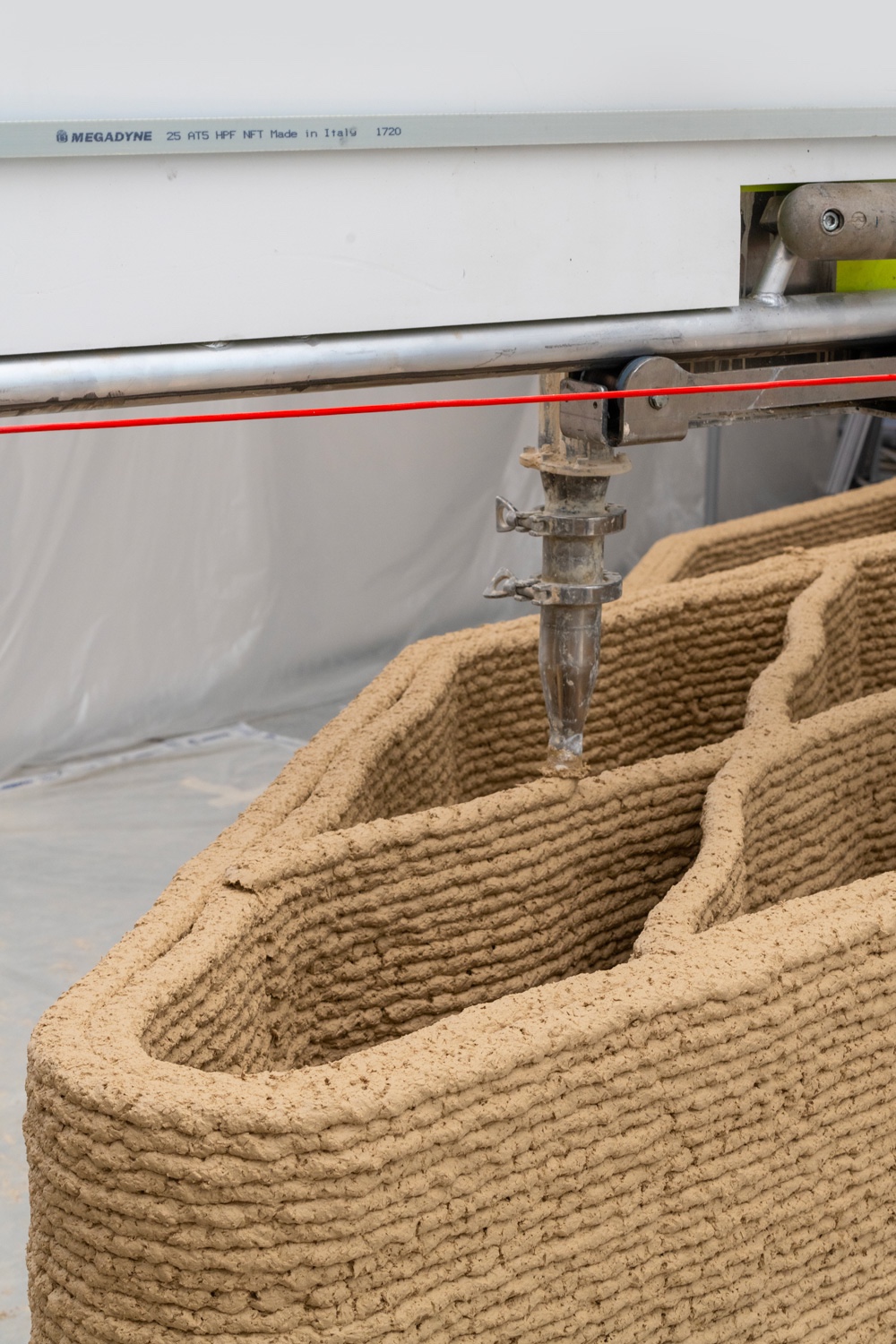
The latest build by WASP (an acronym for “World’s Advanced Saving Project”) epitomizes this perfect balance between function and form. Additionally, the build is accentuated by its serving as the backdrop for a particularly dramatic setting: the 23rd Triennale Milano International Exhibition, currently on display until December 11, 2022. The Triennale, which will be celebrating its 100th anniversary next year, is a globally-influential exhibition for art and design held at the Triennale di Milano museum, in Milan, Italy.
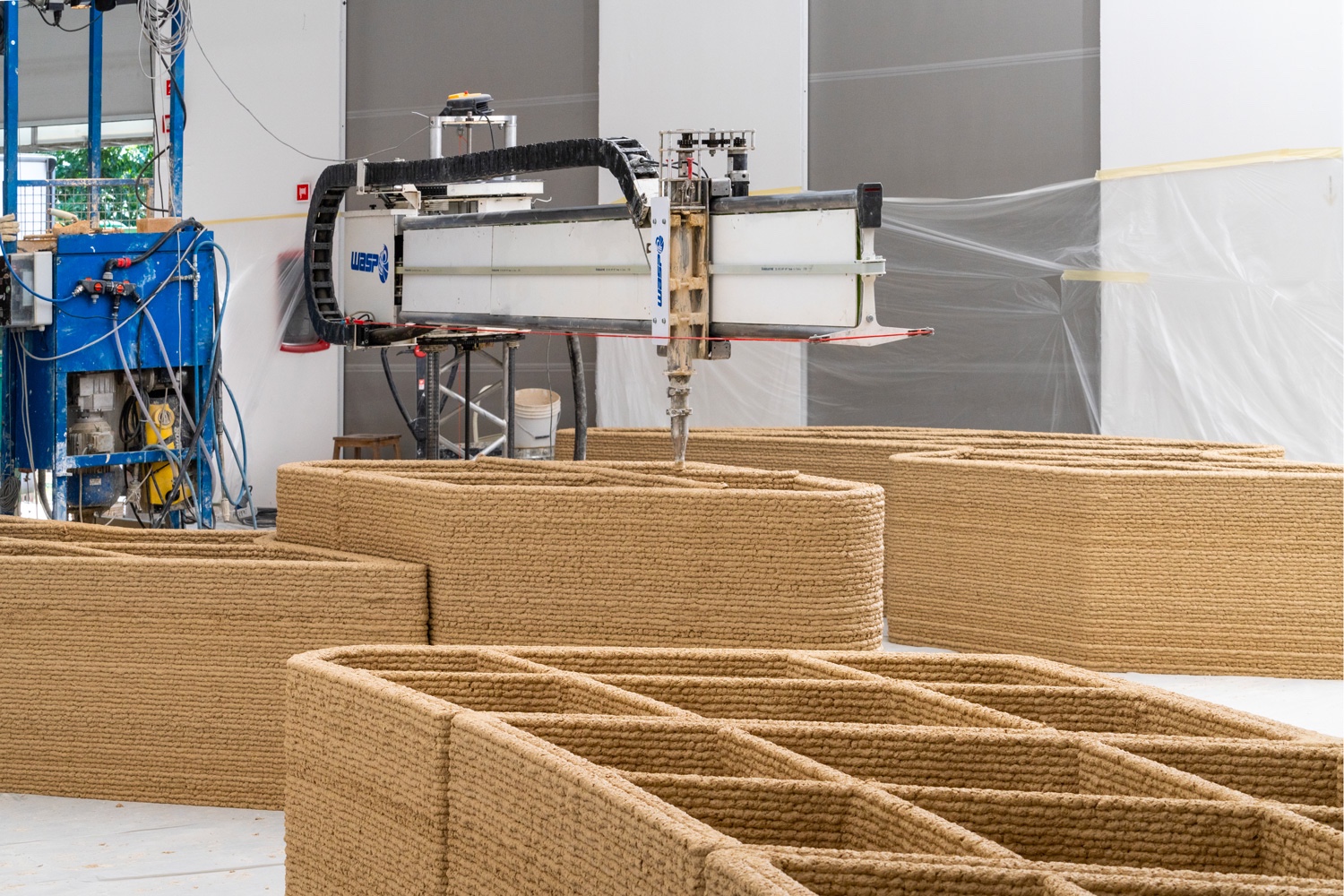
For this year’s event, titled Unknown Unknowns: An Introduction to Mysteries, the staging for all the pieces on display were printed by WASP. Fittingly, one of the central themes for the show was “gravity, the greatest designer”.
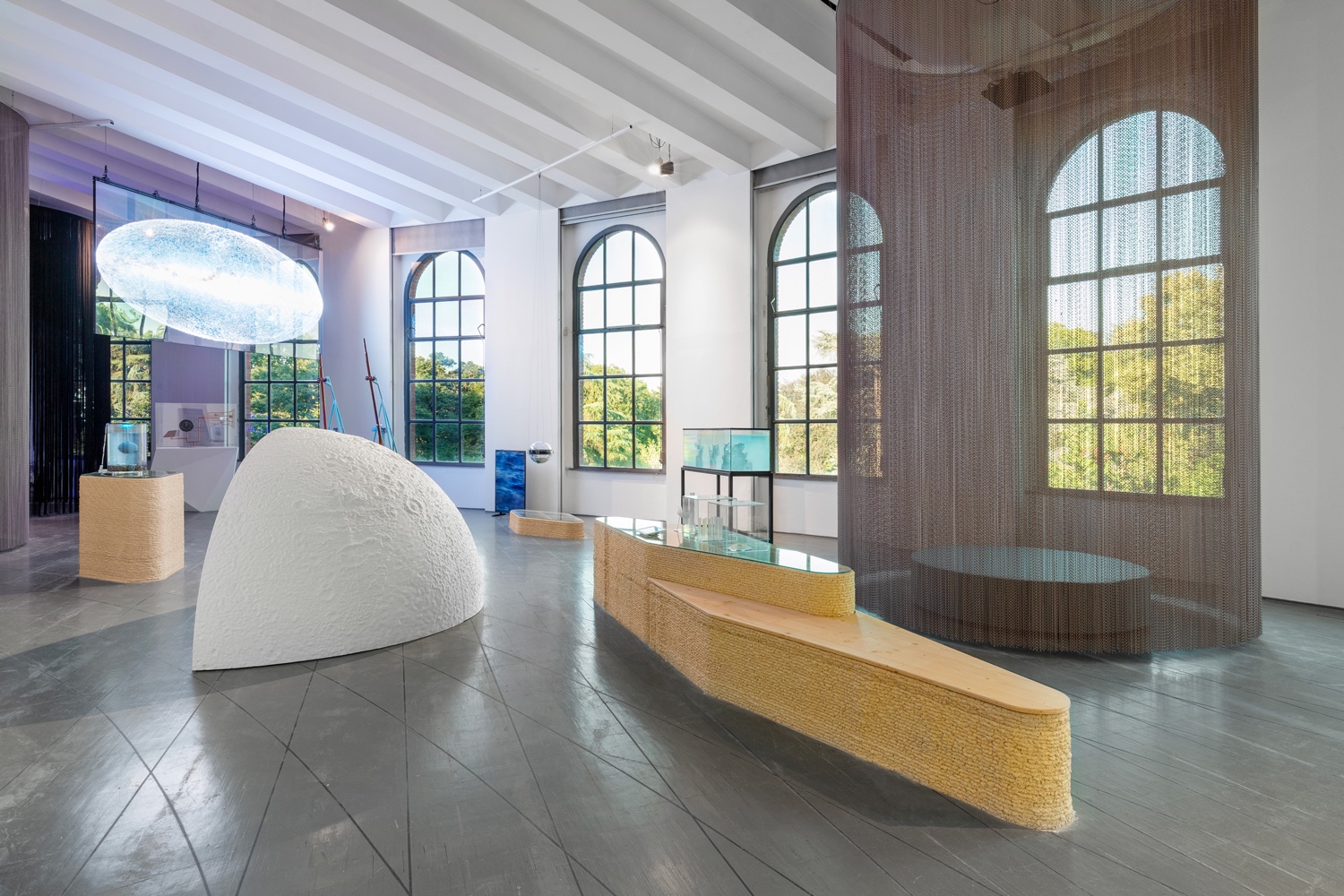
Using its flagship, modular construction printer, called the Crane WASP, the company constructed on-site a variety of organically-shaped platforms based on designs by Space Caviar, the world-renowned Italian architecture and research studio. As the company notes in a press release about the project, this was the first time in history that the staging for the pieces at the Triennale were built inside the museum itself.
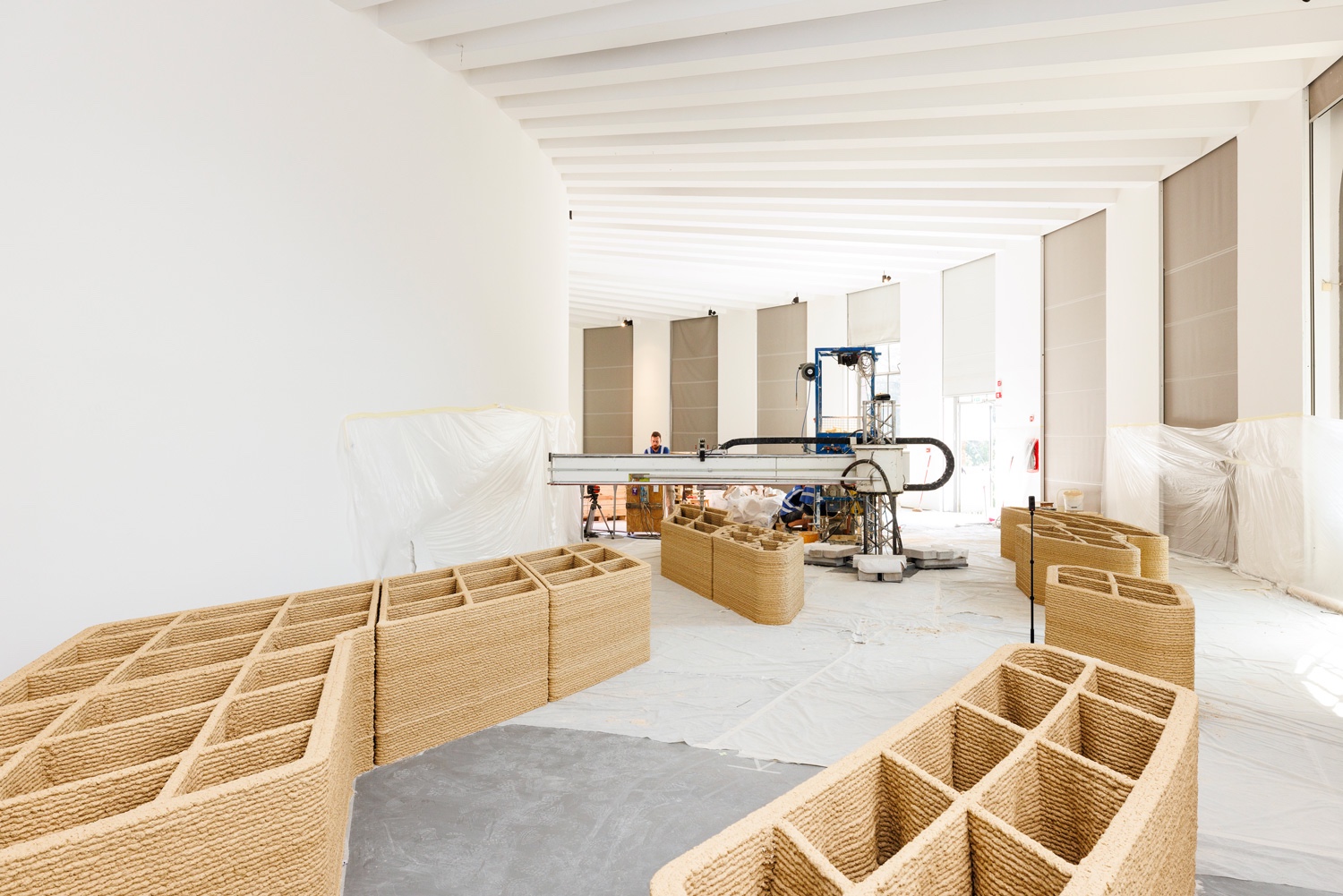
In keeping with WASP’s mission to minimize environmental destruction and uphold the principles of a circular economy, the staging was printed entirely from organic materials, made mainly from food industry waste. In less than 2 weeks, WASP printed 32 different pieces for the exhibition.
Since the preponderance of the additive manufacturing (AM) sector now seems to be devoted to coming up with new ways to make weapons for the military, it’s easy to forget that art and design was, for a long time, the realm where AM was taken the most seriously. The most admirable thing about WASP is its dedication to proving that this doesn’t have to be a thing of the past. Indeed, it’s virtually impossible to imagine the staging for an art exhibit being designed and manufactured according to conventional processes, and managing to steal the show.
Subscribe to Our Email Newsletter
Stay up-to-date on all the latest news from the 3D printing industry and receive information and offers from third party vendors.
Print Services
Upload your 3D Models and get them printed quickly and efficiently.













You May Also Like
Kickstarter is Testing the Next Wave of Desktop 3D Printing
3D printers are raising serious money again…on Kickstarter, that is. Over the last few months, a new group of 3D printer campaigns has attracted millions of dollars and thousands of...
Stratasys vs. Bambu Lab: What’s Really Behind the $27.6M Patent Verdict?
Editor’s note: This is Part 1 of a two-part series by Xu Fanglei examining the technology and patent issues behind the Stratasys-Bambu Lab dispute. Part 1 looks at the U.S....
Bambu Lab and SUSAN FANG 3D Print for London Fashion Week
At London Fashion Week, some of the more unusual pieces on the runway came from 3D printers. Chinese fashion designer SUSAN FANG presented her Spring/Summer 2027 Air-Illusion collection at the...
Stratasys Wins $27.6M in Patent Case Against Bambu Lab; Bambu Challenges Verdict
Update, September 21, 2026: This article has been updated with a statement from Bambu Lab responding to the verdict, along with additional information about the company’s ongoing patent challenges against...