WASP Introduces the Modular WASP Crane Construction 3D Printer


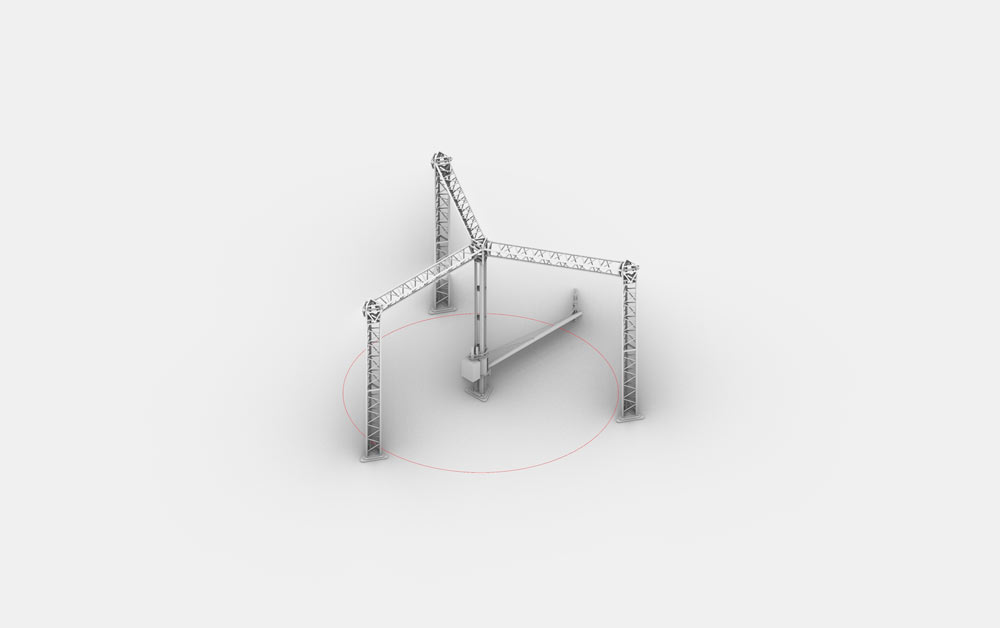 WASP, or the World’s Advanced Saving Project, is a versatile company with a reach that extends into multiple industries, from medicine to food and much more. But what it has perhaps become most well-known for is its large-scale construction 3D printers, with which it is currently working to 3D print an entire village. For the past two years, the company has been working on the development of a new construction 3D printer, and will be presenting it to the public on October 6th and 7th, where the village of Shamballa is being constructed.
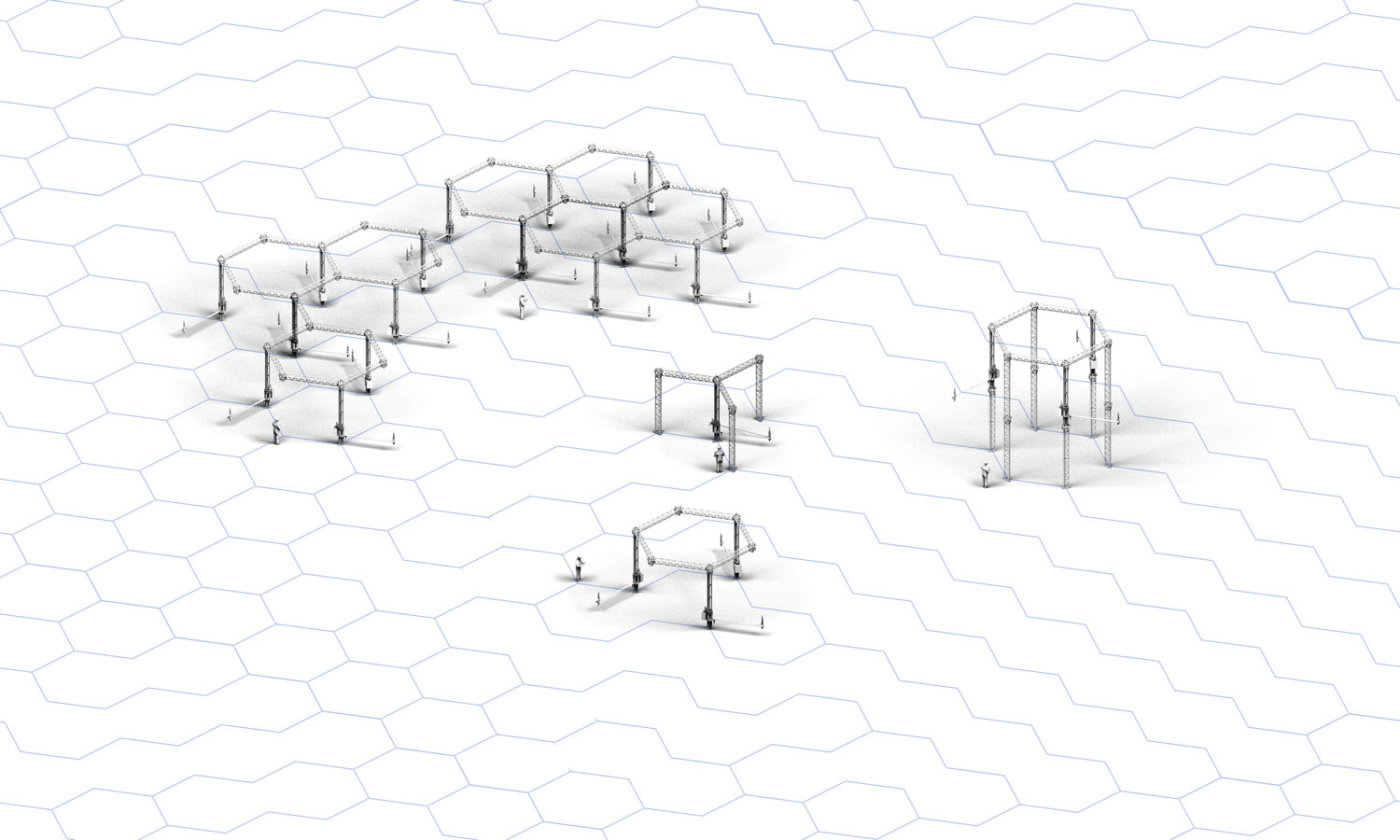 The WASP Crane, which has been dubbed “the infinity 3D printer,” is a modular 3D printing system with different configurations to choose from. It evolved from the BigDelta 12M, and is made from the same components, which can be assembled and disassembled for easy transport. The single module can work self-sufficiently to print cement, natural materials, etc. That module can then be expanded by adding traverses and printer arms.
“It is not necessary to ‘cover’ the entire area involved in the construction with the printing area of the WASP Cranes because they can be reconfigured and can advance with generative attitude depending on the growth and shape of the building,” WASP states. “More WASP Cranes, when working together, have a potentially infinite printing area and can be set by the on-site operators following the evolution of the architectural project.”
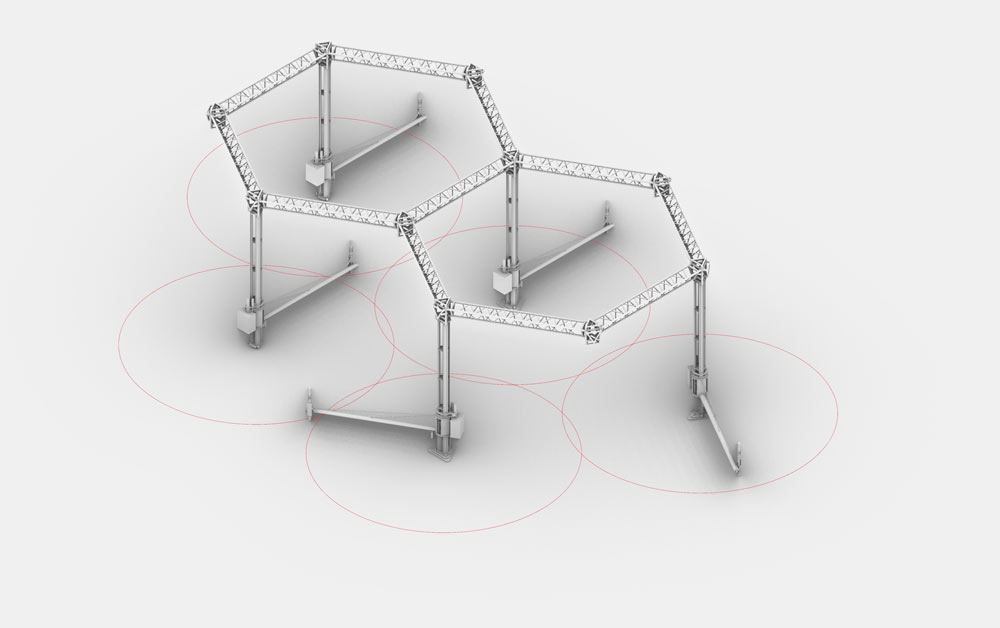 The print area of the single module is 6.60 meters in diameter by 3 meters in height. The WASP Crane takes up a smaller footprint than the BigDelta 12M without reducing print area, and is designed to print with local on-site materials with the addition of natural fibers. It is available as part of the Maker Economy Starter Kit, which was introduced two years ago and includes everything a user needs for complete 3D printed self-sufficiency. It allows customers to build their own villages using 3D printing if they so choose.
The first structure 3D printed with the WASP Crane is called the Gaia Module, a livable tiny house complete with insulation and coatings. The structure is 3D printed from soil, with rice husks and straw added to the interior of the 3D printed walls.
An entire program will take place on the 6th and 7th of October surrounding the introduction of the WASP Crane and the Gaia Module. Visitors who travel to Shamballa will be able to enter and experience the Gaia Module, and can attend information sessions on the village of Shamballa, large-scale construction and green building, 3D printed hydroponics and more. You can learn more about the event here.
The village of Shamballa is a long-term project – you can’t build an entire village in a day, after all – but has been making excellent progress, and the WASP Crane is another addition to the arsenal of 3D printers working to construct the world’s first entirely 3D printed town. WASP has done some truly remarkable things with its 3D printers, and the company is now opening up its site to the public so that they can see the progress that has been made and the tools with which anyone can build their own self-sufficient living spaces. You can see the WASP Crane in action below:
Discuss this and other 3D printing topics at 3DPrintBoard.com or share your thoughts below.
[Images: WASP]
Subscribe to Our Email Newsletter
Stay up-to-date on all the latest news from the 3D printing industry and receive information and offers from third party vendors.
Print Services
Upload your 3D Models and get them printed quickly and efficiently.













You May Also Like
HeyGears G1 Passes $14M on Kickstarter with Full-Color 3D Printing
HeyGears was started in 2015 and has been making value-driven Vat Polymerization systems for dental and home use. The company is marketing savvy and very driven. Now the firm has...
3D Printing News Briefs, August 26, 2026: Meshy 7, 4D Printed Implants, & More
We’re kicking things off today with software news, as the new Meshy 7 is now live. Then we’ll move on to business, with ExOne and voxeljet now operating as a...
Hi3D V3.0 Launches Industry’s First Commercial 2048³ Ultra-High-Precision AI 3D Model, Free for 48 Hours
Hi3D, the all-in-one AI 3D creation platform, has launched Hi3D V3.0, the industry’s first commercially available AI 3D model with 2048³ voxel resolution. The new version is designed to dramatically...
One Machine, Three Worlds of Creation: Inside the HeyGears G1 Series
Turning a digital idea into a finished full-color physical product often requires several machines, multiple software tools, manual coloring, repeated positioning, and outsourced production. For creators and small businesses, this...