6K & Freemelt Partner to Bring Refractory Metal 3D Printing Powders to Market

6K Additive, an ISO:9001 facility and business division of sustainable advanced AM materials leader 6K, reclaims and processes over a million pounds of Ti-64 a year, and last year completed a 45,000 square foot powder production facility in Pennsylvania. 6K uses proprietary plasma processing and industrial systems to create its materials, and has brought in a lot of funding over the last two years. Now it’s announced a strategic partnership with Swedish high-tech growth company Freemelt, which developed an open source solution for 3D printing. Together, these two companies plan to develop and commercialize new refractory metal powder materials for Freemelt’s Electron Beam Powder Bed Fusion (E-PBF) printer platform.
“Since the commercial launch of refractory metal powder we’ve seen a ton of interest in refractories specifically tungsten. Freemelt is an organization that prides itself on working with the market for parameter development on their platform to help customers push the capabilities of 3D printing for applications that require high-performance parts and materials like tungsten,” said Frank Roberts, president of 6K Additive.
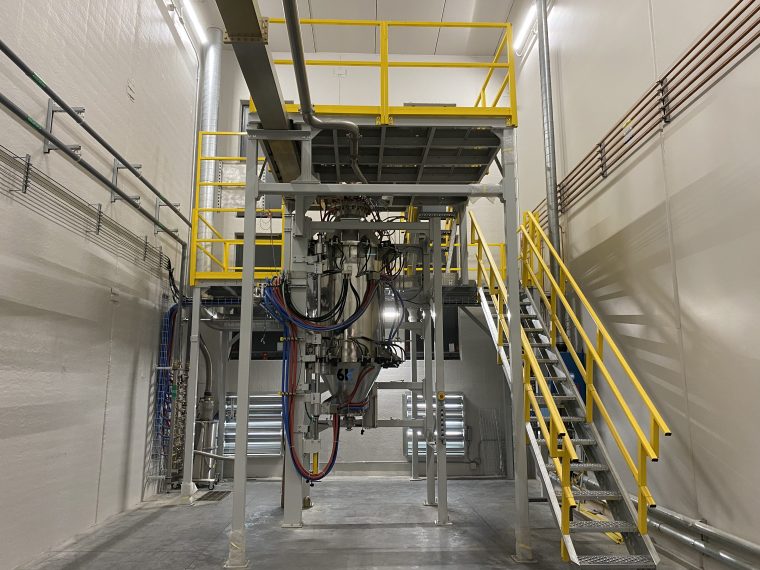
6K’s UniMelt microwave plasma recycles feedstock into premium AM-ready metal powder. Image courtesy of 6K.
With its award-winning continuous UniMelt process—said to be the only microwave production scale plasma in the world—6K has total control over material engineering and can achieve materials at very exacting specifications. Its new facility already commissioned two UniMelt microwave plasma systems, and are scheduled to finish up two more by the end of 2021, which is fast approaching. 6K will also start construction on an expansion of its powder manufacturing building, which will have space for six more UniMelt systems, slated for installation in Q1 of 2022.
6K has the necessary scale and expertise to create refractory performance powders, and pairing these materials with Freemelt’s E-PBF printers will make it possible to deliver more advanced AM applications, such as for the aerospace and medical sectors, which definitely require materials with high-performance properties. Another major application that could benefit from quality performance refractory materials is hypersonics, as tungsten is often used here because it can stand up under forces from altitude dynamics, speed, and shifting directions, as well as extreme temperatures.
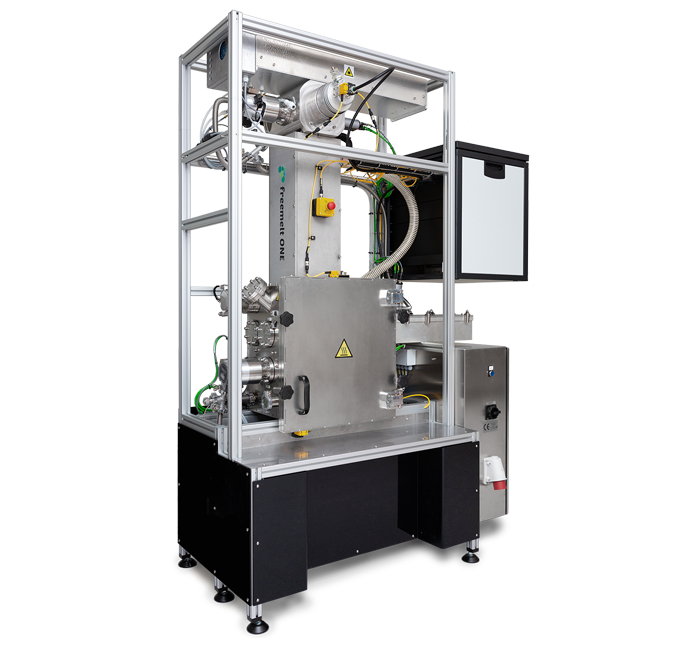
The Freemelt ONE open source E-PBF 3D printer. Image courtesy of Freemelt.
“The market is consistently asking us for performance materials and partnering with 6K Additive gives us and our customers a material supplier that not only delivers high-quality metal powder but is quickly commercializing the sought-after performance materials like tungsten and other refractory metals,” said Dr. Ulric Ljungblad, CEO of Freemelt. “The new partnership helps us and them push the limits of what’s possible with 3D printing.”
For its part, Freemelt is continuing to work on advancing its open source Freemelt One platform, with announcements of new customers like the Polytechnic University of Turin in Italy and the KTH Royal Institute of Technology in Sweden. The company also recently announced global expansion plans with its German market subsidiary, and is attending Formnext 2021 in Frankfurt this week. Visit the company at Booth 138, Hall 12.0, to see a Freemelt One system and printed parts on display, in addition to 6K Additive’s tungsten powder.
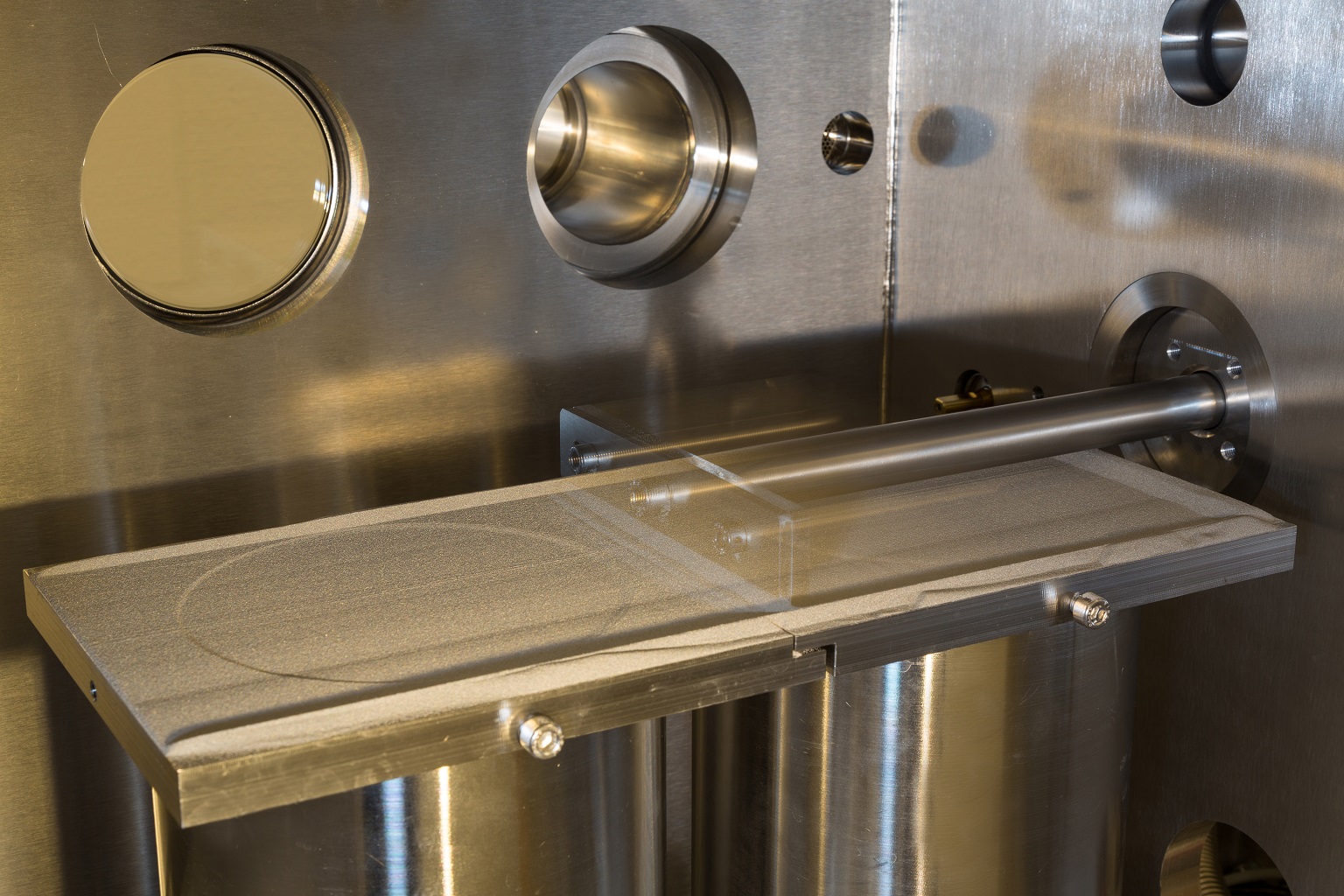
The powder distribution of the Freemelt One E-PBF 3D printer.
Subscribe to Our Email Newsletter
Stay up-to-date on all the latest news from the 3D printing industry and receive information and offers from third party vendors.
Print Services
Upload your 3D Models and get them printed quickly and efficiently.













You May Also Like
10 Years of Multi Jet Fusion: Onsite at HP’s Vancouver, Washington Facility
At this year’s RAPID event in Boston, HP Additive Manufacturing Solutions celebrated ten years in the additive manufacturing (AM) market. The company ushered in the milestone with several innovations, including...
These 3D Printed Lattices Can Sense Damage Before Failure
A new paper, “Full-Field Damage Monitoring in Architected Lattices Using In situ Electrical Impedance Tomography,” points to lattices being able to detect damage. This could really help composites in critical...
3D Printing News Briefs, October 3, 2026: Hypersonics, Hotends, & More
We’re starting off with defense in this weekend’s 3D Printing News Briefs, as Titomic was awarded a $5 million U.S. defense contract, and VulcanForms announced a partnership with Specter Aerospace...
3D Printing News Briefs, October 1, 2026: Defense, Enclosures, & More
In today’s 3D Printing News Briefs, we’re starting with defense news, first from Massivit and then from AML3D. Then we’ll move on to U.S. manufacturing of a new large-format LPBF...