Large Carbon Fiber 3D Printing from AREVO Now Available in France


France’s Multistation is steadily increasing its product portfolio in France. Upon adding silicone 3D printing to its lineup, the company has announced that it will be distributing AREVO’s large-format composite 3D printing services. This both diversifies the materials capabilities at the French firm and gives AREVO a broader reach in Europe.
AREVO has already made a name for itself as a large-format composites 3D printer manufacturer with the most momentum in the space. While Continuous Composites and Impossible Objects offer their own takes on large-scale composites 3D printing, AREVO, backed by the CIA’s In-Q-Tel, has been on the market longer with a greater number of commercial applications, such as bikes and scooters, already being validated.
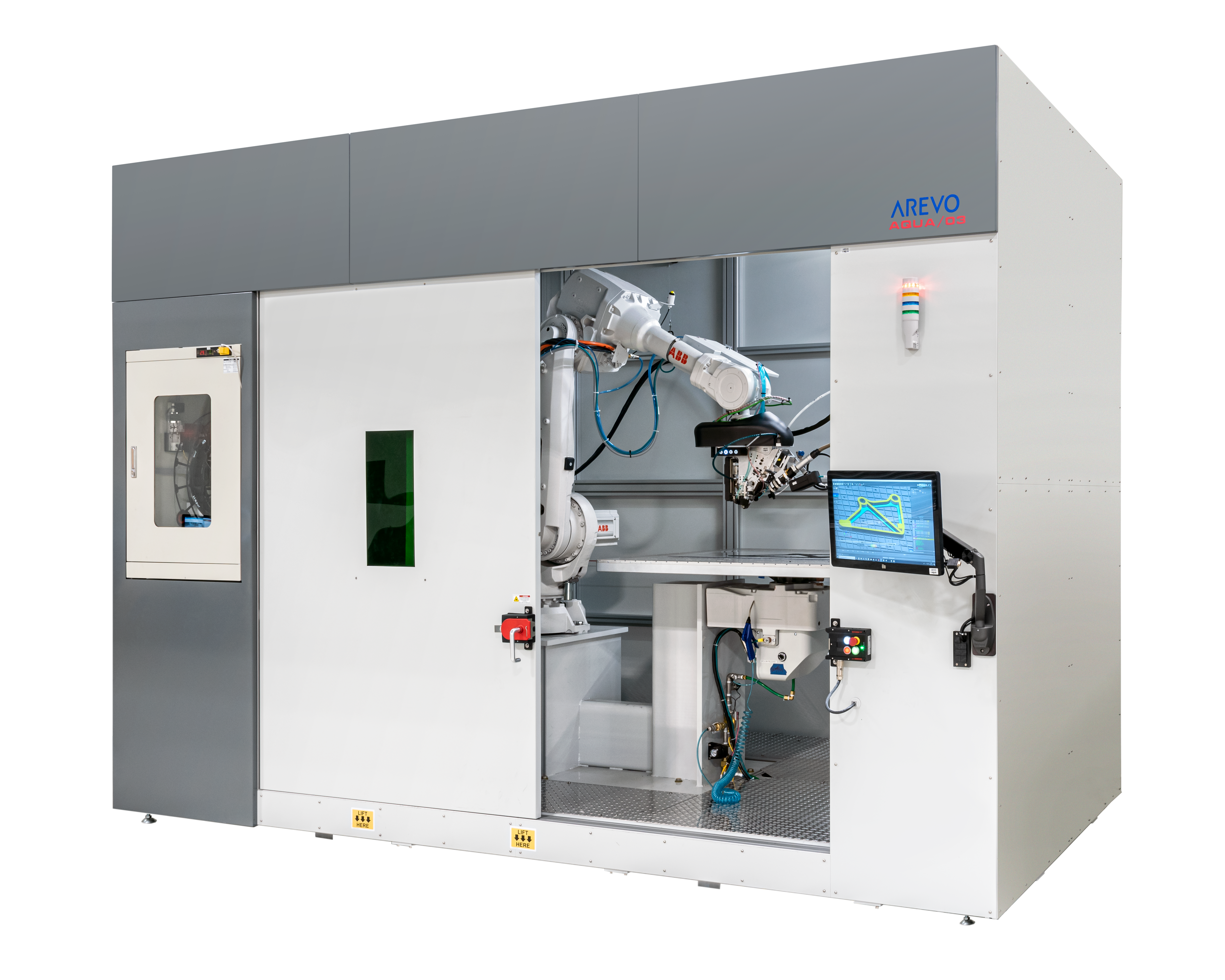
AREVO “Aqua” 3D Printing System for Composite Parts
Its technology is capable of 3D printing continuous carbon fiber-reinforced Nylon 12 parts with a volume up to 1000x1000x830 mm in size. Filament is first treated by a laser before it is compressed by a roller and deposited onto a print bed. It has apparently set up a print farm in Vietnam where its AQUA 3D printers mass produce composite parts. (Side note: this author has questions about a CIA-backed firm working in Vietnam, but it’s probably nothing?)
By partnering with Multistation, the Bay Area startup gets a foot into the European parts market, where RICOH has already been offering large-format composite parts made by Impossible Objects’ technology. Multistation has been in business since 1987 and provides a range of products and services, from metal 3D printing and finishing to selling new and used additive manufacturing equipment. The product portfolio is diverse and includes desktop continuous carbon fiber from Anisoprint, large-format from AREVO, and absolutely massive from Ingersoll.
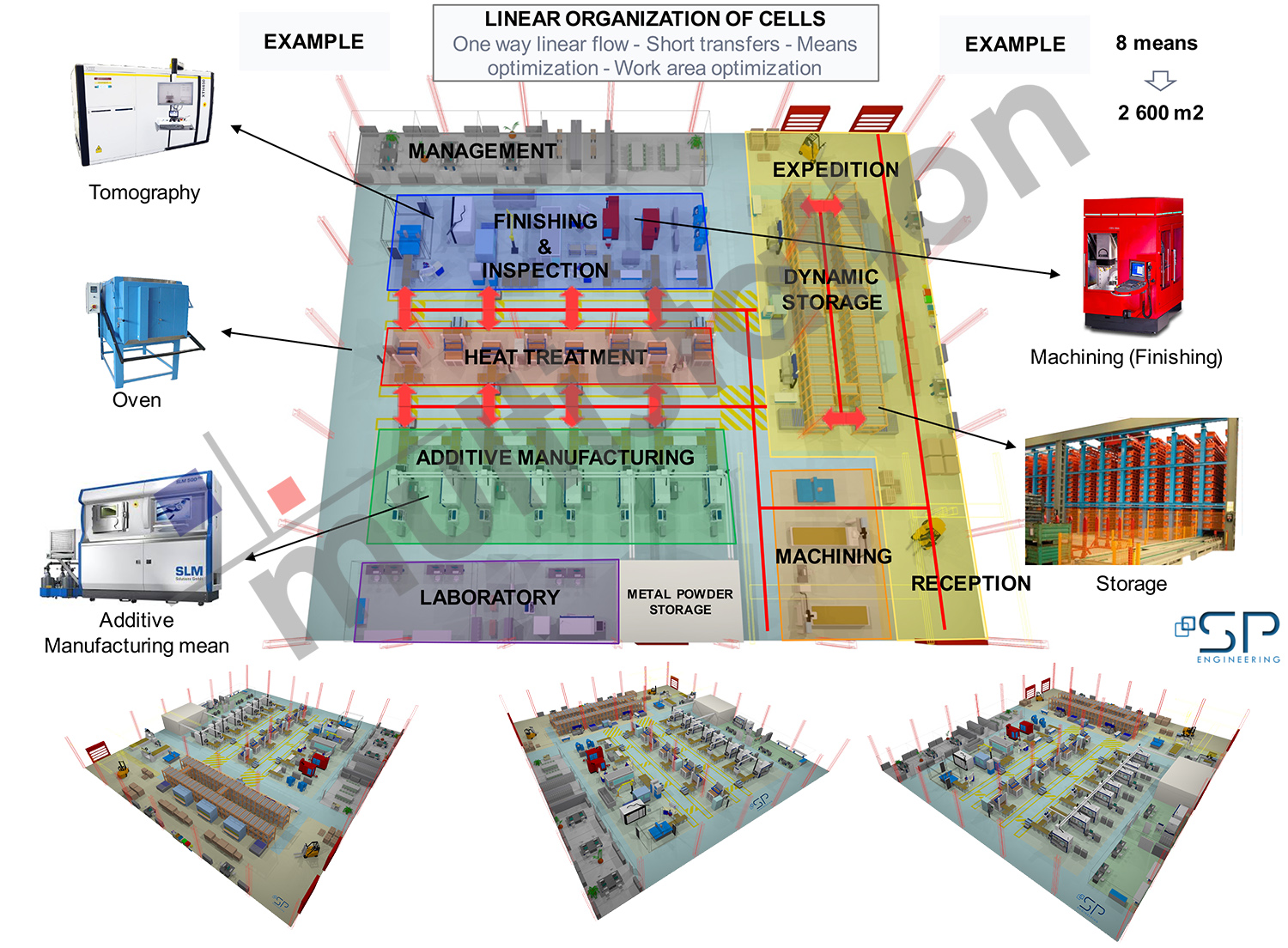
Multistation’s Haining Additive Manufacturing Competence Center. Image courtesy of Multistation.
Given the breadth of its work, it won’t be a surprise if Multistation doesn’t become increasingly well-known in the U.S. Meanwhile, we can expect AREVO’s technology to become more widespread globally.
Subscribe to Our Email Newsletter
Stay up-to-date on all the latest news from the 3D printing industry and receive information and offers from third party vendors.
Print Services
Upload your 3D Models and get them printed quickly and efficiently.













You May Also Like
AM Investment Strategies 2026 Sets the Stage for AMS 2027
AM Investment Strategies 2026 Nov. 5 · 12 p.m. ET · Free online event RESERVE YOUR SPOT ↗ A one-hour online discussion featuring some of the biggest names in 3D...
With Its Latest $200M Round, ICON May Be Running Away With the 3D Printed Construction Market
I used to view ICON, the Austin-based additive construction (AC) firm, as one of a handful of companies that could realistically consider itself the leader of the 3D printed construction...
How Should Businesses Build New Business? Dirk Simon Weighs In — Part 1
Dirk Simon had deep experience in materials and chemistry before joining the 3D printing industry. Instrumental in BASF and Farsoon’s market introduction, Dirk has spent a lot of time thinking...
3D Printing Services Near $2.5B as AM Market Shifts Beyond Hardware
The additive manufacturing market may be growing again, but one of the more interesting numbers behind that recovery has little to do with selling 3D printers. AM services generated nearly...