Czinger Unveils 1232-HP Hypercar with 3D Printed Parts

Those familiar with the additive space will likely be aware of Divergent 3D, an interesting startup that has wowed readers and auto show attendees with its supercars made with 3D printing. The company still exists and is 3D printing parts for high performance vehicles but seems to be doing so under a separate subsidiary. Its latest project is a vehicle with a whopping 1,232 horsepower engine.
Divergent 3D’s Blade super car featured a very unique concept: a modular design made up of 3D-printed metal nodes that would connect together various parts of the car’s chassis, including carbon fiber rods. With a power-to-weight ratio twice that of a Bugatti Veyron, the Blade was able to achieve 0 to 60 mph acceleration in just 2.2 seconds, faster than a McLaren P1.
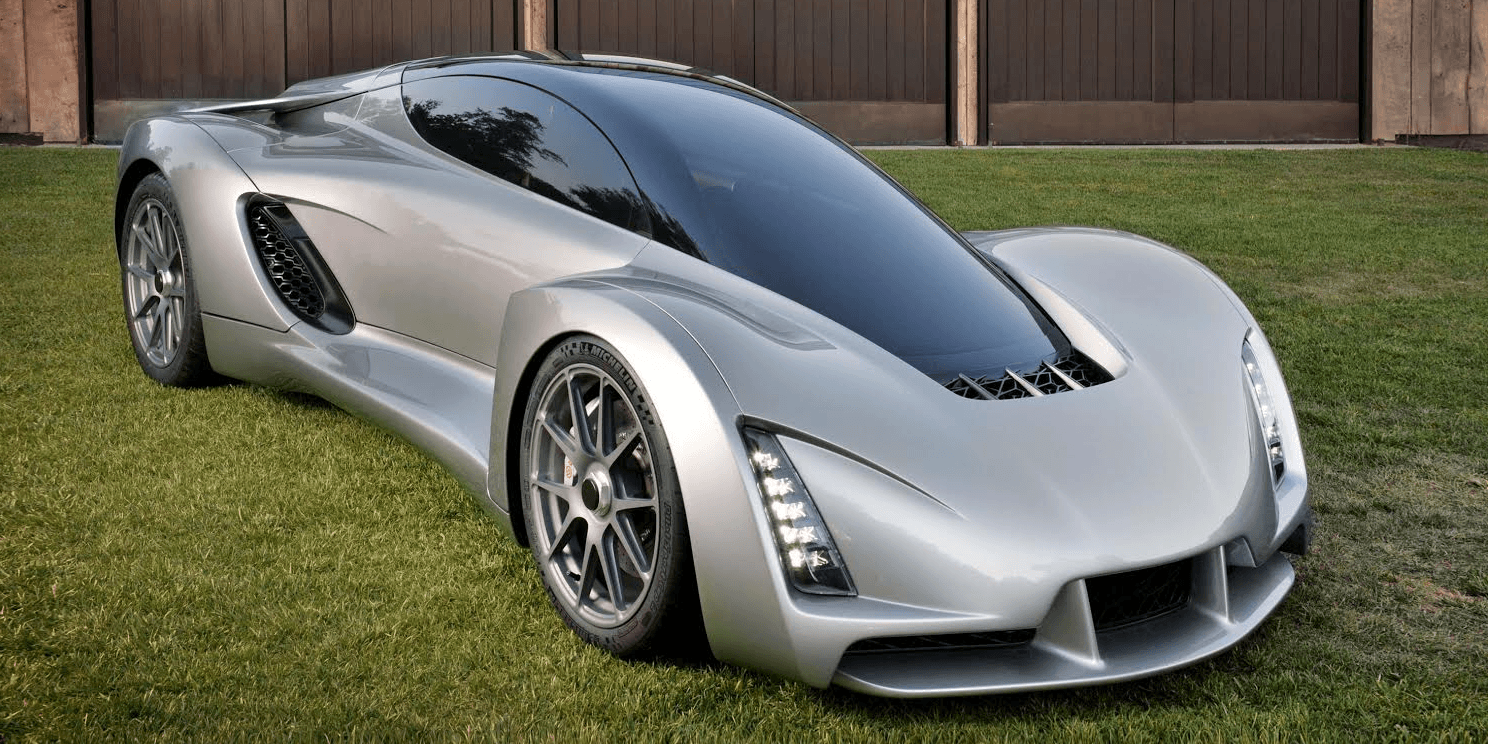
The 3D-printed Blade (Image courtesy of Divergent 3D)
Partnering with SLM Solutions, Divergent 3D used the firm’s metal powder bed fusion technology to 3D print the metal nodes. With the PSA Group, makers of the Peugeot brand of luxury vehicles, the startup aimed to make between 10,000 and 20,000 vehicles per year.
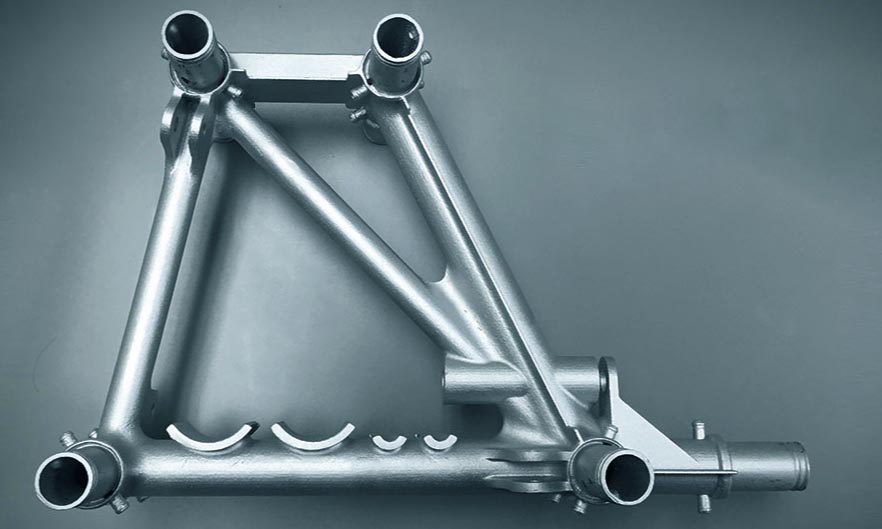
A 3D-printed NODE used to connect carbon fiber rods for the Blade supercar. Image courtesy of Divergent 3D.
This isn’t Divergent founder Kevin Czinger’s first attempt at launching a successful auto manufacturer, which is no easy feat. In 2009, he founded CODA Automotive, which sold, in total, 117 EVs before filing for bankruptcy in 2013. Whereas, with CODA, Czinger attempted to reduce emissions at the tailpipe, at Divergent, he has said that he hopes to cut greenhouse gasses for the auto industry as a whole.
According to Czinger, the firm’s patented process could potentially reduce emissions for the actual car manufacturing process, not just those from vehicle emissions. If we were able to apply Divergent’s technology to a traditional five-passenger sedan, Czinger suggested that it would be possible to reduce its weight by half and the number of parts by 75 percent.
A separate company, Czinger Vehicles, announced in March that it had built a hypercar, the 21C. Both Divergent 3D and Czinger Vehicles are subsidiaries of the larger Divergent Technologies, which has raised $150 million in investment funds so far.
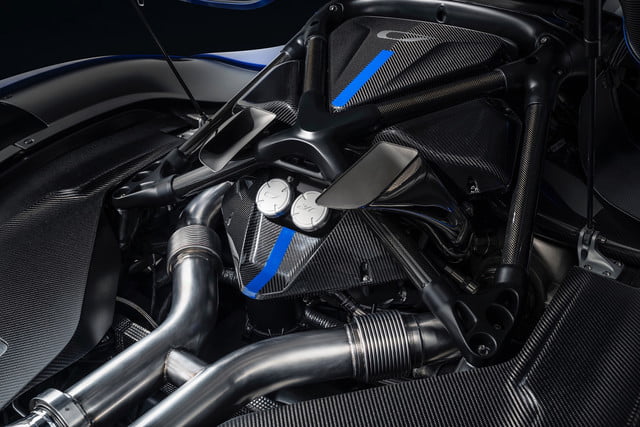
A look at the 21C’s engine, featuring 3D-printed components.
Czinger aims to produce 80 of the new 21C vehicles, which feature a number of parts printed with aluminum alloys, an exhaust system 3D-printed from Inconel, portions of the a-pillars on either side of the windshield 3D printed from titanium. It accelerates even faster than the Blade, reaching 60 mph in just 1.9 seconds and hitting a top speed of 268 mph. One of the important factors separating supercars from hypercars is horsepower, with the 21C featuring a 1,232 twin-turbocharged, 2.9-liter V8 engine that connects to two electric motors, making it a hybrid gas-electric vehicle.
Shortly after initial news about the 21C, Divergent 3D disclosed that it had reduced its staff by about one-third due to the COVID-19 pandemic. In other words, schedules may be tentative. Czinger told Tech Crunch that he believed it was necessary to ensure the long-term stability of the company, maintaining the core team and activities related to research and development and customer programs.
“Whenever you’re doing something that’s affecting people’s jobs — and especially in a company where I basically recruited everyone and knew everyone by face and name — it’s obviously super painful to do that under any circumstance,” Czinger said. “This was about making the company as totally weatherproof as possible.”
Despite setbacks to Divergent 3D by the pandemic, Czinger Vehicles will continue its work on the new hypercar. Built by hand in Los Angeles, the 21C will be priced at $1.7 million before taxes and deliveries are potentially slated for 2021.
[Images/source Digital Trends]Subscribe to Our Email Newsletter
Stay up-to-date on all the latest news from the 3D printing industry and receive information and offers from third party vendors.
Print Services
Upload your 3D Models and get them printed quickly and efficiently.











You May Also Like
Fabric8Labs & University of Illinois Collaborate on 3D Printed Copper Cold Plates for Data Centers
Collaboration between emerging technology enterprises and research universities is one of the most consistently winning tactics for any nation building (or rebuilding) an industrial ecosystem. It’s an especially constructive approach...
3D Printing News Briefs: May 7, 2026: Metal Powder Bed Fusion, Surgical Plates, & More
In today’s 3D Printing News Briefs, we’ll start with a strategic collaboration to advance next-generation metal additive manufacturing (AM), before moving on to funding for surgical research. We’ll end with...
3D Printing News Briefs, May 2, 2026: Soft Robots, Agricultural Waste, & More
In this weekend’s 3D Printing News Briefs, we’ll start off with a multi-laser metal powder bed fusion 3D printer and post-processing news. We’ll end with research into soft robotics and...
3D Printing News Briefs, April 30, 2026: Support-Free Titanium, Drug Delivery, & More
In today’s 3D Printing News Briefs, we’ll start with Makelab’s new website, and move on to commercialization of support-free metal 3D printing in South Korea. We’ll end with drug delivery...