3D Prod Buys Sculpteo

French 3D printing service Sculpteo has been bought by 3D Prod. Sculpteo was a direct Shapeways competitor with dreams of dominating the direct-to-consumer 3D printing service market. Founded in 2009, the company had good software and good prices. With investment from Creadev, the company raised over $5 million. Sculpteo then moved a bit more into industrial and was acquired by BASF. Sculpteo became BASF’s industrial and consumer 3D printing offering, spearheading a deeper engagement with LPBF. Now the company is a part of 3D Prod, another French service bureau.
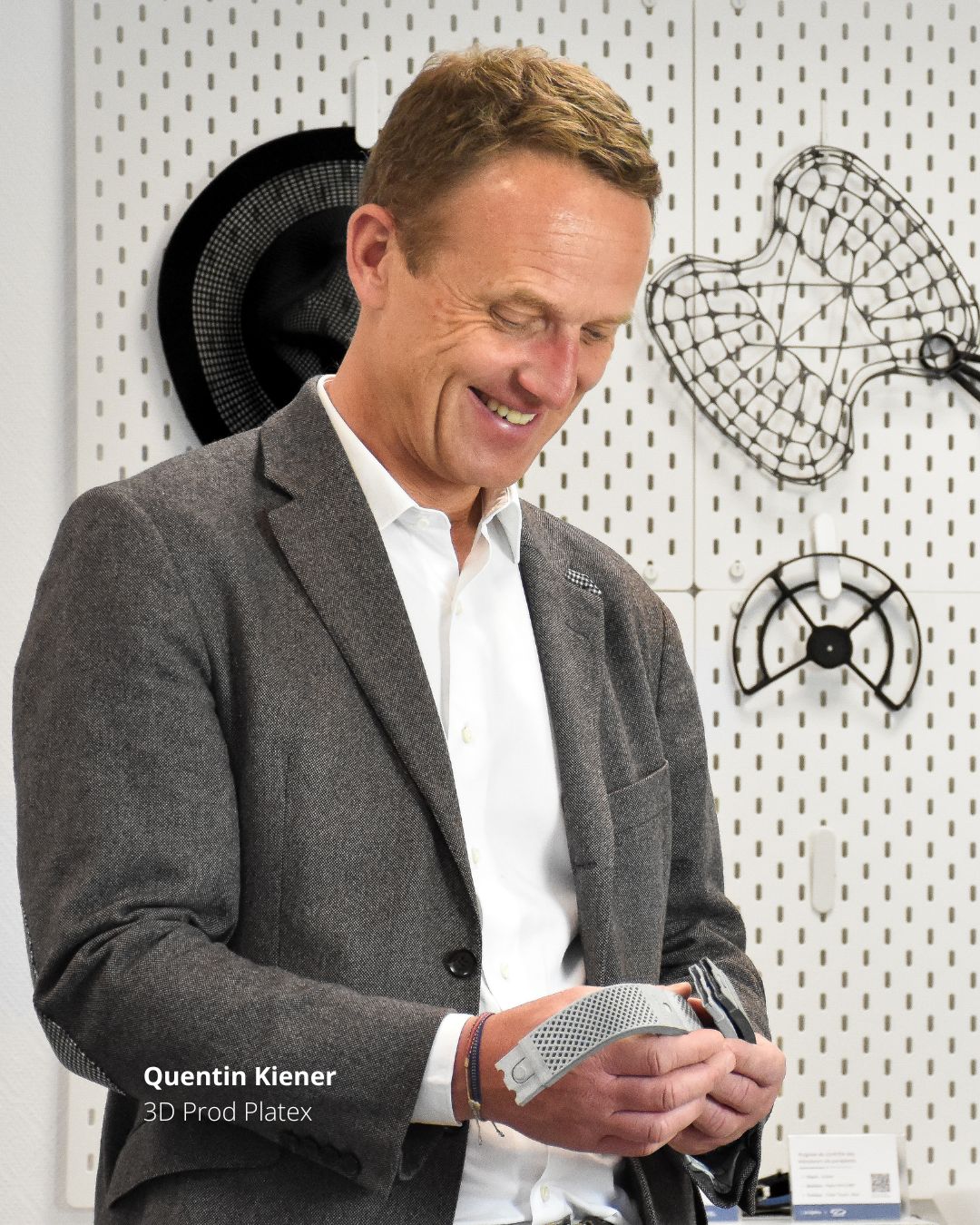
Quentin Kiener, CEO of 3D Prod. Image courtesy of 3D Prod.
The combined entity seems to have a very French focus, but could yet grow into a leader in 3D printing as a service beyond France. The companies together will have 75 industrial 3D printers, 75 materials, make over 1.2 million parts per year, sell into 61 countries, and have 8,000 m² of production space. The company has ISO 9001 and ISO 13485 for aerospace and medical parts, respectively. The combined entity will have around $19 million in revenue. The owner will be Platex, a large French injection molding company established in the 1950’s known for its resin breakfast trays. For Platex, this is an excellent move, letting them diversify and move into lots of new businesses such as defense and medical. It can use its competencies in manufacturing in France and, in part, its material expertise to help and open itself to new opportunities and modalities along the way. For Sculpteo staff, this will be quite a relief since it puts them on a surer footing.
As a firm, both brands could be valuable, and the company could perhaps have one consumer and design-oriented brand and a more industrial one. There is a lot to be said for having a France-focused 3D printing service. Defense contracts and aerospace contracts could be considerable in the country, given Airbus and other large aerospace contractors based there. In a more independent and self-reliant world, French companies, and in particular the aerospace and defense sector, will look to local production. The biggest direct competitor, Erpro, is focused on luxury and doing large continuous production deals with companies such as Chanel. They have a lot of the same technologies and a proven track record. The two could merge to dominate the market completely. This would probably not be a good idea, since there should be enough growth for both of them, and France would be better off with two global players rather than one quasi-monopolist. Both could coexist with Erpro looking for long relationships and big runs, and 3D Prod going for single parts to series.
Both companies should look beyond the cozy French experience, however. Fat and lazy firms focus on one country in 3D printing. An international focus and exports would make the firm more competitive and keep it on the edge of technological development. With many more international clients and businesses, the firms would be a true asset to France. Just like any service bureau, 3D Prod would be wise to start using print farms more extensively and making its own filament. If it thinks for a second that there is no need for large print farms in France, or that it somehow floats above the print farm movement, then the company will be doomed. Print farms are a huge opportunity to make low-cost parts quickly. In China, we can already see 3D printer megafarms of 10,000 to 15,000 units emerging. In the US, the largest that we’ve found is only 5000 printers. Europe trails behind, with the largest farms being only around 2000 printers in size. 3D Prod could therefore dominate this market in Europe and outproduce everyone else. If not, they will eventually be crushed by someone who does this.
If the team sees this move as an opportunity for investment and global expansion through excellence, I think that we could see a lot happen in the European service bureau market. Large sources of capital, such as Core, AIP, and AFM Capital Partners, are currently squarely focused on US defense opportunities. This means that there is room for large European firms to emerge. But excellence and high-value parts must be complemented by low-cost desktop 3D printing. This is especially true if their average part cost is around $16, which should see someone else nipping at their heels quite quickly.
Subscribe to Our Email Newsletter
Stay up-to-date on all the latest news from the 3D printing industry and receive information and offers from third party vendors.
Print Services
Upload your 3D Models and get them printed quickly and efficiently.













You May Also Like
AM Forum Berlin 2026: Tough Love From BMW’s Timo
We’re once again in the lovely city of Berlin, at the absolutely immense Estrel Center. The congress center, a musical and theater venue, towers over the easternmost reaches of the...
NAMIC GAMS 2025: Additive as a Tool for Resilience and Agility
This year’s National Additive Manufacturing Innovation Cluster (NAMIC) Global AM Summit (GAMS) began once again with a speech by Dr. Ho Chaw Sing, the head of NAMIC. He opened the...
Deutsche Bahn To Work With 3D Spark to Measure CO₂ Footprint for 3D Printed Spare Parts
Sustainability in some places is a detail, something for the PR people and occasional campaigns. In other companies, countries, and industries however, there is a remarkable awakening going on. Companies...
Naomi Nathan, Head of MGA Medical, on EHFAM & Melting 3D Printing Barriers in Medical
MGA is an organization trying to collectively industrialize 3D printing. Member organizations can be service bureaus, machine builders, materials companies or users. All work together on breaking down the barriers...