Brightwake’s Hemosep Blood Collection Device Produced With the Help of Stratasys 3D Printers

Every year thousands of people die on the operating table from the loss of blood. These people, who have certain religious beliefs which prevent them from have having other people’s blood transfused into them, may now have 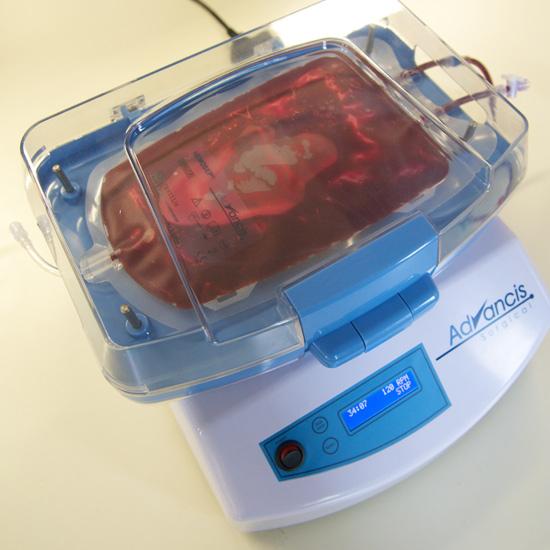 an important option.
A UK company called Brightwake Ltd. has created a new device which they call the Hemosep. What the Hemosep does is recover blood during a major surgery or trauma, and concentrates that blood into a system which can then transfuse it back into the patient. Since this is the patient’s own blood, religious people such as Jehovah Witnesses, are able to recover lost blood without relying on that of donors.
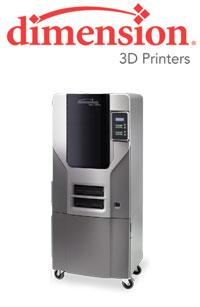
Stratasys, one of the world’s largest 3D printing companies, announced today that their 3D printing technology, particularly the Stratasys Dimension 1200es 3D printer, played a significant role in the production and testing of the Hemosep device. Although the final product will not use 3D printed parts and be produced out of metal, the testing device, and prototypes have used several 3d printed parts including the filtration and cooling systems.
“The Hemosep consists of a bag that uses chemical sponge technology and a mechanical agitator to concentrate blood sucked from a surgical site or drained from a
heart-lung machine after surgery,” said Steve Cotton, Brightwake’s Director of Research and Development. “The cells are then returned to the patient via blood transfusion. In a climate of blood shortage, this recycling methodology has the potential to be a game-changer within the medical industry, saving the National Health Service millions.”
Because of the use of 3D printing, Brightwake was able to significantly cut their prototyping costs by 95%, as well as eliminate a majority of lead-times.
“Previously we had to outsource the production of these parts which took around three weeks per part,” explains Cotton. “Now we’re 3D printing superior strength parts overnight, cutting our prototyping costs by 96% and saving more than £1,000 for each 3D printed model. 3D printing has not only enabled us to cut our own costs, it has also been crucial in actually getting a functional device to clinical trials. The ability to 3D print parts that look, feel and perform like the final product, on-the-fly, is the future of medical device manufacturing,” he added.
This is yet another application which has shown the amazing benefits that 3D printing can have on businesses of all types. There have already been 100 successful clinical trials in Turkey of the Hemosep device during open-heart surgeries. Additional trials are now underway in the United Kingdom. Discuss Brightwake’s use of 3D printing in the development of the Hemosep device at 3dprintboard.
Subscribe to Our Email Newsletter
Stay up-to-date on all the latest news from the 3D printing industry and receive information and offers from third party vendors.
Print Services
Upload your 3D Models and get them printed quickly and efficiently.













You May Also Like
Creality K3 Opens for Pre-Order at $849, Advancing Multi-Color 3D Printing
Creality has officially opened pre-orders for the Creality K3, its latest flagship K Series 3D printer, starting at $849 in the United States. Recognized as an IFA Innovation Awards 2026...
Beyond the Printer: HP and DyeMansion Tackle the Future of Prosthetics
Making a custom orthotic or prosthetic device involves much more than producing the final part. Patients need to be measured, devices must be designed to fit their bodies, and finished...
3D Printing News Briefs, October 14, 2026: Bolus, Aerospace Tooling, Water Filter, & More
In today’s 3D Printing News Briefs, we’re starting with medical news, as Myrava has received FDA 510(k) clearance for its 3D printed bolus. Moving on to aerospace and metals, AML3D...
Can India’s AM Push Help Make it a Viable Supplement to China?
Diversifying manufacturing supply chains to locales outside of China has nothing to do with actually cultivating “substitutes” to the Chinese economy. The real stakes are these: China is an irreplaceable...