Hoet and Aoyama Unveil New Line of Custom 3D Printed Eyeglass Frames for Yuniku


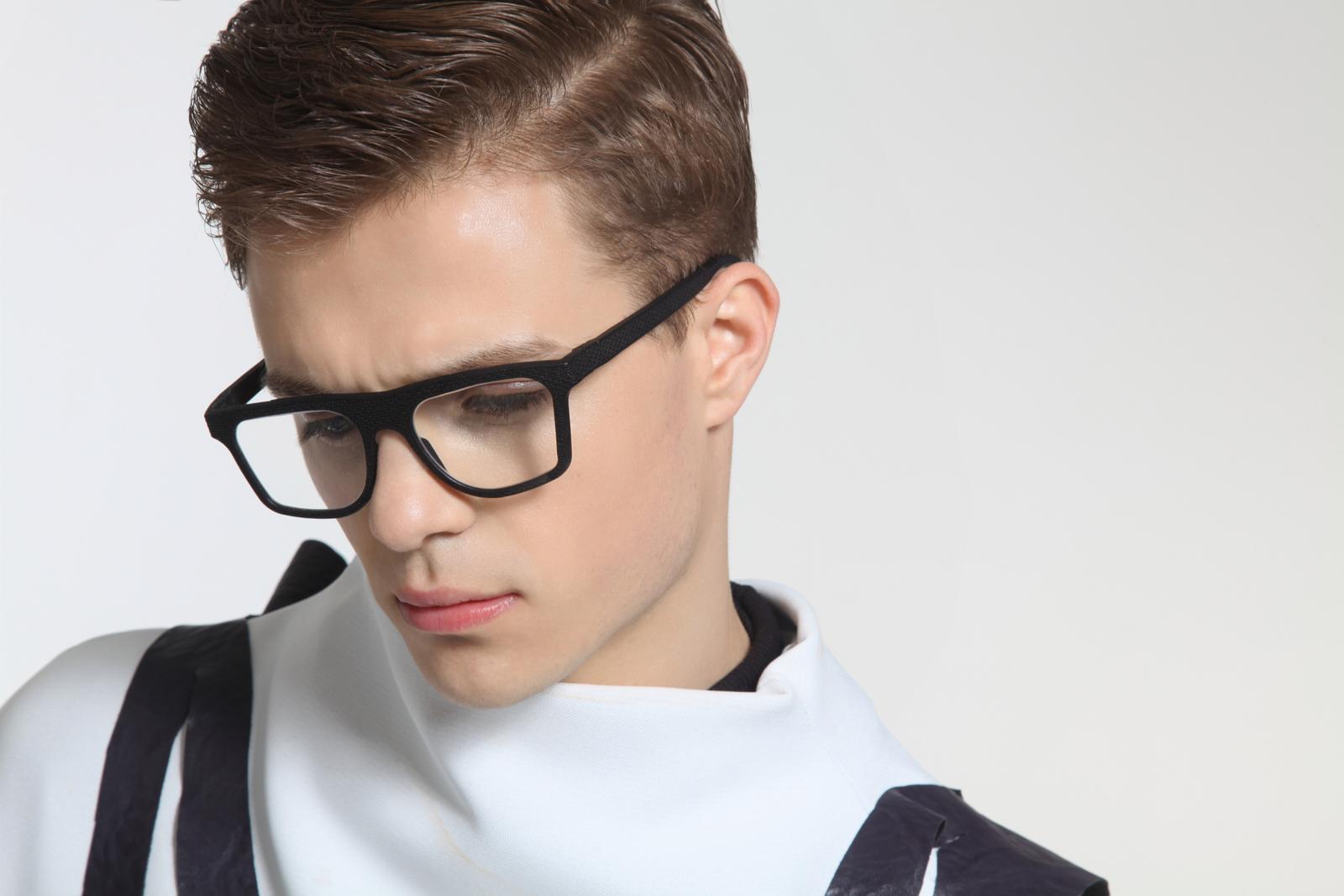
3D printed frames by Hoet
Tomorrow in Munich the doors will open at Opti, an international trade show for optics and design that attracts exhibitors and visitors from around the world. The show, which has been going on for ten years now, will dedicate a portion of its space to looking back at its own history and the groundbreaking products that have made it a center of attention for those interested in eyewear. But they aren’t going to be looking into their past so deeply that they won’t do what they have become known for: provide an opportunity to introduce the latest in cutting edge optics.
Last year, HOYA wowed us with the introduction of Yuniku, a system that allows for scanning a customer’s face, creating eyewear that has optimally positioned lenses, customizes the frame to fit both the lenses and the customer’s face, and finally actually 3D prints the frames themselves. This intriguing new method for the creation of custom eyewear was the result of a collaboration between HOYA, Hoet Design Studio, and Materialise. One of the hot new developments to look for this year comes from a partnership that includes Aoyama Optical in addition to Materialise, Hoet and HOYA. This latest collaboration in customized eyewear will be comprised of 3D printed frames and promises to be, well, eye-catching to say the least. This display will provide a glimpse at what is to be on offer when the Yuniku system is officially launched.
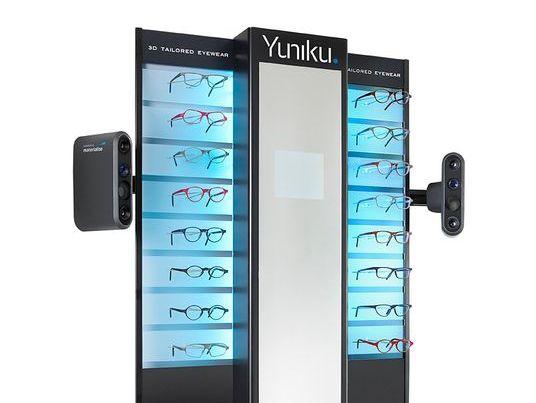
The Yuniku scanner [Image: HOYA Vision Care]
“Standardized production and a one-size-fits-all approach are no longer enough. We offer customizable options that speak directly to an individual’s tastes and preferences. Aoyama’s goal with this collection was to bring true mass customization to a luxury consumer-grade product.”
The idea of providing specific eyewear for each individual doesn’t, technically, make it unique, but the point appears to be, rather, that each individual is unique and, given the number of configurations of eyewear + facial type, mathematically that is almost the same thing. The beautifully shot black and white promotional video for Yuniku eyewear does an excellent job of showcasing eyes, the attribute that is most often obscured by glasses rather than supported by them. Unfortunately, it works against itself somewhat in that at no point during the video, or anywhere on their website, do any of the models actually wear glasses. In fact, only the briefest glimpse of the eyewear is given and the majority of the video dedicated to artistic pandering.
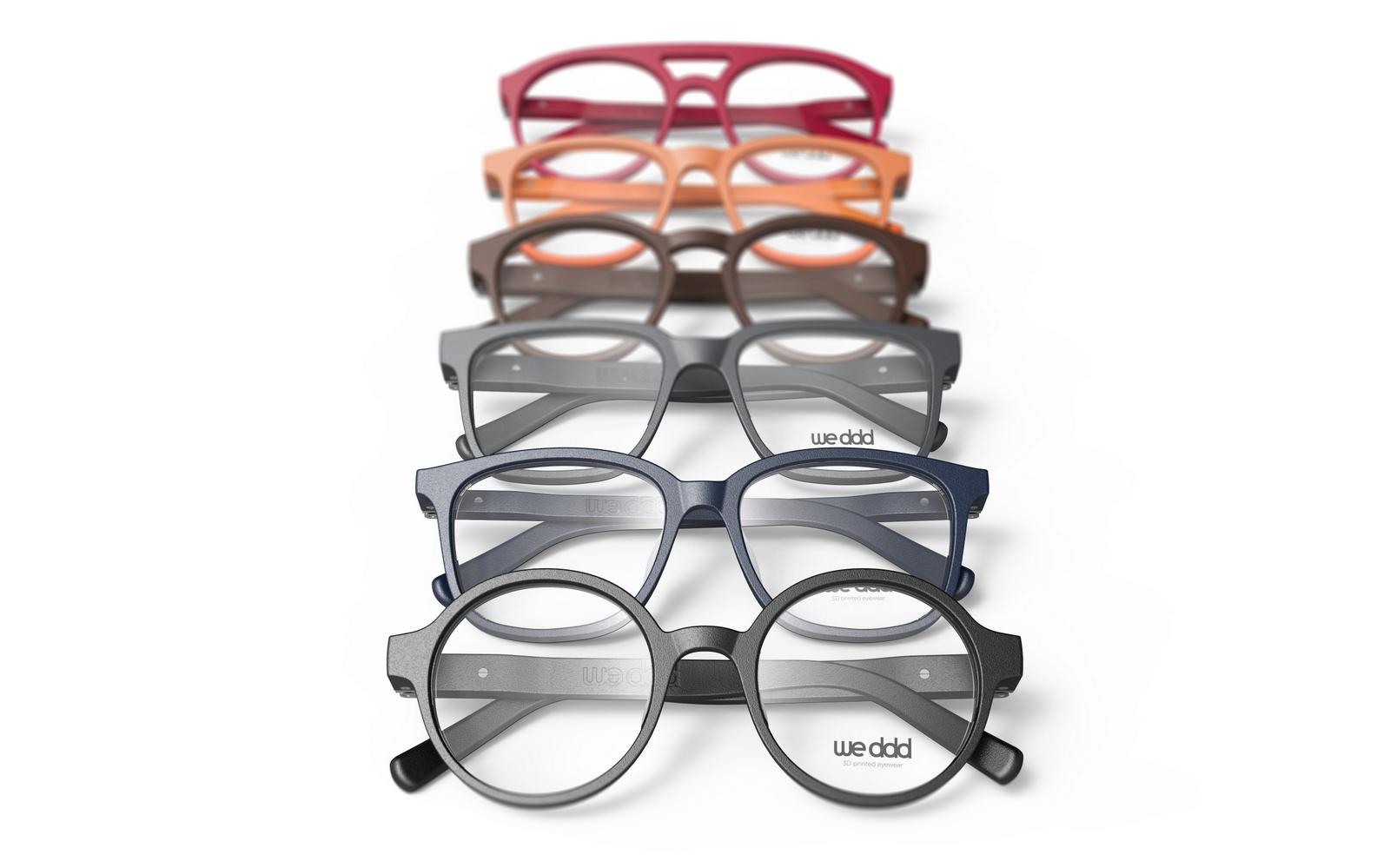
Aoyama’s We DDD Collection, produced in collaboration with Materialise [Image: Aoyama]
Subscribe to Our Email Newsletter
Stay up-to-date on all the latest news from the 3D printing industry and receive information and offers from third party vendors.
Print Services
Upload your 3D Models and get them printed quickly and efficiently.












You May Also Like
3D Printing News Briefs, July 1, 2026: Prosthetics, Drug Delivery, & More
We’re focused on healthcare and research in today’s 3D Printing News Briefs, including 3D printed prosthetics, patient-specific implants, drug delivery, and more. Read on for all the details! Students from...
3D Printing News Briefs, June 18, 2026: Reseller, Relocation, Metal Space Powder, & More
We’ll start with business news in today’s 3D Printing News Briefs, as XJet appointed a value-added reseller in Germany, BIO INX is expanding its presence in the Italian market, and...
CEO Yoav Zeif on Why Stratasys’ Markforged Acquisition Is Really a Bet on Industrialization
When Stratasys announced plans to acquire Markforged, the immediate focus was on the deal. Markforged is one of the most recognizable names in additive manufacturing (AM), known for its continuous...
Stratasys Acquires Markforged, Analysis of AM’s Latest Consolidation Move
A very long time ago, in 2023, the additive manufacturing (AM) industry was enraptured over the attempts by a large chunk of its publicly traded original equipment manufacturers (OEMs) to...