Pôle-Ergo Creates Universal Wireless Switch to Improve Computer Access for the Disabled


 Of all the areas that 3D printing has had an immediate effect on, the medical field seems to have benefited immensely from the emerging technology in a number of ways. Although certain innovations like bioprinting will certainly take some more development before becoming a widely adapted medical tool, one application that has found 3D printing to be advantageous is prosthetics and other assistive devices for those who are disabled. The affordable and customizable nature of 3D printing has made it possible to create patient-specific devices on the spot, that, in turn, have helped make life more convenient and enjoyable for disabled individuals.
Back in July, an assistive device challenge was launched by the 3D printing marketplace Pinshape in collaboration with MatterHackers, Ultimaker, and e-NABLE, which is an open source, community-based prosthetic design organization that has helped thrust 3D printing forth as a viable tool to produce prosthetics and assistive devices. The contest, called the Within Reach 3D Design Challenge, asked participants to design assistive devices for people with limited use of their hands due to conditions such as arthritis, stroke, or debilitating injury.
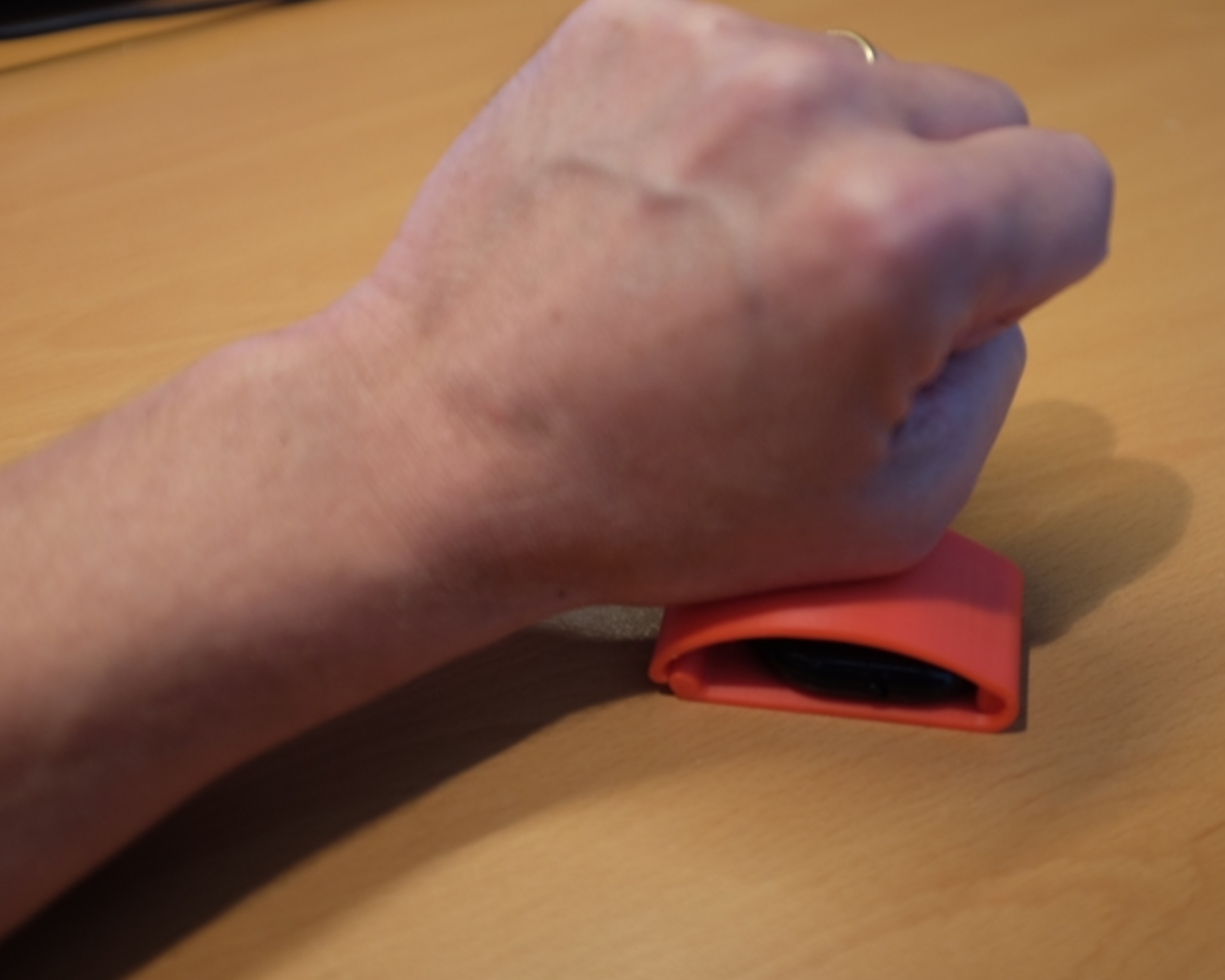 One of the most unique designs to come out of the challenge was a Universal Wireless Switch Access created by Guy Ehretsmann of Pôle-Ergo, a Lyon, France-based occupational therapist and technological consultant for the disabled. This project enables disabled people who are unable to use their hand to access keyboard or use a mouse with an accessibility option to scroll different choices displayed on the computer or tablet screen.
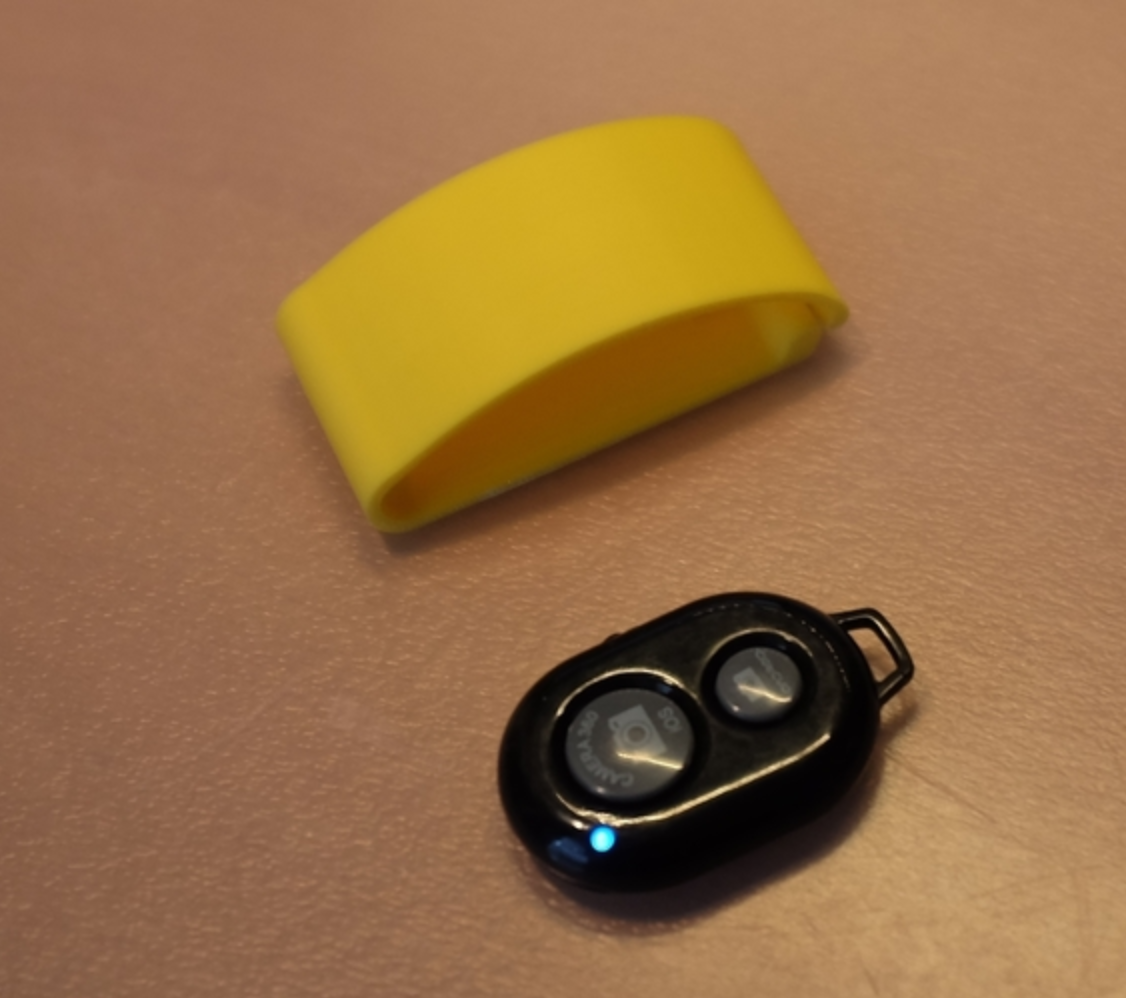 The assistive device was designed in Solid Edge ST8 Academic CAD, printed in ABS, and equipped with a bluetooth selfie button. According to Ehretsmann, the Bluetooth switch was purchased on eBay for just 1.5 €, making the entire project extremely affordable and convenient to create. Pôle-Ergo made sure that the 3D printed bluetooth device was well-vetted, conducting accessibility tests on the latest Android’s Lollipop, Mac OSX, and Windows operating systems to ensure functionality.
Although the 3D printed assistive device stands to improve the lives of those who have incurred a hand disability of some sort, Pôle-Ergo has made it a point to offer the object as an informative and educational tool, not a commercial product. Those who could potentially benefit from their Universal Wireless Switch Access should not consider the device to be a replacement for a professional specialist or treatment.
As for the “Within Reach 3D Design Challenge”, the contest is still open for submissions until the end of the day today, September 6 (at 23:59:59 PST). Submissions are separated between two categories: youth under 18, and adults 18 and over. First place winners will receive an Ultimaker 2+ (under 18 category) or Ultimaker 2 Extended+ (over 18 category), as well as a MatterControl T10 3D Printer Controller and three spools of MatterHackers PRO Series PLA filament. Second place winners will receive a Crafty 3D Printing Pen plus a $100 MatterHackers gift card, and third place winners will also receive a Crafty 3D Printing Pen, as well as a $50 MatterHackers gift card. You can design your own 3D printable assistive device and upload it to Pinshape, joining with Pôle-Ergo in the fight to make the world a better and more accessible place for those suffering from debilitating disabilities. Discuss further in the Universal Wireless Switch forum over at 3DPB.com.
Subscribe to Our Email Newsletter
Stay up-to-date on all the latest news from the 3D printing industry and receive information and offers from third party vendors.
Print Services
Upload your 3D Models and get them printed quickly and efficiently.













You May Also Like
3D Printing News Briefs, September 12, 2026: Rebranding, Cybersecurity, Project Call, & More
We’ve got a lot of business news from ATLIX to start off this weekend’s 3D Printing News Briefs, with a new identify for its additive manufacturing (AM) portfolio and some...
Apple’s 3D Printed Hinge Cover & the Inauguration of the Ternus Era
Marc Andreessen notwithstanding, it turns out that hardware is, in fact, eating the world. Perhaps after being starved for so long, the hardware side of tech innovation is now overcompensating,...
3D Printing News Briefs, September 10, 2026: Tax Credits, Polymer Research, Microneedles, & More
We’re starting off this week’s 3D Printing News Briefs with a little business from Axtra3D and Beehive Industries, before moving on to a scientific collaboration agreement between Roboze and a...
IperionX Gets $11.5M Army Boost to Make Titanium Fasteners in the U.S.
IperionX is going to get another $11.5 million, potentially up to $25.4 million, of an existing SBIR Phase III with the Army (Task Order W911QX26FA097). The award covers low-cost titanium...