Pixelstone: A Unique Brick 3D Printer That Could Change the Face of Construction


 I’ve always loved the look of brick, whether on buildings or streets. There are still a few brick roads in my area, which I love – the color, the feel, the old-fashioned appearance. Brick is one of the oldest construction materials still being used today, although these days it’s used less for actual construction and more as exterior façade in buildings. Though it might be a classic material, it’s a labor-intensive one to create, and one that requires quite a bit of energy. A single brick takes up to three days to fire, and requires a temperature of over 1000°C – not the most energy-efficient process.
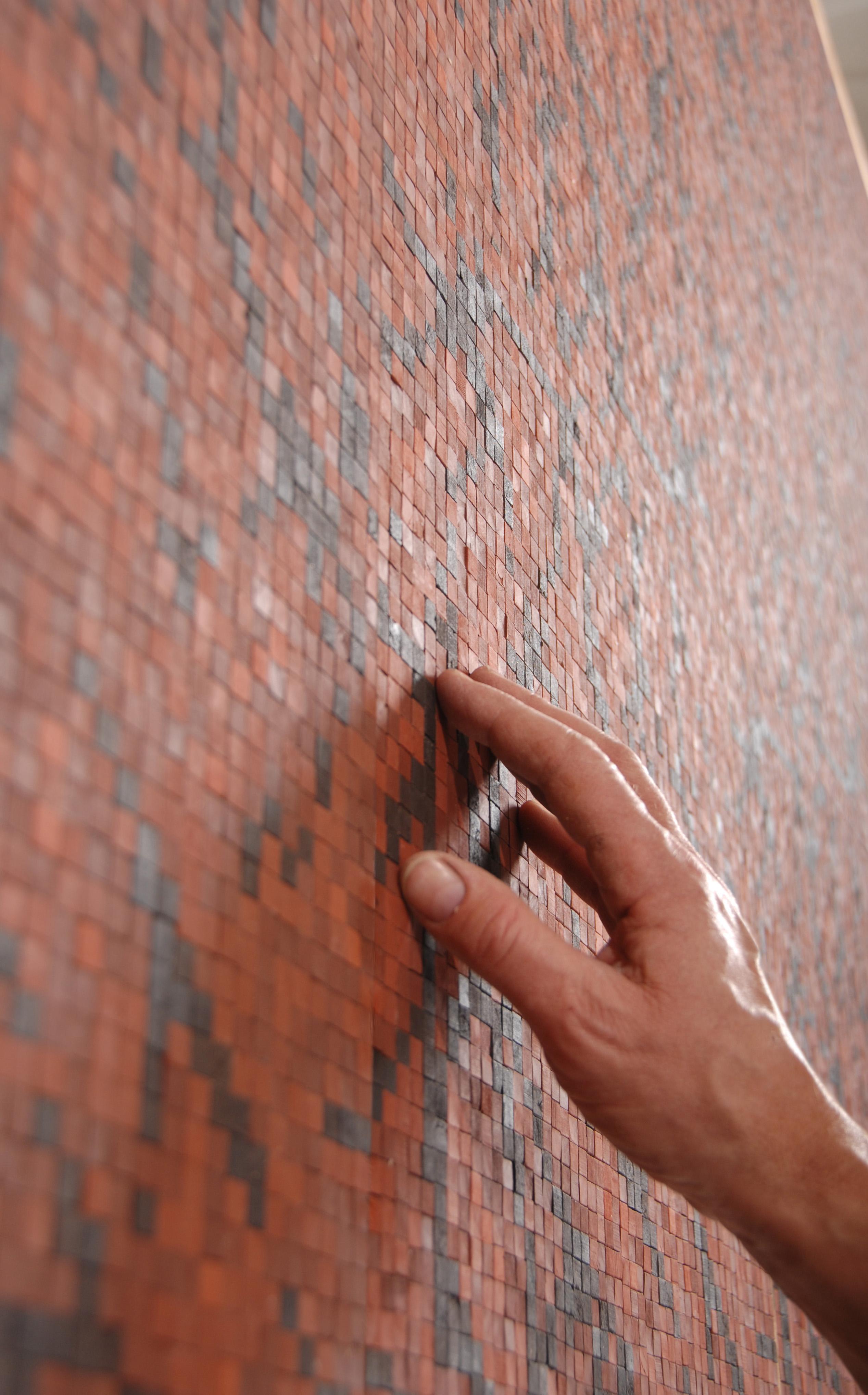 Brick isn’t a material that we’ve really seen much in 3D printing yet, but a new startup is developing a 3D printer that could revolutionize the way brick façades are created. Last year we wrote about Lab3D, a Dutch company working on completely new methods of 3D printing building structures. Now they’ve created a spinoff startup entirely dedicated to the development of a printer unlike any other. Meet Pixelstone – if all goes according to plan, you’re likely to be hearing a lot about it within a couple years’ time.
Pixelstone is a printer specifically designed to print brick façades. It actually prints “pixels,” or small brick cubes which are loaded into cartridges in single colors or mixes. Those cubes are pumped into a mixer, which remixes them according to color, then extrudes them through a hose in a digitally predesigned pattern. As the printer extrudes the bricks, it also bonds them together into a sheet of solid brick that can then be used as a façade.
“Besides sleek facades, Pixelstones enables rich and complicated facades,” the company states. “Printed with different colors, patterns, images, reliefs, ornaments, window frames; everything you can imagine. The architect gets total control of every pixel in a facade.”
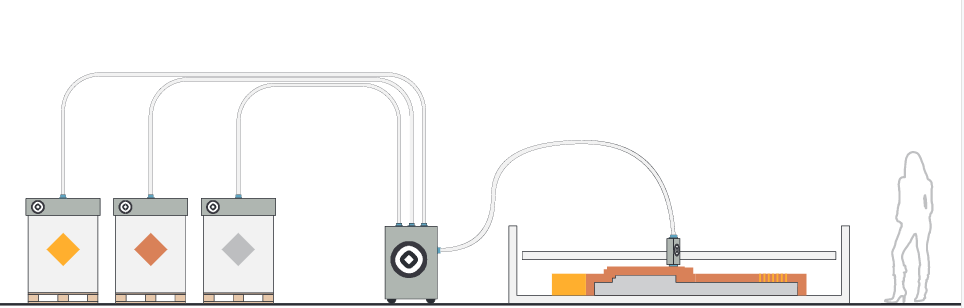
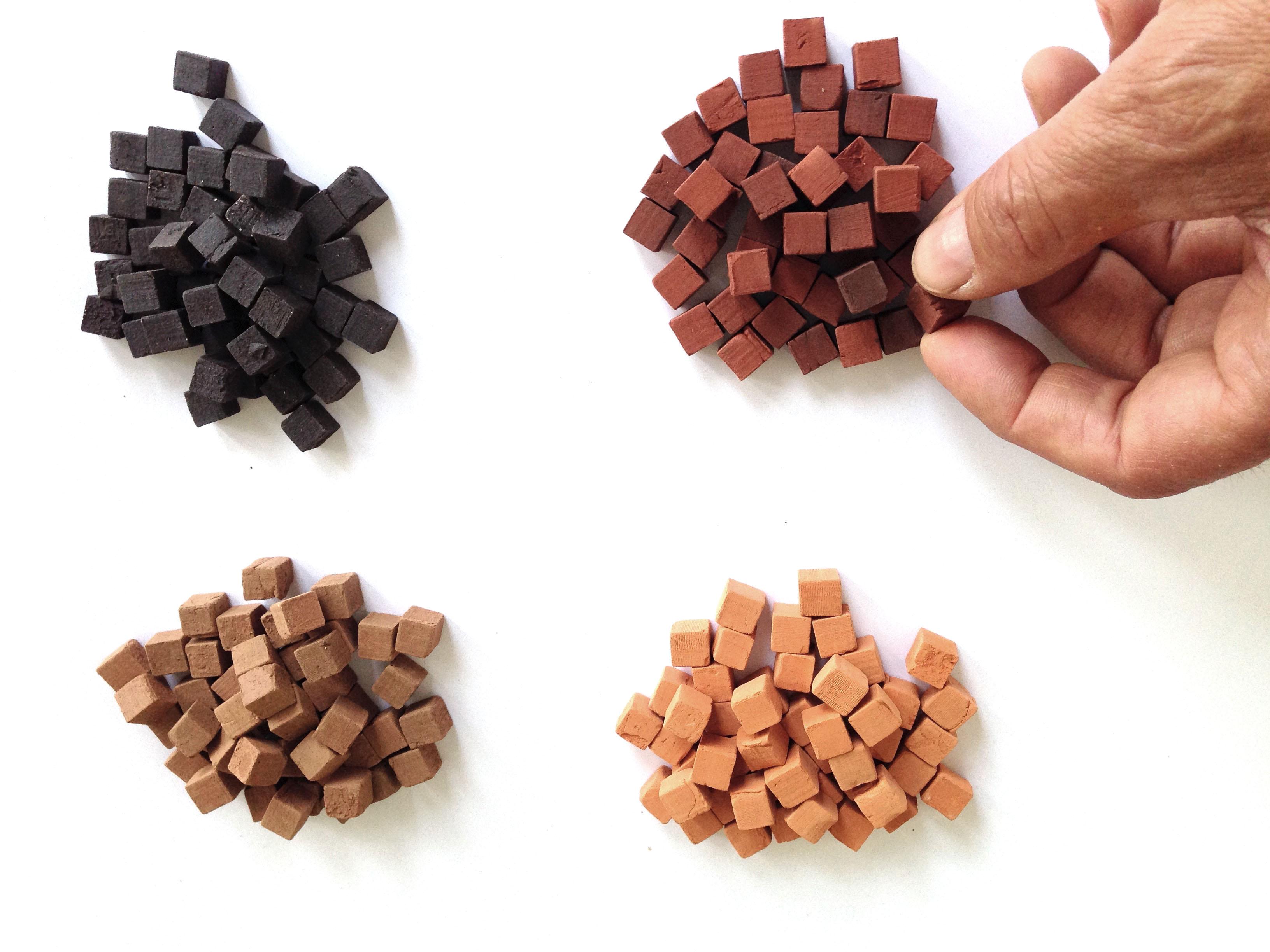 The advantages are many: because of the small size of the bricks, they need very little firing; the creation of a pixelstone takes one to two hours as opposed to the several-day process a standard-sized brick requires. Less firing equals less energy – 90% less energy, as a matter of fact, according to Pixelstone. Printing them is a speedy process as well – the current prototype can print at a speed of 0.5 m2/hr, and when the final version is developed, the company expects that it will be capable of printing 5 m2/hr.
“New technology requires a new design tool,” the company continues. “Pixelstone developed a simple application that enables the architect to design with Pixelstones. Any kind of image or facade design can be loaded in the software and converted in the cubic bricks. Stone colors and the ratio between the colors can be tweaked in order to have total control of the end result.”
 The Pixelstone printer is scheduled to hit the market one and a half to two years from now. A patent is pending, and the company already has ambitious visions for the future – while they’re starting with brick façades, the ultimate goal is to be able to print entire structures with Pixelstone technology.
In the meantime, Pixelstone is looking for partners and/or investors. Small pilot projects are available; if you’re interested in getting on board, you can contact the company at info@pixelstone.nl or +31(0)107142456. Below, you can see the prototype in action. Are you interested in this technology? Discuss in the Brick 3D Printer forum over at 3DPB.com.
Subscribe to Our Email Newsletter
Stay up-to-date on all the latest news from the 3D printing industry and receive information and offers from third party vendors.
Print Services
Upload your 3D Models and get them printed quickly and efficiently.













You May Also Like
Limitless Labs Raises $20 Million in Series A Funding for Agentic CAD
Limitless Labs has raised an additional $20 million for its agentic CAD/CAM platform, bringing its total funding to date to $27.3 million. Investors in the Series A round include Dell...
The Seminal Moment: Creality’s IPO Analysis & Possible Effects
Something super important happened just a few days ago, and too few people paid attention. Creality, a pioneer in low-cost desktop material extrusion printers, went public. Creality is now listed...
As Longevity Gains Momentum, Rem3dy Health Raises £14 Million for 3D Printed Nutrition
Longevity hack or healthcare trend? The answer may depend on who you ask, but investor interest in personalized nutrition is growing as consumers search for the next longevity hack. Now,...
Flashforge Unleashes Wax 3D Printer
Flashforge has released a wax 3D printer. Wax printing was pioneered by Solidscape, a company acquired by Stratasys and later sold to Prodways before being shuttered in 2024. That firm’s wax jetting...