
Flashforge Unleashes Wax 3D Printer

Flashforge has released a wax 3D printer. Wax printing was pioneered by Solidscape, a company acquired by Stratasys and later sold to Prodways before being shuttered in 2024. That firm’s wax jetting process lets you make wax patterns without changing anything to your forging and casting setup. Cost-effective and comparatively easy to use, these systems were used by jewelry artisans and in production. For many years, low-cost vat polymerization systems with cashable resins have expanded their market share. These systems have displaced larger DLP systems, such as Envisiontec’s Perfunctory line, and are increasingly displacing mid-range DLP and SLA systems as well.
Meanwhile, for the design-oriented, Formlabs has a solution for you as well. All in all, this segment is a lively one, with competition ranging from $180 vat polymerization systems to $300,000 large units. Deskside, in the factory, in your shop, someone will have a solution for you.
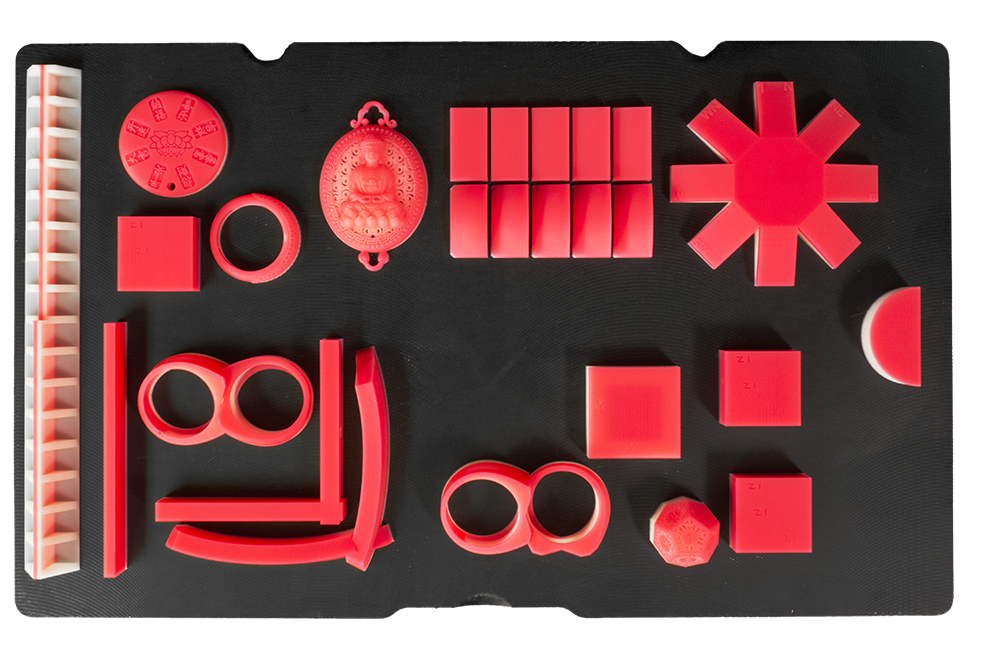
Parts made with Flashforge’s wax 3D printer. Image courtesy of Flashforge.
Also in this segment: filament printing, vat polymerization, and material jetting compete head-on. What’s more, there are multiple technology options, with you being able to burn out a regular polymer, for example, or a wax filament for material extrusion. For very detailed parts, a client can choose from an entry-level vat polymerization system, between DLP and SLA in all its variants, technologies such as Axtra3D, dedicated wax production units using material jetting, and now desktop wax printing from Flashforge. Ash-free burnout may make you look to wax, while workflow, cost, and machine size may make you look elsewhere depending on the part and part size.
This release is a smart move by the company, as an optimized printer here could serve many jewelry stores, jewelry artisans, people new to jewelry, and even people making small metal casting parts for industrial use. Lost wax casting is a cost-effective method for producing jewelry and metal parts, generally in many materials. And in a small casting setup, this process can help you make strong, durable parts for many mechanical uses. This kind of move by Flashforge could really build out their presence in a great long-term niche.
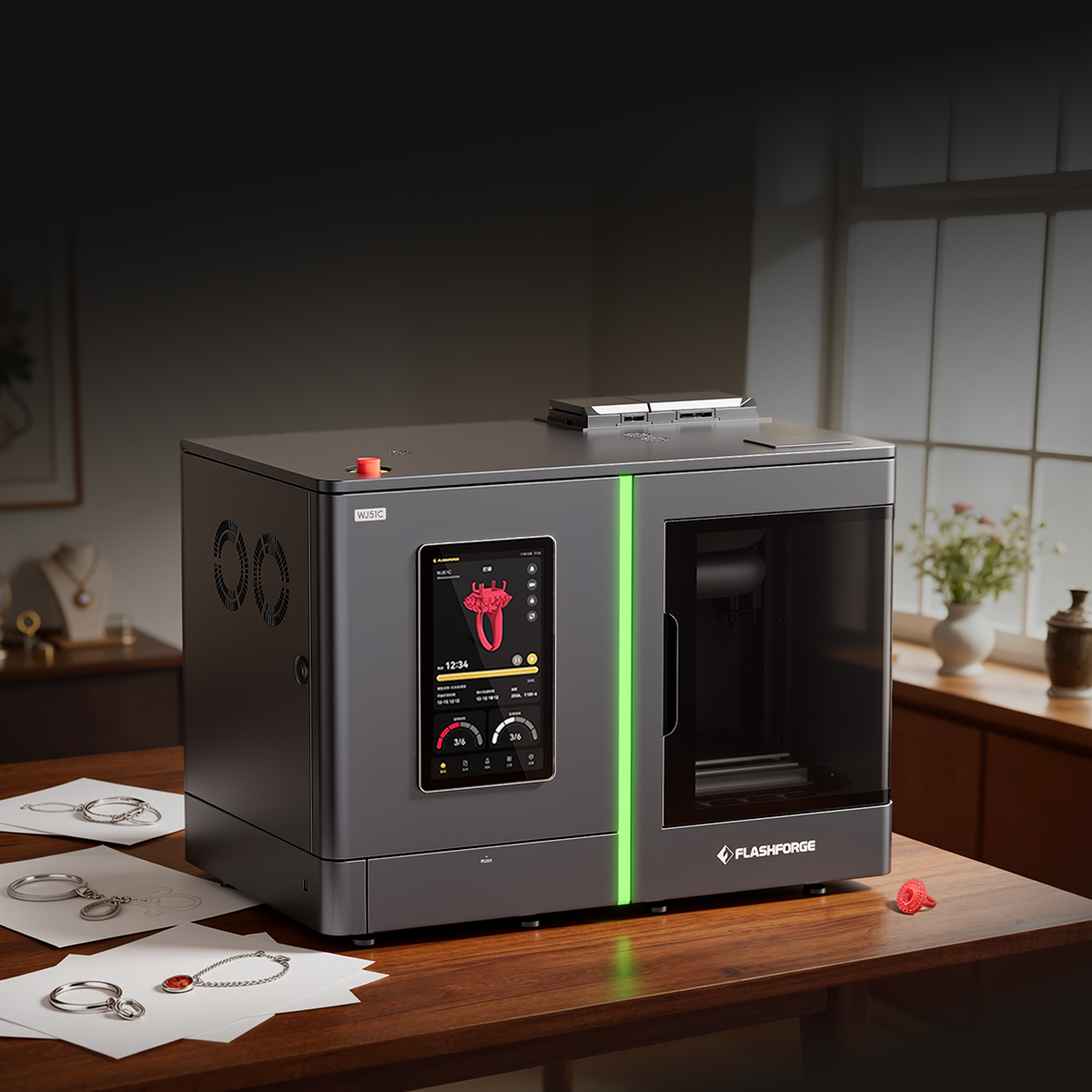
Flashforge wax 3D printer. Image courtesy of Flashforge.
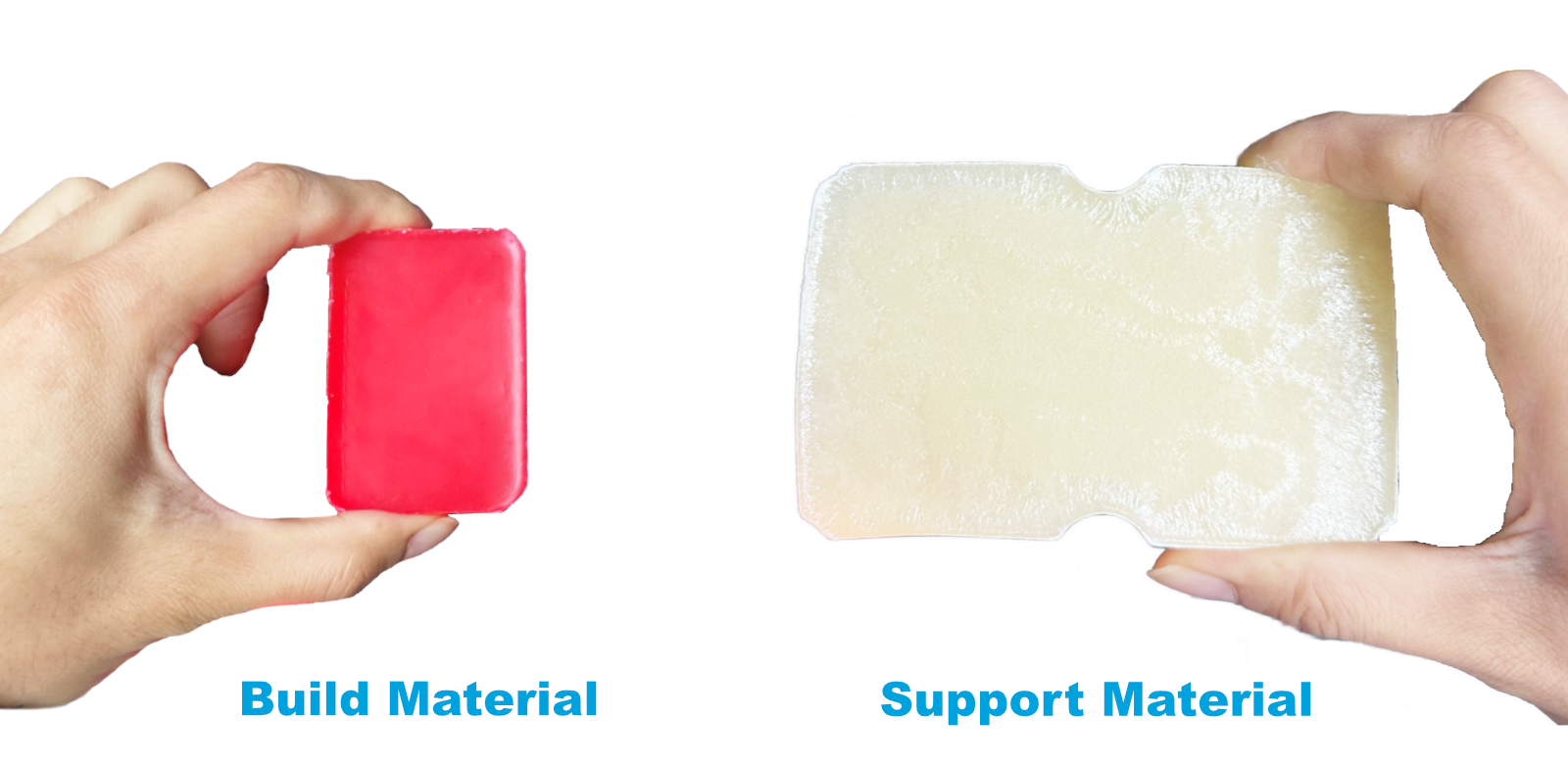
The WJ51C is an 865×510×654 mm printer with a 235×138×100mm build volume that uses material jetting (MultiJet Printing). The 2900 × 2900 × 1700 DPI head has 2080 jets. The thinnest layer is 15 microns, and the firm says it can achieve a dimensional accuracy of ±0.04mm. It takes Flashforge’s own wax material and wax support, which come in blocks. I’m not sure if you can just pop other regular wax in here, but I’m sure that people will try. The idea behind wax blocks is that, rather than using large tanks of wax, individual blocks can be used for smaller print runs. The wax costs around 46 cents per gram, while the support costs 18 cents per gram. The support is dissolved with a solvent. The printer weighs 115 kg, so get a good desk. The company says the prints are very smooth, which is important for jewelry firms, as it saves them time and work later. The printer has camera monitoring in the build chamber. Flashforge isn’t releasing the printer’s cost, but a US distributor is offering it for $768 per month for 60 months, which would bring the total to around $35,000?
The company says that the printer has been made for continuous operation and could consume up to 4 kilos of wax a month. This is an exciting solution for large jewelry shops that do a lot of custom work. For an individual, jewelry is pricey; they might opt for a Formlabs setup, which will be messier and require more work, with a higher cost per part. But with a lower initial investment, this may be much more palatable for them; the investment may be 8 times lower or higher. But, for some volume and in working with a few designers or jewelers, the WJ51C could be a very cost-effective solution indeed.
I was secretly hoping for something even more affordable and smaller. If Flashforge kept the costs of wax, support, solvent, and the jetting head low, they could really grow in the large market of jewelry professionals. With gold prices expected to stay high and marriage on the decline, jewelry professionals will have to get creative in their business models, markets, and offerings, as well as their jewels. But, with industrial diamonds becoming increasingly popular among young people, there is also more room in budgets for more experimentation. Jewelers should do more to make creative, fun experiences around jewelry design. How about a romantic game where the two of you are separated and asked questions about each other, and a jewel emerges from that? Or a bachelorette party jewelry experience where you design a commemorative piece for the whole gang? Custom cufflinks for the boys, meanwhile, or a piece commemorating both your mothers. For friend groups or couples, jewelry stores could do more to make the experience fun, engaging, and memorable. The WJ51C could play a huge part in this kind of more emotive jewelry creation movement. Will it happen? What do you think?
Subscribe to Our Email Newsletter
Stay up-to-date on all the latest news from the 3D printing industry and receive information and offers from third party vendors.
Print Services
Upload your 3D Models and get them printed quickly and efficiently.













You May Also Like
10 Years of Multi Jet Fusion: Onsite at HP’s Vancouver, Washington Facility
At this year’s RAPID event in Boston, HP Additive Manufacturing Solutions celebrated ten years in the additive manufacturing (AM) market. The company ushered in the milestone with several innovations, including...
These 3D Printed Lattices Can Sense Damage Before Failure
A new paper, “Full-Field Damage Monitoring in Architected Lattices Using In situ Electrical Impedance Tomography,” points to lattices being able to detect damage. This could really help composites in critical...
3D Printing News Briefs, October 3, 2026: Hypersonics, Hotends, & More
We’re starting off with defense in this weekend’s 3D Printing News Briefs, as Titomic was awarded a $5 million U.S. defense contract, and VulcanForms announced a partnership with Specter Aerospace...
3D Printing News Briefs, October 1, 2026: Defense, Enclosures, & More
In today’s 3D Printing News Briefs, we’re starting with defense news, first from Massivit and then from AML3D. Then we’ll move on to U.S. manufacturing of a new large-format LPBF...

























































