Artist Uses Afinia 3D Printer to Make Iron Man Boot Prototype


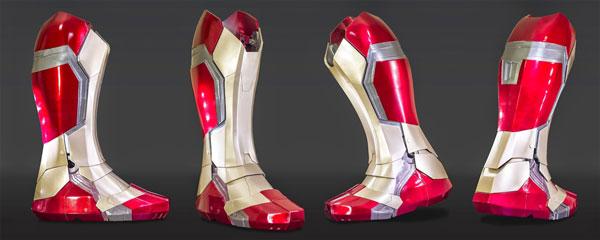
In high school, artist, animator, and film maker James Christianson interned as a steel fabricator and was able to access many tools — 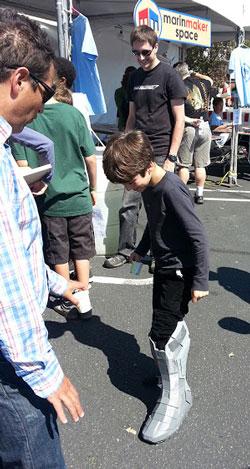 working in plastic, wood, and metal. It was this initial training that made him familiar with building objects, and no doubt also led to his interest in 3D printing. When he purchased his Afinia 3D printer in 2013, Christianson decided that he would make a mechanized armor prototype, and he has done just that. He has completed two versions of an Iron Man MK 42 Prototype Boot using his Afinia printer, and many self-taught skills. Both versions have been displayed at the Greenbrae Mini Maker Faire, to the delight of both Iron Man and 3D printing fans!
Christianson has attributed his 3D printing skill set that led to the successful prototyping of his Iron Man boot to the Internet tutorials and people he was able to get help from. Christianson is an Avengers fan and he was especially impressed by the body armor in Iron Man 3. He says he chose the boot specifically because it was what Iron Man first started with and it has so many interesting components.
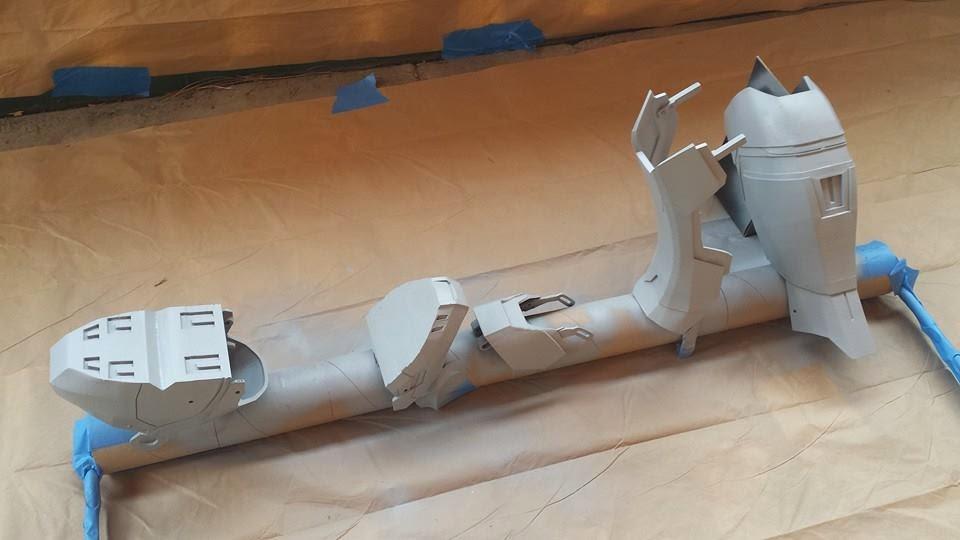
Two versions of the boot prototype were created: the first was more experimental while the second was more of a group effort that involves electronics, such as the Arduino Mini, that allows the boot to close when the foot is placed in it. This second prototype — which took between 60-80 hours to make — has more integrated electronics, joints, and interior and skeletal components. It also took Christianson time to learn how to paint the boot to look like metal. The team he gathered to the project — “Together we are Jarvis,” he said, referencing Tony Stark’s famous system — have the experience and enthusiasm to see it through.
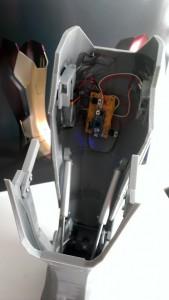 Now a third version is in the works. This one has redesigned plate movements, more expensive electronics, and it is made from “a skeletal frame instead of the outside armor itself.” This boot version has six different kinds of bearings involved with “twelve joints, servos, linear actuators, lights, new materials etc.”
In many ways, Christianson credits his Afinia 3D printer’s reliability, accuracy, and rigid build for his boot’s overall quality. He also credits the acetone slurry machine he used to bond different printed boot parts together (after trial and error with different kinds of glues). This ability to bond smaller parts together into a larger part made his printer’s smaller build area less of a disadvantage. And the combination of different parts gives the boot prototype its unique high-tech appearance, too.
To view more details about Christianson’s design and building process, and to read updates on his most recent version, you can check his blog out here. Let us know what you think of the design in the 3D Printed Iron Man Boot forum thread over at 3DPB.com. Check out the video below of the first prototype.
https://youtu.be/HOtrWT0N74c
Subscribe to Our Email Newsletter
Stay up-to-date on all the latest news from the 3D printing industry and receive information and offers from third party vendors.
Print Services
Upload your 3D Models and get them printed quickly and efficiently.












You May Also Like
Divergent Declares that German 3D Printers are Superior, And Plans Massive LPBF Expansion
Divergent has announced a new version of its Laser Powder Bed Fusion (LPBF) printer and a new site. The company aims to do nothing short of “further accelerating its mission...
Incodema3D Buys 14 Metal EOS Systems, Now One of the World’s Largest Metal 3D Printer Operators
Recently, a majority stake of 3D printing service bureau Incodema3D was purchased by AFM Capital. Under new ownership, the Freeville, New York company is now using its cash-rich parent for...
CEO Yoav Zeif on Why Stratasys’ Markforged Acquisition Is Really a Bet on Industrialization
When Stratasys announced plans to acquire Markforged, the immediate focus was on the deal. Markforged is one of the most recognizable names in additive manufacturing (AM), known for its continuous...
3D Printing & the Autonomous Era: Defense Tech’s Latest Mutation
When we last checked in on the broad defense tech landscape and the role of the additive manufacturing (AM) industry in that environment, it became clear that the connecting thread...