Interactive Sofa Studio Uses RFID and 3D Printing to Tune the Customer Experience

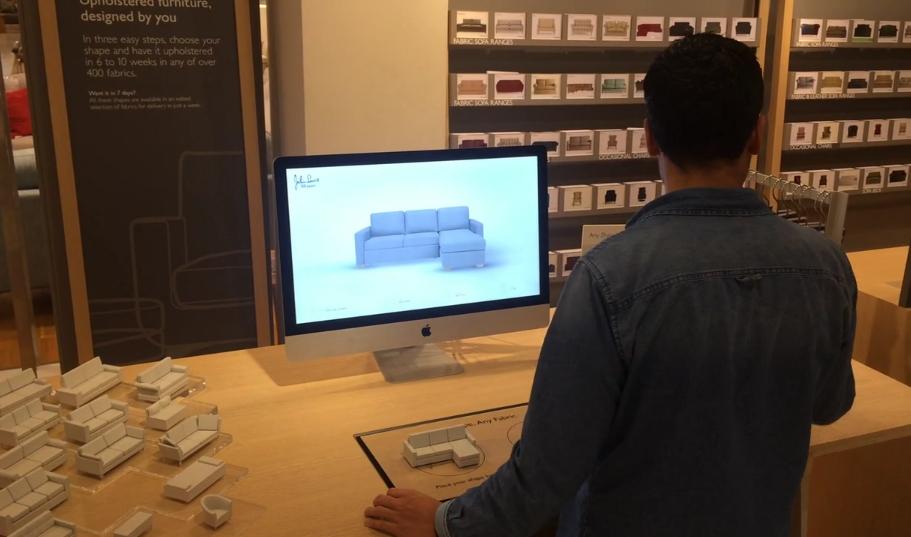
John Lewis Interactive Sofa Studio 3D Printing
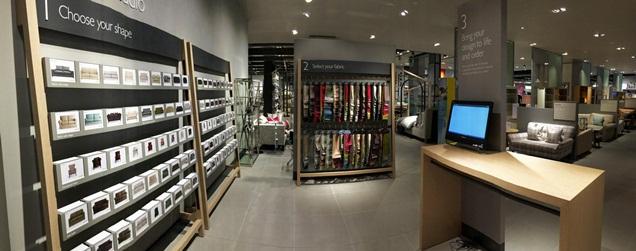
They call it the interactive sofa studio, and it’s a prototype tool that uses 3D printed pieces to focus the customer’s in-store experience at the John Lewis Any Shape and Fabric store.
John Lewis is a 150-year-old London retailer, and though they have a long history, they’re hardly resting on their laurels. The company created an initiative called JLAB 2, and it’s a program of “pitching and mentoring” which calls on up to 10 technology firms to come up with bleeding edge ideas to sharpen their business practices.
 The big prize goes to one winner – nearly $150,000 funding plus the chance to land a contract with the retailer. John Vary, the innovation manager for John Lewis, says the incubator idea is structured to achieve business objectives and look at the retailer’s key challenges.
“What’s important is we give them some boundaries, to say: ‘OK we want you to look in this area so there’s a bit more structure there,’” Vary says
The JLab is open to individuals, companies, start-ups and established companies, and according to Lewis “it’s more about the solution and the experience they are offering and their ability to mold their solution for us.”
Most of the work happens in what the company calls Room Y. It was Vary’s idea, and he calls it a place to bring the latest ideas to life quickly using technologies from software developers, interactive designers and engineers. One of the the Room Y projects, Sofa Studio was tested at John Lewis Oxford Street location and it will go live this month.
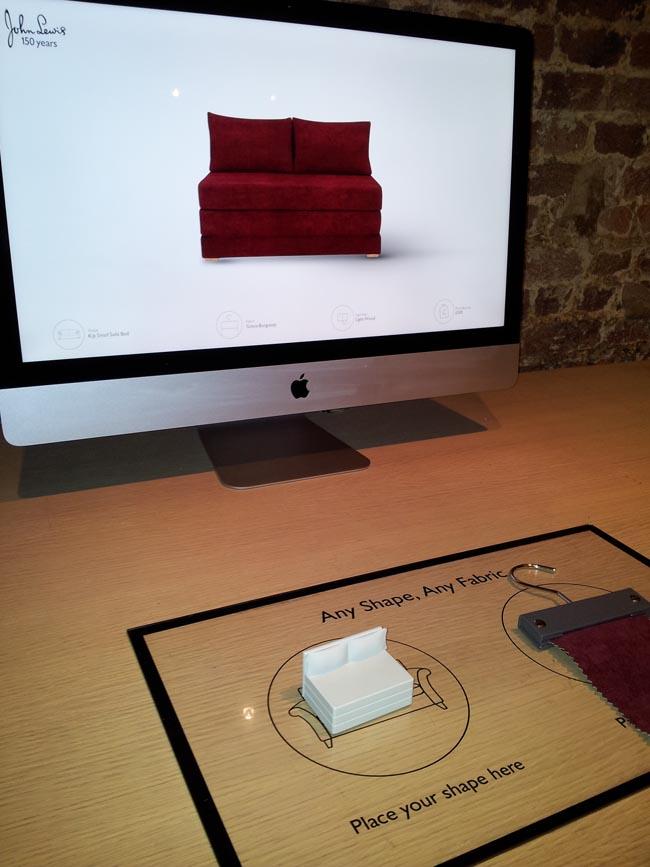
Sofa Studio is aimed at letting a customer design a personalized sofa. It combines 3D printed model sofas and color swatches which both contain RFID tags.
It works like this: The sofa and the swatch are placed on a tabletop reader and the information encoded within the pieces combines to produce an image on a display to reveal the customer’s choices.
“With a picture, you don’t get a sense of scale and size,” Vary says. “Looking at a picture is not the same thing as being able to play with something, and this also takes away the complexity of navigating a computer screen.”
Vary says Sofa Studio was built in 12 weeks. It used 3D printing and laser cutting to create the “reader,” and over the course of another 12 weeks, the device and the system were used in some 65,000 customer interactions.
What do you think about the Sofa Studio and how it uses 3D printing? Let us know in the Sofa Studio forum thread on 3DPB.com.
Subscribe to Our Email Newsletter
Stay up-to-date on all the latest news from the 3D printing industry and receive information and offers from third party vendors.
Print Services
Upload your 3D Models and get them printed quickly and efficiently.











You May Also Like
3D Printing Financials: Velo3D Sees Rising Demand and Defense Growth, but Losses Persist
Velo3D (Nasdaq: VELO) is moving further into production-focused 3D printing, with growing demand from defense and aerospace customers shaping its strategy. The company is shifting beyond selling machines toward producing...
What the 2026 Post-Processing Survey Reveals About the Future of AM
As additive manufacturing (AM) continues its transition from prototyping to production, industry attention is shifting toward one of the most demanding but often overlooked parts of the workflow: post-processing. The...
Additive Manufacturing Is Rewriting the Rules of Reshoring
Reshoring sounds straightforward: bring production back home. In practice, it’s far more complex. According to recent research by Hexagon in 2025, about 36% of U.S. manufacturing leaders are actively looking...
Sintavia Taps NVIDIA Blackwell for AI-Driven Additive Manufacturing Pipeline
Investors have become increasingly anxious about the sustainability of NVIDIA‘s growth trajectory, which is a rather natural outcome when a stock goes up infinity percent or so over the course...