New Details Emerge On Biozoon’s 3D Printed SmoothFood

The 3D printing of food, it sounds interesting, but outside its decorative uses, the idea does not appeal to the majority of people out there. That’s not to say eventually, as the technology behind food printing matures, there  won’t be a market for such a product. One German company however, called Biozoon, which we covered in an article six weeks ago, has found an interesting application for 3D food printing. Believe it or not, it just might be a multi-million dollar business idea, while at the same time helping a countless number of less fortunate individuals.
As we mentioned in last month’s article, Biozoon targets a group of individuals who suffer from dysphagia, a condition which makes it difficult for a person to swallow their food. Instead of the way you and I may swallow, without even thinking about it, their larynx does not close properly. The condition is rather common among the elderly. It is estimated that 20% of individuals 50 years of age and older have difficulty swallowing to some degree, due to dysphagia.
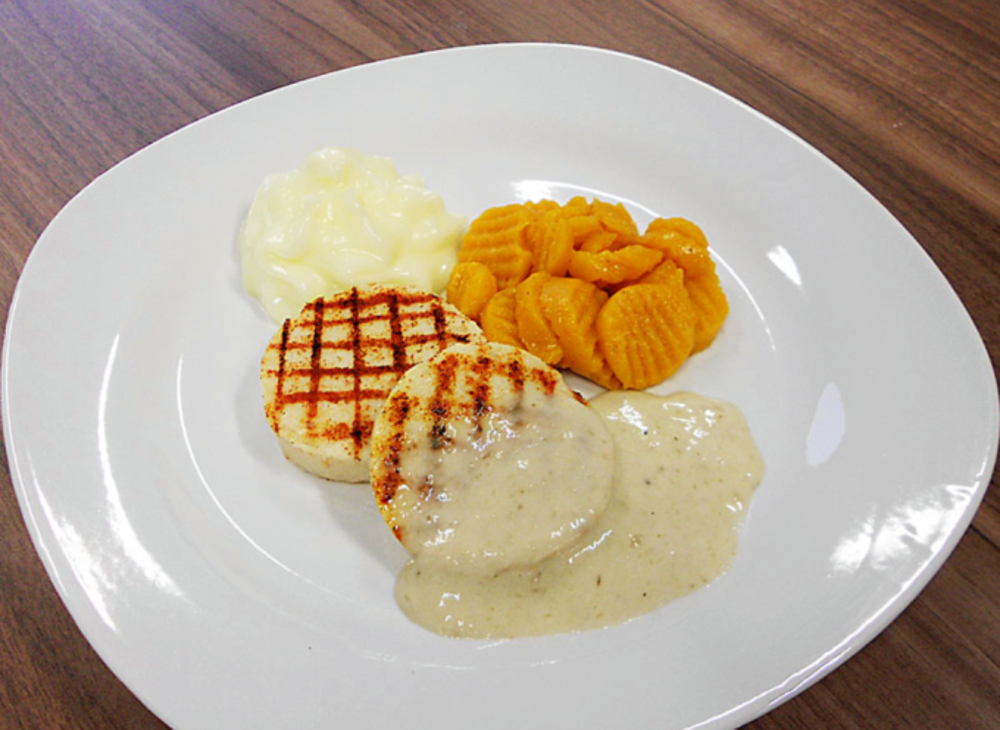
An Entire Plate of 3D Printed Food
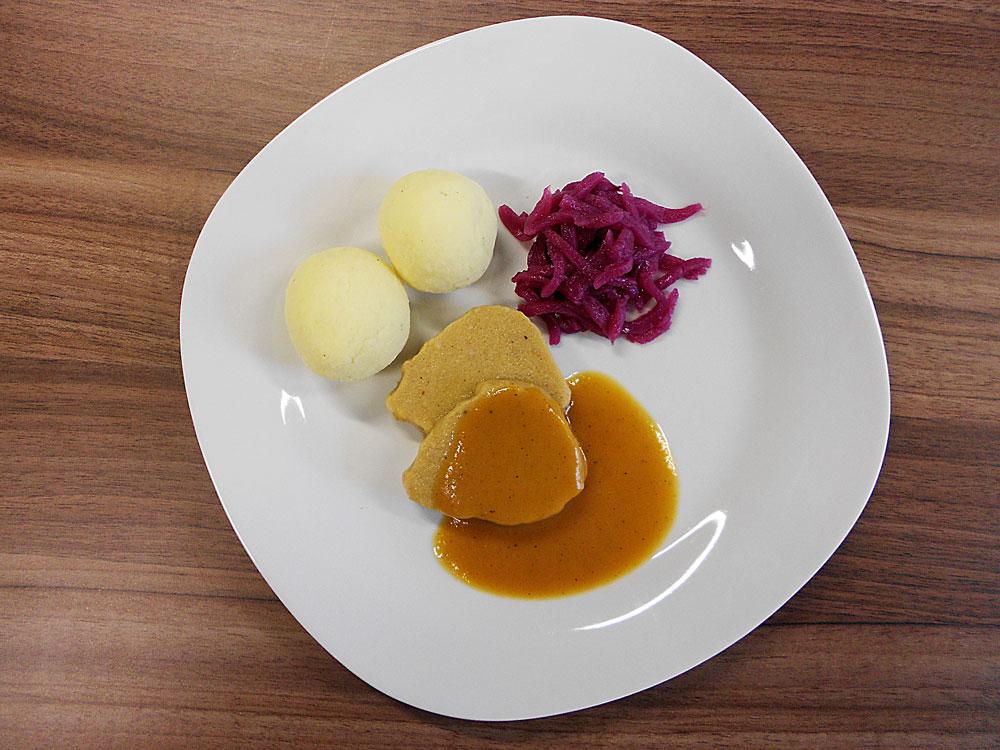
This makes the Biozoon technology perfect for the growing number of elderly individuals living in nursing homes and assisted living facilities. This week, further details emerged about the 3D printers that Biozoon had been working on. Apparently the printers are now spitting out all sorts of food puree. The printers which use 48 nozzles, via a jetting technology, combine puree of fresh ingredients like asparagus, chicken, pork, peas, pasta, and potatoes with a substance, which Biozoon prefers to keep a secret. It then prints those ingredients out in whatever shape the user desires. The secret substance allows for the puree to hold its shape, but at the same time melt in the mouth of whoever takes a bit. Sandra Forstner, the project manager for Biozoon, explained to Munchies, a food blog, how the printer is able to print in different shapes and textures.
“The printer is controlled by software where you can program, more or less, every kind of shape. The printing material itself will provide the taste since it’s normally spiced food purée, combined with the newly developed texturizing system that will be printed onto the plate. This means that with the printer we cannot adjust the taste, only the shape.”
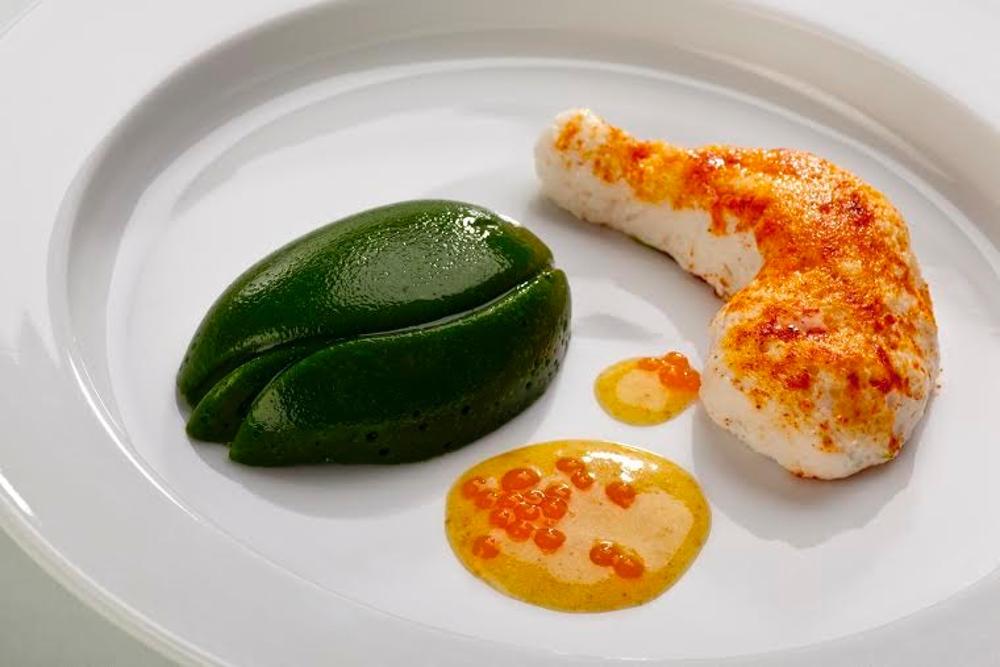
According to Munchies, Biozoon is the coordinator of the project, however, several companies are involved, including Foodjet, who provides the ink jetting technology for the SmoothFood project in nursing homes. Biozoon is also responsible for developing texturing technologies for the printers. They currently have 4 different types of textures that they are able to achieve. They are able to produce foods with an airy foam, stable foam, gel, or thickened liquid textures. The ability to give different foods, different textures, goes a long way towards making the food almost as palatable as the solid alternative.
The project is currently under way in nursing homes as we write this article. All the food is prepared off-site, and shipped in as needed. Whether it’s a dessert, an appetizer, a main course or snack, there are 3D printing solutions for them all. For more details on this story, and to discuss Biozoon, and this project, check out the 3DPB.com forum thread for 3D printed food.
Subscribe to Our Email Newsletter
Stay up-to-date on all the latest news from the 3D printing industry and receive information and offers from third party vendors.
Print Services
Upload your 3D Models and get them printed quickly and efficiently.













You May Also Like
Stratasys Showcases 3D Printed Automotive Applications & New Printer at IMTS 2026
Just ahead of last week’s International Manufacturing Technology Show (IMTS) in Chicago, Stratasys launched the F870, a new large-format, production-grade FDM 3D printing platform designed to drive industrial manufacturing at...
3D Printing Financials: $28M in China, U.S. Deals and a Metal AM Comeback
Money continues to go into additive manufacturing (AM). From a $30 million raise for a Chinese metal 3D printing company to new funding for naval AM and a European company...
Stratasys Wins $27.6M in Patent Case Against Bambu Lab; Bambu Challenges Verdict
Update, September 21, 2026: This article has been updated with a statement from Bambu Lab responding to the verdict, along with additional information about the company’s ongoing patent challenges against...
AMAsia Pulse: AM Investment Picks Up Across Asia-Pacific
The first half of September brought fresh investment and expansion activity across Asia-Pacific’s additive manufacturing sector. China’s Xinjinghe secured funding for an aerospace AM hub, South Korea’s Lincsolution outlined plans...