Researchers are 3D Printing Living Brain Tissue to Eventually Treat Brain Disorders

 Sometimes when covering the 3D printing space, I have to look at my calendar to make sure we are still living in the year 2014. The technology is advancing so quickly that sometimes I have to double check and make sure I’m not some sort of time-traveling journalist. Each and every time that I check that handy dandy calendar though, I find that we are still just living in the beginning of the 21st century.
In all seriousness though, the future definitely looks bright when it comes to rapid prototyping, rapid manufacturing, space travel, medical technology, and more, thanks to the potential that lies within the 3D printing space. To me, the most promise lies in that of 3D printing within medicine and the medical fields. We have already seen many breakthroughs made via 3D bioprinting, where researchers have been able to 3D print miniature organs which can be used for testing of drug interaction. In fact, just last month a company called Organovo made 3D printed human liver tissue commercially available for the first time.
Now, researchers at the University of Wollongong and ARC Centre of Excellence for Electromaterials Science (ACES) at St Vincent’s Hospital Melbourne in Australia want to use the same concept to study the human brain, with hopes of curing various brain diseases and disorders as well as repairing head injuries. To do so, they are setting out to 3D print real brain tissue using stem cells.
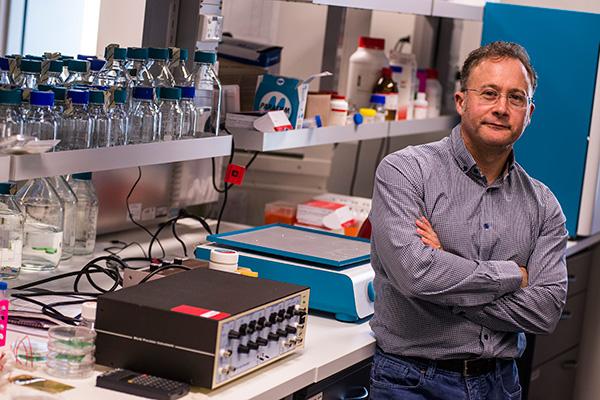
Stem cell expert Professor Jeremy Crook (image source: ARC Centre of Excellence for Electromaterials Science)
The diseases that they wish to initially help understand, and then ultimately treat, are those such as schizophrenia and epilepsy which are not able to be studied through the use of animal research. If all goes as planned, this research could lead to cures and better treatment of virtually all brain disorders and diseases. It will also help doctors better understand treatment options for severe brain injuries, and perhaps even provide transferable tissue that could eventually be implanted into a human brain.
“The brain in mind-bogglingly complex, it’s undoubtedly the most complex thing known to mankind,” said ACES stem cell expert Associate Professor Jeremy Crook. “We are using additive fabrication technologies such as 3D bio-printing to carefully control our tissue constructs from the nano, through to micro and right up to macro dimensions, deliberately organising cells within the construct to closely mimic functional brain tissue.”
Jeremy Crook, at the A*Star Institute of Medical Biology in Singapore, was the first to use human stem cells to model psychiatric disease in the lab, and if all goes as planned this technology could ultimately help cure many of the world’s most complicated disorders.
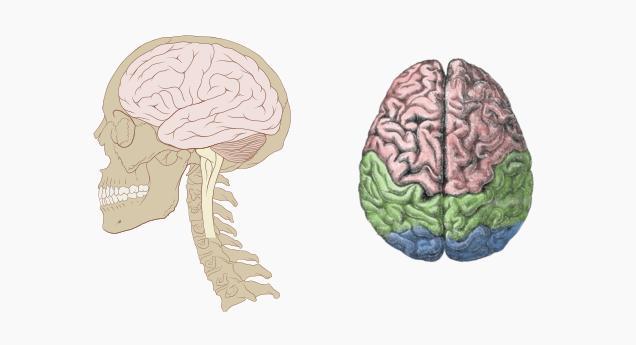
“Our priority goal for the next seven years in the Centre of Excellence is to use the human stem cells to fabricate useable 3D neural tissue constructs that reasonably reflect the tissue sub-types you find in different regions of the brain including neurons and supporting cells,” Crook said.
While initially the 3D printed tissue will be used to study the causes and effects of certain neurological disorders and diseases, Crook believes that eventually the tissue could be used to restore function to the human brain in instances where disease, injury, and even aging have caused improper function. This is great news for those who will in the future be diagnosed with brain disorders, such as schizophrenia, epilepsy, and even perhaps Alzheimer’s disease.
“We are at a very exciting time in stem cell and regenerative medicine research and technology development,” Crook explained. “With the opportunity and realisation that natural and synthetic biomaterials can be used to support and control cell and tissue engineering, I believe we can better model healthy and disease biology for understanding disease processes, drug development, and tissue replacement therapy.”
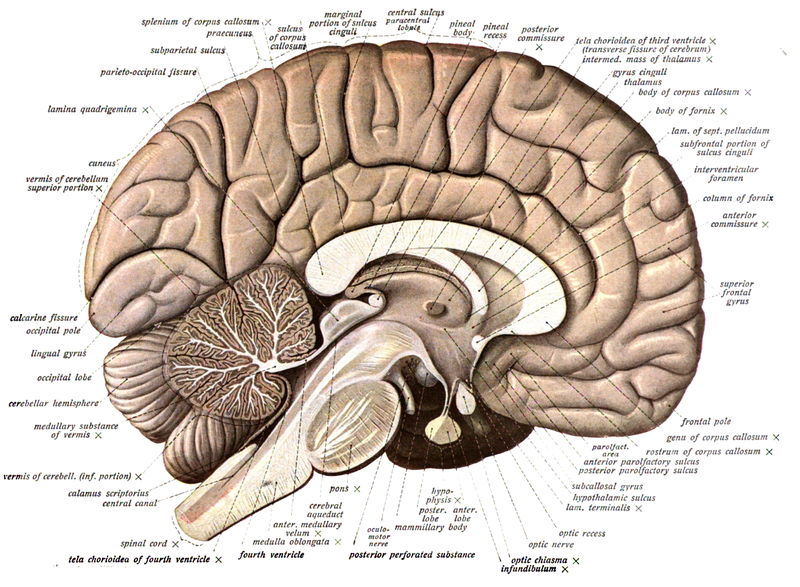
Also in the future it is possible that the researchers’ understanding of stem cell interaction with specific materials could lead to implants and bio-synthetic neural micro-tissue constructs that could be fabricated using a patient’s own living stem cells, which are then 3D printed.
While this technology certainly has a ton of potential, it is worth noting that we are very far from understanding exactly how the brain operates. However, technology such as 3D bioprinting using stem cells will certainly give us further insight and help researchers uncover the mysteries of the human brain. While the potential seems unbelievable, it could conceivably be decades before most of the benefits are realized.
What do you think? Will 3D printing of brain tissue via the bioprinting of stem cells lead to cures for some of the most difficult to treat brain disorders? Discuss in the 3D printed brain tissue forum thread on 3DPB.com.
[Source:electromaterials.edu.au/]Subscribe to Our Email Newsletter
Stay up-to-date on all the latest news from the 3D printing industry and receive information and offers from third party vendors.
Print Services
Upload your 3D Models and get them printed quickly and efficiently.











You May Also Like
Ceramitec 2026 3D Printing Wrap Up
I was surprised by just how many 3D printing companies and 3D printing projects there were at Ceramitec this year. I came away from the show convinced that the ceramics...
RusselSmith Brings Additive to Ghana’s Maritime Sector
Nigerian firm RusselSmith is in talks with Ghana’s Maritime Authority (GMA) to bring 3D printing to Ghana’s maritime sector. The Commonwealth Enterprise and Investment Council (CWEIC) helped make the discussion...
The Blueprint for Industrial Serial Production
Lithoz is kicking off the 2026 trade fair season with a powerful showcase of real-world applications of ceramic AM serial production capabilities alongside new material upgrades. The company is stepping...
Fraunhofer ILT Tests 3D Printed Titanium Reactors to Generate Hydrogen Onboard Heavy Vehicles
The Aachen-based Fraunhofer Institute for Laser Technology (Fraunhofer ILT) is to research titanium aluminide hydrogen reactors and heat exchangers. The hope is that lightweight, better-performing 3D printed components will make...