Tethon3D Buys Sintx Subsidiary to Vertically Integrate Ceramic 3D Printing Materials

Omaha, Nebraska-based Tethon 3D develops photopolymer 3D printing resins for materials such as zirconia, alumina, and bio-inks. The company has collaborated with Carima to bring the Gazelle printer to market and has also worked on the affordable DLP bioprinter, the Bison. Tethon 3D was founded based on research conducted at the University of Nebraska and has partnered with companies like Showa Denko to develop alumina and other slurry-based resins. Now, the firm has acquired Technology Assessment and Transfer, a subsidiary of Sintx Technologies.
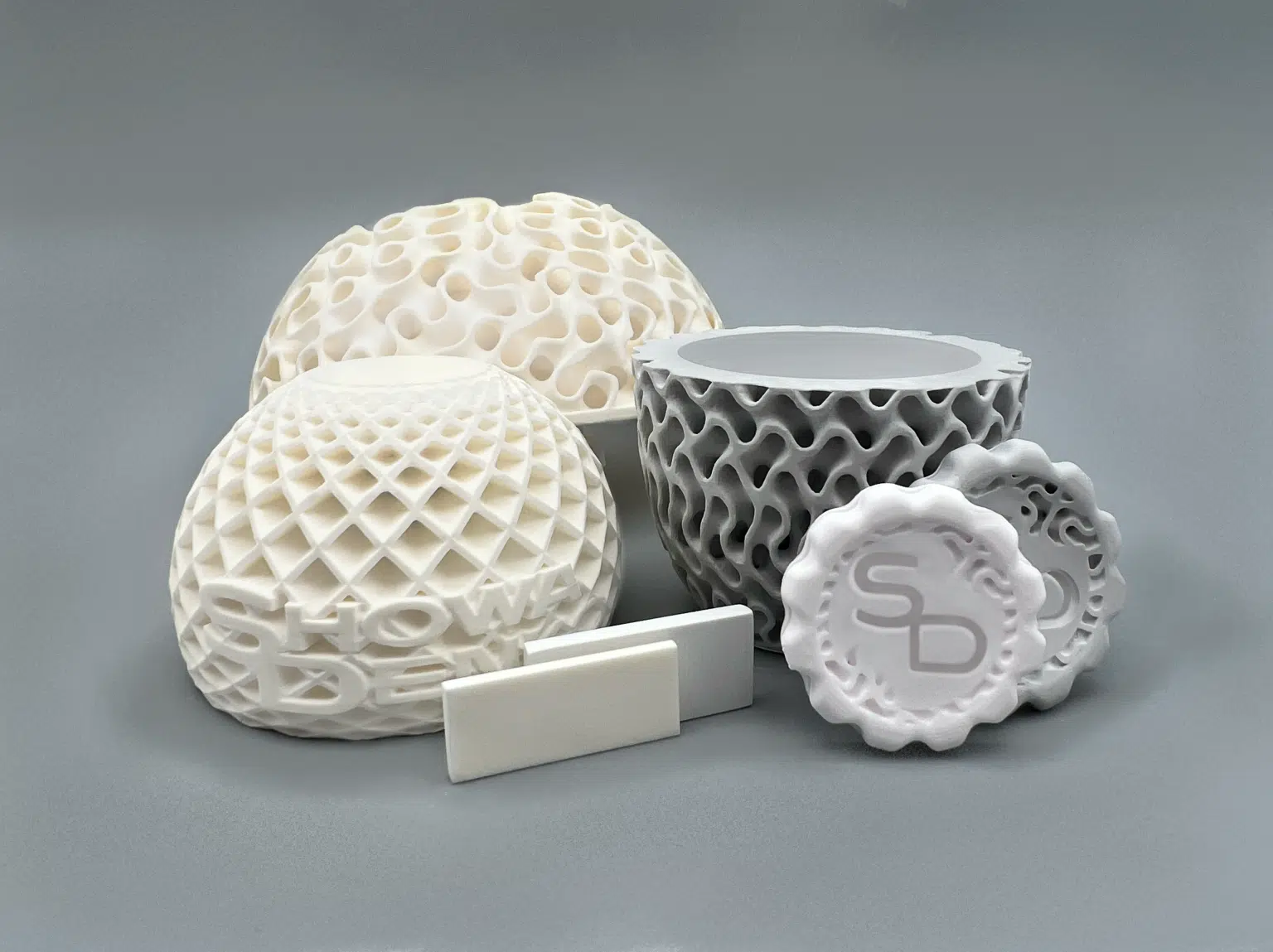
Parts 3D printed using new alumina resin from Showa Denko and Tethon. Image courtesy of Tethon Corporation.
Sintx specializes in silicon nitride ceramics (Si₃N₄), a high-performance ceramic traditionally challenging to manufacture and process. Sintx is selling the unit to focus more on silicon nitride medical devices, while Tethon will take over a Baltimore manufacturing site and expand its materials lineup. With this acquisition, Tethon can now produce its own resins, as well as debind and sinter in-house. Additionally, the company can manufacture parts, scale production alongside clients, or sell machines directly—an integrated approach that could significantly accelerate adoption.

Tethon3D CEO, Trent Allen said,
“We are excited to have the TA&T team join us at Tethon. Together, as the U.S. leaders in ceramic additive manufacturing, we will continue our domestic and global growth, while continuing to innovate our resin portfolios and ensuring our materials are compatible with more hardware platforms than ever before. With Tethon´s resources and distribution network, TA&Tcan fully commercialize its technologies. This acquisition also enables the combined dual-use companyto streamline efforts and expand its leadership in advanced ceramic manufacturing.”
TA&T President Ann Kutsch stated,
“At TA&T, we are committed to bridging the gap between the lab and marketplace. Tethon’s acquisition ensures that commitment is stronger than ever. With the resources and expertise of Tethon, we are well positioned to scale and enhance our impact in ways we couldn’t before. We are excited about this next phase of growth,”
Tethon can now capture more margin and position itself as a complete solution provider for technical ceramics. At the same time, it operates several other distinct businesses. The acquired subsidiary also produces lenses, coatings, and ceramic armor—areas that could present new opportunities or potential distractions.
TA&T has been involved in multiple SBIR and other research projects with DEVCOM and other military divisions, which could open further possibilities or, likewise, divert focus. Additionally, it remains unclear whether Sintx will continue in additive, given its partnerships with Prodways and others. Will these partnerships transition to Tethon or continue independently? That remains uncertain.
While the exact acquisition price is undisclosed, Sintx stated that “the sale of TA&T also reduces corporate liabilities by $750,000 and lowers annual operating expenses by more than $1.7 million.”
At the same time, the company has partnered with CONCR3DE, a relatively new entrant in binder jetting. The Dutch firm aims to expand its material offerings through collaboration with Tethon. Together, they will develop parameters and ceramic materials, with silicon carbide (SiSiC) being one of the materials mentioned.

“We are thrilled to join forces with Tethon 3D, whose proven track record in developing advanced binder jetting materials makes them the ideal partner for our next-generation additive manufacturing solutions. Tethon 3D’s unwavering commitment to pushing the boundaries of material science, combined with their wealth of experience in binder jetting, perfectly aligns with our vision for elevating the industry standard,” CONCR3DE co-founder Matteo Baldassari said.
The acquisition could be a weight around Tethon’s neck. It remains unclear whether the company can fully absorb these new liabilities or successfully translate them into growth. Similarly, the potential success of its partnership with CONCR3DE is uncertain. Both moves are highly ambitious. With the uncertainty surrounding Forward AM and Desktop Metal, Tethon appears eager to expand in ceramics, binder jetting, and beyond.
Subscribe to Our Email Newsletter
Stay up-to-date on all the latest news from the 3D printing industry and receive information and offers from third party vendors.
Print Services
Upload your 3D Models and get them printed quickly and efficiently.













You May Also Like
EOS Joins the MAT‑H2 Consortium
EOS is joining the MAT‑H2 consortium. MAT is an EU-funded group that aims to do research into a hydrogen-led economy. The thinking is that hydrogen will be a clean energy...
Where the Money is Going, Part Two: Why All Roads Lead to AI
In Part One of this article, Vanesa Listek expertly described the major themes driving infrastructure investment so far this decade, illustrating how the same concerns are driving both public and...
DTU 3D Prints New Fuel Cell Design With 5x Power Boost
Technical University of Denmark (DTU) researchers have used Lithoz ceramics 3D printing to make more efficient hydrogen fuel cells. With a part made from Lithoz Yttria Fully Stabilized Zirconia (8YSZ),...
Fraunhofer ILT Tests 3D Printed Titanium Reactors to Generate Hydrogen Onboard Heavy Vehicles
The Aachen-based Fraunhofer Institute for Laser Technology (Fraunhofer ILT) is to research titanium aluminide hydrogen reactors and heat exchangers. The hope is that lightweight, better-performing 3D printed components will make...