
Pininfarina and De Rosa Join Forces to Create a 3D Printed Italian Racing Bicycle

 At 13 years old just after the war in 1947, Ugo De Rosa was crazy about bicycles. He reveled in reviewing the feats of the great road racers Bartali and Coppi, and once his studies were complete for the day, he headed to Filippo Fasci’s workshop where he dreamed of building himself a bike and becoming a champion himself. By age 18, he’d set up his own business building those bicycles of his dreams.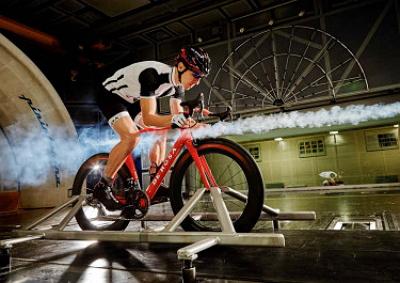
Francesco Moser and his Filotex team won the World Championship with a De Rosa machine, and demand for De Rosa bicycles skyrocketed in the 1980s around the world. The demand meant De Rosa’s company outgrew his small workshop adjacent to his home, and the company relocated to a larger building in Cusano Milanino.
As De Rosa began researching and developing designs with titanium tubing, his De Rosa Titanio led to aluminum and carbon fiber frames in the late 1990s.
During that same time frame following the war years, the Italian design firm and coach works Pininfarina was creating their stylish, and now wildly expensive, automotive works of art. The company’s special car bodies represented the epitome of manual craftsmanship, and their factory began to boast the latest in industrial tools and procedures.
 After the war, Pininfarina designed and produced the 1946 “Cisitalia,” and it’s now part of the collection at the Museum of Modern Art in New York as the curators there called it “one of the eight outstanding cars of our time.” The Cisitalia, with its simplicity and flowing lines, set the standards for metalworking beauty in the post-war era automobile.
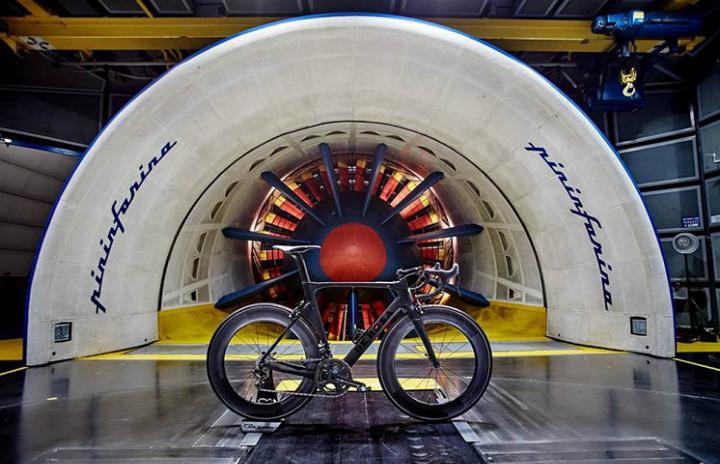
Now Pininfarina and De Rosa have announced the partnership that resulted in a bicycle which represents the ethic of both companies: the De Rosa SK Pininfarina.
“I am very proud that Pininfarina have chosen De Rosa as their partner to undertake a project whose strengths are extremely high quality and elegance. We want to give the world a bicycle that puts the heart into design, in that it combines passion, cutting-edge technology and all-round excellence, thanks to the joint efforts of the Turin-based design centre and our R&D laboratory. Form and function in the service of the most demanding cyclists,” said Cristiano De Rosa, Managing Director of De Rosa.
It’s a stunning racing bike which arose from the design ideals forged by both companies, and they call it “perfect synthesis of two icons of Made-in-Italy excellence.”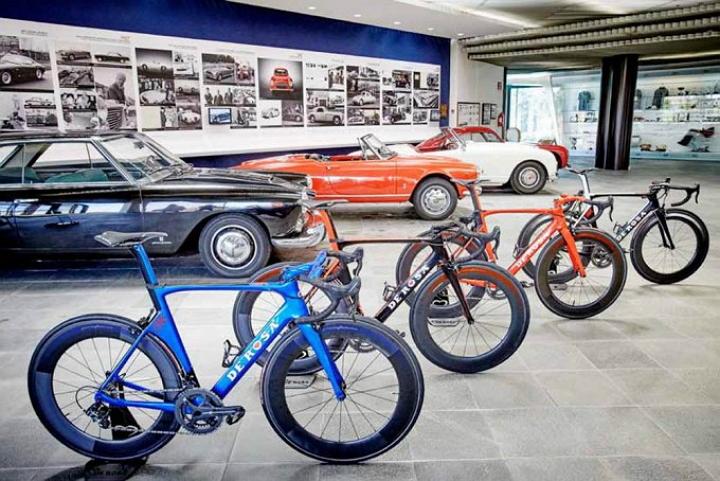
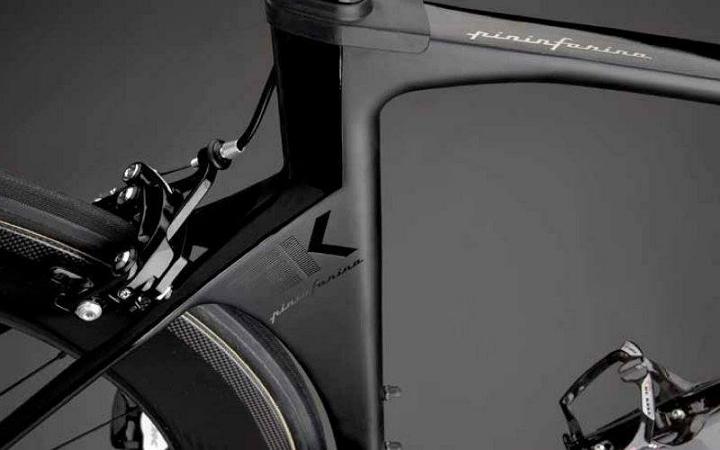
Using what they call an “ultra-precision 3D printing process” and “a special resin,” the resulting machine features a frame which is both as stiff and light weight as possible. As might be expected, it’s sleek, streamlined and designed to eliminate drag.
The De Rosa SK Pininfarina racing bicycle is available in a variety of sizes and colors, and each of the bikes is crafted from carbon fiber.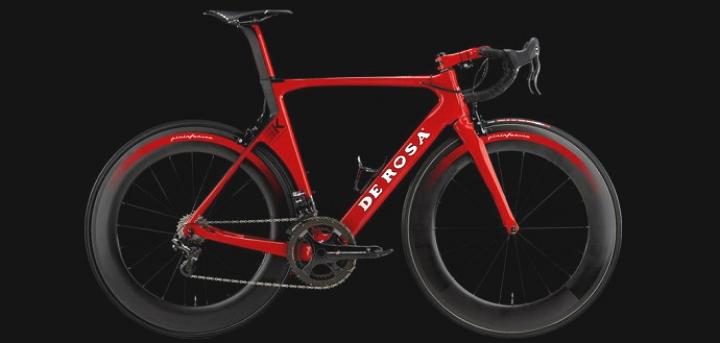
“Passion and design are the keywords of our collaboration,” said Paolo Pininfarina, Group President of Pininfarina. “Love for speed and high level performance. Design as a means to devise solutions that are innovative from the functional viewpoint and elegant in terms of aesthetics. The SK Pininfarina is a full embodiment of the values we share with De Rosa and the first result of what we hope will be a long-lived collaboration between our two companies.”
And these new machines will surely come at a dear price. While the pricing for the collaborative creation has not been announced yet, as an example, a De Rosa Sessanta 60th Anniversary Carbon Super Record EPS Bike retails for nearly $17,000.
What do you think about this collaboration between Italian coach builder Pininfarina and racing bicycle manufacturer De Rosa? Let us know in the Pininfarina and De Rosa 3D Printed Bicycle forum thread on 3DPB.com.
Subscribe to Our Email Newsletter
Stay up-to-date on all the latest news from the 3D printing industry and receive information and offers from third party vendors.
Print Services
Upload your 3D Models and get them printed quickly and efficiently.













You May Also Like
The Manufacturing Race Behind the Drone Revolution
We are in the middle of a major manufacturing shift focused on the production speed and payload capacity of uncrewed aerial systems (UAS), or drones. A recent Manufacturing Dive article...
ADDMAN to Buy Up to $10.8M in Nickel 718 Powder from 6K Additive Over 30 Months
After years of buildup, we’re finally starting to see what the US metal additive manufacturing (AM) market could look like at scale. To be sure, it’s still not quite there,...
Metal AM in a Multipolar World, Part 2: How PBF and DED Could Change by 2035
The first decades of PBF development were heavily shaped by machine capability: more power, more lasers, larger build volumes, better recoating, and improved process monitoring. These developments will continue, but...
Advanced Manufacturing at IMTS 2026: 3D Printing and AI and Drones, Oh My!
Last week’s International Manufacturing Technology Snow (IMTS) in Chicago welcomed over 90,000 attendees to the jungle that is McCormick Place. With over 1.17 million square feet of exhibit space, and...

























































