It’s Like Walking on Air With These 3D Printed Shock-Absorbing Shoes


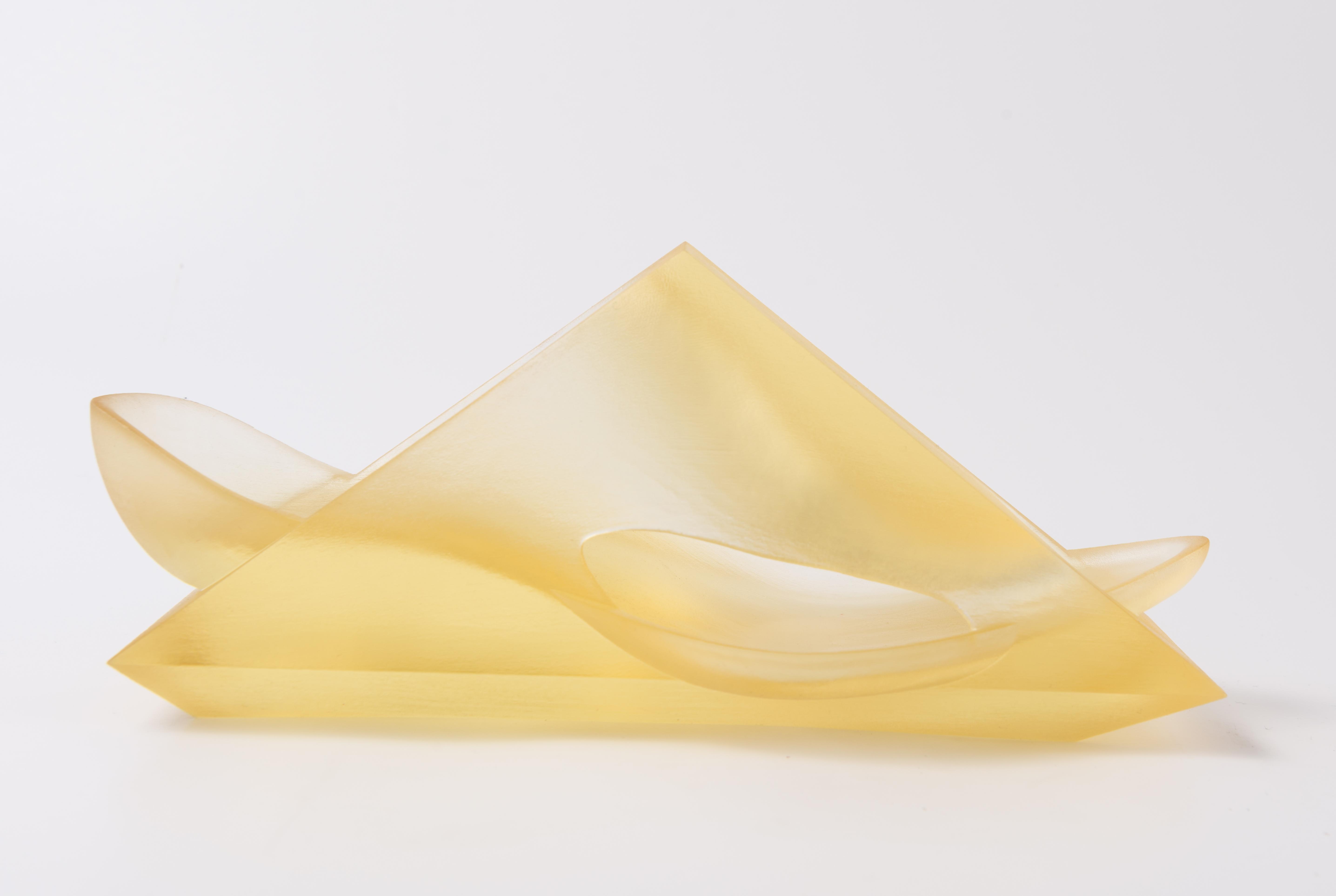 We’ve seen 3D printed shoes before–what is interesting to note is that these stories are becoming increasingly common as the technology becomes more accepted as a method for footwear design and production. However, it is still sufficiently novel that these kinds of projects are attention grabbing not only for their design but for the simple fact that they were fabricated in this way.
 In the case of these designs by Neta Soreq, the shoes are worthy of attention in their own right and are the result of a high taste and an in-depth understanding of the possibilities provided by 3D printing as a technique for fabrication. Soreq graduated this year with a BFA in Jewelry and Fashion Design from the Bezalel Academy for Arts and Design in Jerusalem. She began to experiment in footwear design during her second year and focused on the idea of 3D printing them while in her third and final year.
Soreq has the distinction of having produced the first 3D printed shoe at Bezalel – and what a way to make an entrance. Inspired by Pink Floyd’s Dark Side of the Moon, she takes that concept beyond a simple visual reference, making an effort to infuse the experience of wearing those shoes with the associations of the lunar trip taken with the music.
For her final project, she designed a spring shoe for not just the active, but actually the hyperactive. In an interview with 3DPrint.com, Soreq explained her approach to the design of shoes with what she calls a ‘spring’ heel:
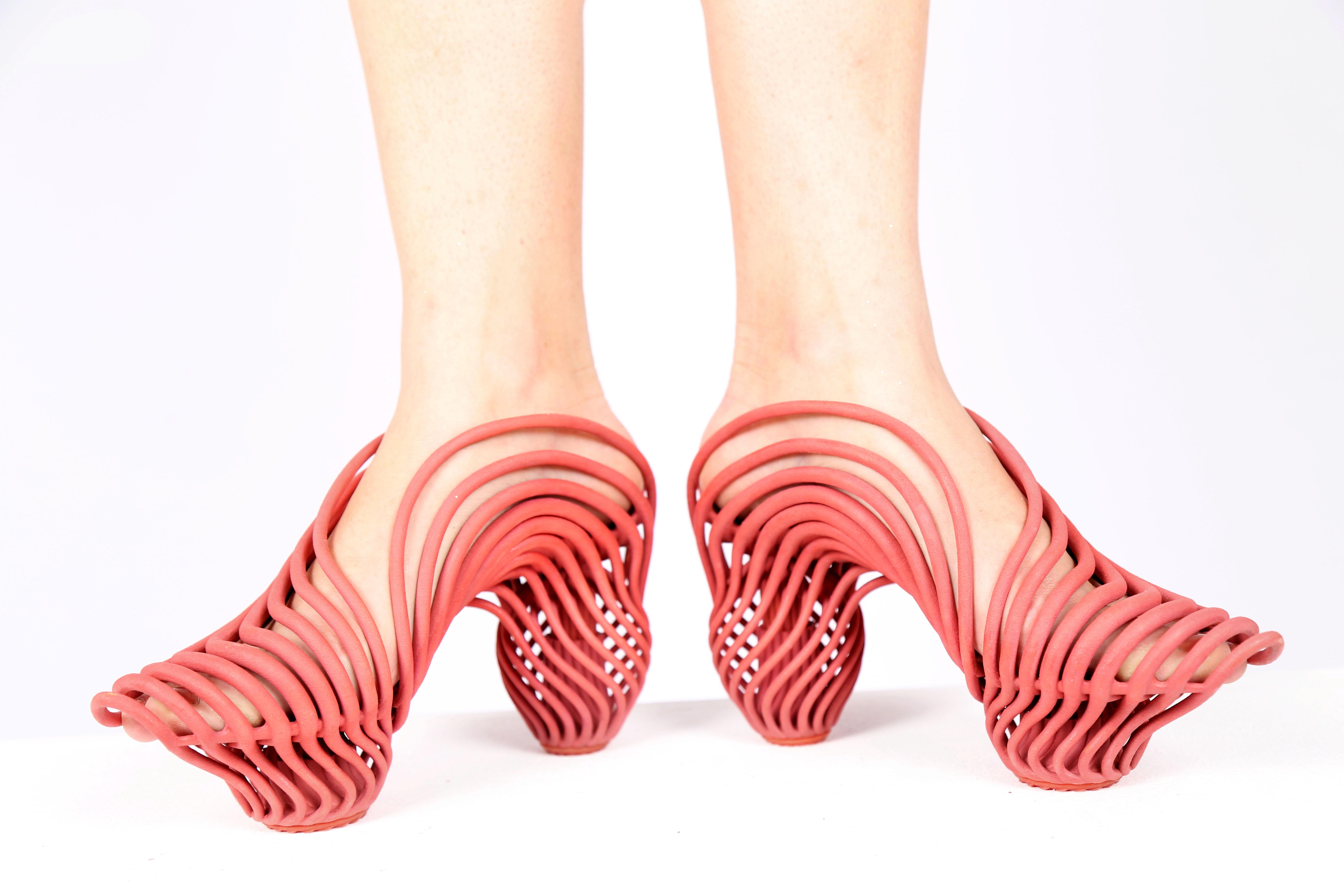
“My shoe design came from studying about hyper-actives people with a focus on different therapy treatments that direct the energy in the body. I was inspired by the structure of the muscles and the natural movement of the foot in different positions. The spring heel has a mechanism which acts as a shock absorber, and gives the wearer a new walking experience. The wearer doesn’t feel the pain and pressure that occurs because of the incline of a high heel shoe that has a fixed heel. The shoes can also help people with knee and back problems.”
She began with sketches and moved to the development of digital models in SolidWorks and physical models using a 3D printing pen. Once she had determined the form she printed them on an Aran-RD SLS printer. The uppers were printed in Nylon12 and to prevent friction with the floor, the soles were fabricated in a photopolymer created by The Object Company. The shoes are lightweight and comfortable and provide support in a way that counteracts the normal stresses placed on the shoes from wearing heels.
If a bit futuristic still, the concept is very interesting and clearly the high heel is something that needs to be re-examined. Who knows, one day they might be the most comfortable shoe around!
Are these shoes that would keep you walking on air? Let us know your thoughts in the 3D Printed Shock-Absorbing Shoes forum thread over at 3DPB.com.
Subscribe to Our Email Newsletter
Stay up-to-date on all the latest news from the 3D printing industry and receive information and offers from third party vendors.
Print Services
Upload your 3D Models and get them printed quickly and efficiently.













You May Also Like
The Two Paths to AM Print Services Market Growth
AM Research New market research: AM Research is building its new Additive Manufacturing Services Market 2.0 model. Learn more about the report and preorder here → Things continue to heat...
Additive Manufacturing Has a Major Growth Opportunity; Trust Will Decide Who Captures It
After years of overpromising, the next phase of AM growth will be won by companies that consistently deliver what they say. When I entered additive manufacturing in 2014, after 15...
10 Years of Multi Jet Fusion: Onsite at HP’s Vancouver, Washington Facility
At this year’s RAPID event in Boston, HP Additive Manufacturing Solutions celebrated ten years in the additive manufacturing (AM) market. The company ushered in the milestone with several innovations, including...
ADDMAN to Buy Up to $10.8M in Nickel 718 Powder from 6K Additive Over 30 Months
After years of buildup, we’re finally starting to see what the US metal additive manufacturing (AM) market could look like at scale. To be sure, it’s still not quite there,...