People’s Liberation Army of China Now Using 3D Printers for Battlefield Drills

It’s rather odd that while China is one nation which is leading the way when it comes to innovative uses for 3D printing, there hasn’t been any talk about their military implementing the technology in any way. In the meantime several other governments, including the United States, Britain, and Israel have all integrated 3D printing into exercises and practical applications within at least one branch of their militaries. Is China just better at hiding military strategy then the rest are, or are they missing out on a major opportunity?
As it turns out, the People’s Liberation Army (PLA), China’s armed forces, have actually been working with 3D printers. In fact, one such application was revealed to reporters earlier this week, and it certainly shows promise.
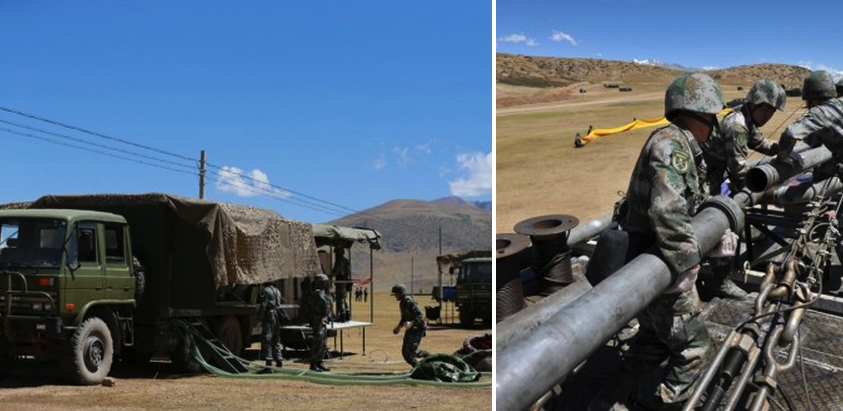
In a recent supply operations drill conducted by the PLA, reporters were on hand to witness what they described as a ‘magic scene’ at the Chengdu Military Region, one of seven military districts in the country, located in China’s southwest quarter. The drill was conducted with a convoy of six oil tanker trucks in which one truck caught fire. As the soldiers scurried to put out the flames in a relatively quick fashion, preventing the fire from spreading to the other vehicles in the convoy, they noticed damage to the truck. In particular a coupling on the vehicle needed repair and the soldiers found that such a part was not available in their inventory.
So what did they do? They pulled out a laptop and a 3D printer that they had on hand and instead of waiting for hours or longer for the part to be delivered, one solider named Dong Kaiyi pulled a model of the coupling up, while another solider fed material into the the 3D printer. Before they knew it the coupling had been printed out. While the exact machine used was not divulged, reporters on the scene claim that it used a 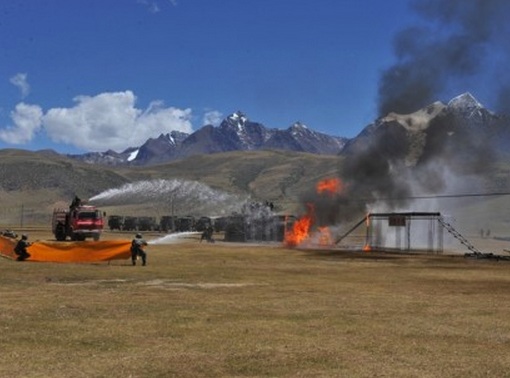 powder polymer and a binding agent.
The part was attached to the tanker, and after numerous tests the PLA confirmed that the tanker was now in perfect working order, ready to resume normal operations. The Army has been testing various other 3D printed parts as well, including ratchets, shafts and gears, all with relative success.
“One little 3D printer as opposed to waiting for 5 repairman to arrive!” Dong Kaiyi said, “The traditional way of machining parts is no longer necessary. No more planing, grinding, routing or other complex processes are required. With the 3D printer now ready for use, say goodbye to a lot of heavy maintenance machines, as field repair efficiency has improved.”
While this drill was just one possible application for the technology, there is little doubt that China is looking into the use of 3D printing for dozens of possible military applications, and as the technology improves and soldiers become more experienced using the printers, we could certainly see every convoy or military unit eventually equipped with one or more machines of their own.
Let’s hear your thoughts on the PLA’s use of 3D printing in the China’s Army 3D Printing forum thread on 3DPB.com.
Subscribe to Our Email Newsletter
Stay up-to-date on all the latest news from the 3D printing industry and receive information and offers from third party vendors.
Print Services
Upload your 3D Models and get them printed quickly and efficiently.












You May Also Like
Making Space: Stratasys Global Director of Aerospace & Defense Conrad Smith Discusses the Space Supply Chain Council
Of all the many verticals that have been significant additive manufacturing (AM) adopters, few have been more deeply influenced by the incorporation of AM into their workflows than the space...
EOS in India: AM’s Rising Star
EOS is doubling down on India. With a growing base of aerospace startups, new government policies, and a massive engineering workforce, India is quickly becoming one of the most important...
PostProcess CEO on Why the “Dirty Little Secret” of 3D Printing Can’t Be Ignored Anymore
If you’ve ever peeked behind the scenes of a 3D printing lab, you might have caught a glimpse of the post-processing room; maybe it’s messy, maybe hidden behind a mysterious...
Stratasys & Automation Intelligence Open North American Tooling Center in Flint
Stratasys has opened the North American Stratasys Tooling Center (NASTC) in Flint, Michigan, together with automation integrator and software firm Automation Intelligence. Stratasys wants the new center to help reduce...