Made In Space Breakthrough Allows 3D Printing in the Vacuum of Space, Away from ISS

 In November of 2014, Made in Space made history when astronauts aboard the International Space Station (ISS) unpacked the world’s first piece of manufacturing equipment designed to operate in space. The astronauts successfully 3D printed the first object ever made in outer space, a NASA designed buckle that is part of exercise equipment intended to prevent muscle loss in zero gravity environments. It was the first of twenty four different objects 3D printed aboard the space station, proving that the Made in Space Zero-G Printer worked as intended and could be used to create tools or replace many broken or damaged parts on the ISS without the need to wait for shipments from Earth.
 This was only the first step however. While the ability to 3D print objects, parts and tools directly on the ISS was an important development, Made in Space’s ultimate goal is to create manufacturing technologies for extra terrestrial applications. The flexibility of in-space manufacturing is vitally important for long term space missions. Not only will it allow the manufacture of components and tools that are too fragile to survive the massive g-forces involved with being launched into space, but will be a requirement for any extended space mission, such as the eventual colonization of Mars. Today the Mountain View, CA company announced that they have successfully taken another step in that direction.
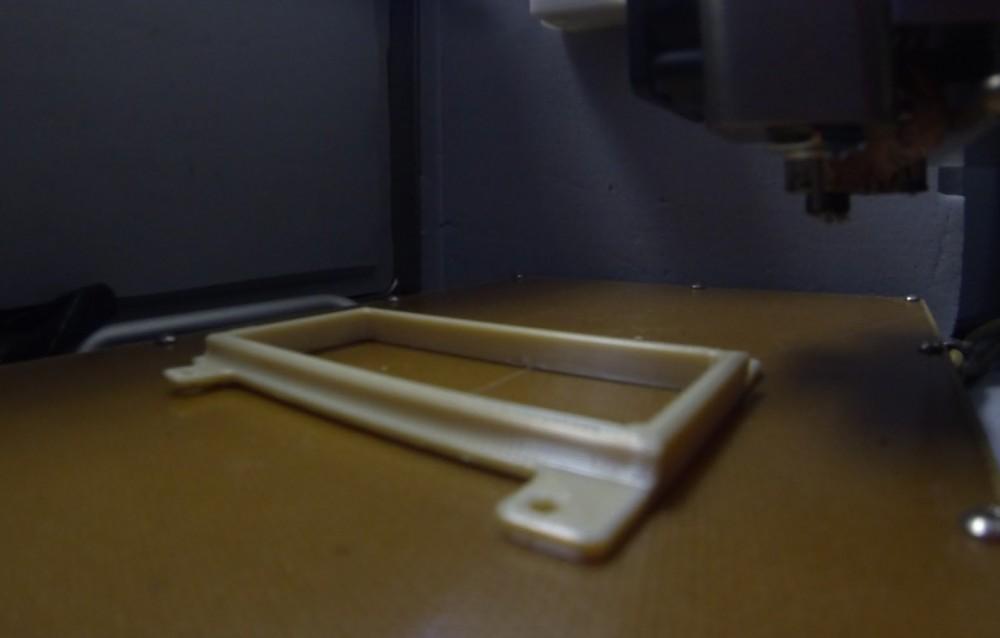
The first 3D printed test part manufactured in a vacuum.
Since they successfully achieved zero gravity 3D printing last year they have been working on technology that would allow astronauts to manufacture objects outside of the ISS in the vacuum of space. Just over a month ago Made in Space completed a round of successful tests indicating that their newest generation of 3D printers will be fully functional in open space. The new technology will be the first machine capable of in-vacuum additive manufacturing.
“We believe we are as little as 18 months away from incorporating the current designs into on-orbit tests. These preliminary tests, combined with our experience with microgravity additive manufacturing, show that the direct manufacturing of structures in space is possible using Made In Space developed technologies. Soon, structures will be produced in space that are much larger than what could currently fit into a launch fairing, designed for microgravity rather than launch survivability. Complete structural optimization is now possible in space,” said Chief Engineer at Made In Space Mike Snyder
Last year’s successful printing test was a precursor to Made in Space’s commercial Additive Manufacturing Facility (AMF) which will be sent to the International Space Station later this year. All twenty four of the original parts have been sent back to Earth for laboratory analysis and comparison with identical objects 3D printed on Earth. These tests and the first round of printed parts are only the first phase of NASA’s 3D Printing in Zero-G Technology Demonstration mission.
The Made in Space Zero-G Printer
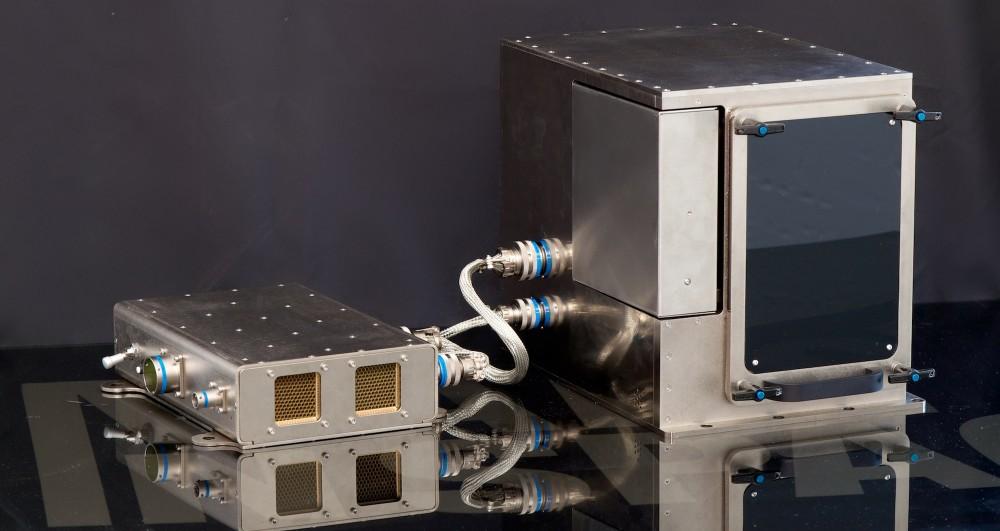
For the second phase of the mission Made in Space tested a modified version of their AMF that includes proprietary vacuum-compatible extrusion heads. These test parts were produced using aerospace-grade thermopolymers to assess how well the deposition process functions within a vacuum. After a full week of testing inside of a vacuum chamber the preliminary results of these tests have been successful. While the vacuum 3D printing process worked exactly as expected, Made in Space will be testing the finished parts to detect any mechanical properties that differ from parts produced in Earth’s atmosphere.
You can find out more about all of the exciting technology being developed by Made in Space over on their blog. And if you’re so inclined, Made in Space is also offering spools of their zero gravity 3D printing filament for sale on their website. And make sure that you let us know what you think about these developments over on our Made In Space forum at 3DPB.com.
Subscribe to Our Email Newsletter
Stay up-to-date on all the latest news from the 3D printing industry and receive information and offers from third party vendors.
Print Services
Upload your 3D Models and get them printed quickly and efficiently.











You May Also Like
Reuniting ExOne and voxeljet: An Investor’s View on Building a Global Industrial Sand Printing Leader
Authored by Whitney Haring-Smith, Chair of the Board, ExOne Global Holdings & Managing Partner, Anzu Partners At Anzu Partners, we invest with conviction in industrial technologies that create categories—and then...
Adoption of Advanced Powder Metal Manufacturing in the Global Small Arms Space – SHOT Show 2026 Additive Manufacturing Analysis
Back in 2013, I remember being completely blown away when a company called Solid Concepts reportedly additively manufactured nearly a complete firearm as a proof of concept. Although desktop polymer...
AM-Europe, operated by CECIMO: Positioning Additive Manufacturing at the Core of Europe’s Industrial Competitiveness
As European industries face growing pressure to strengthen resilience, reduce supply chain risks, and meet sustainability objectives, additive manufacturing (AM) is emerging as a practical and strategic solution. Closely align...
Five Imperatives for CAD and PDM In The Additive Era
Additive manufacturing has reached an inflection point. Hardware capabilities continue to advance, materials portfolios are expanding rapidly, and automation is reshaping post‑processing and production workflows. Yet many additive programs still...