Researchers Using 3D Printed Chocolate Treats to Encourage Physical Exercise


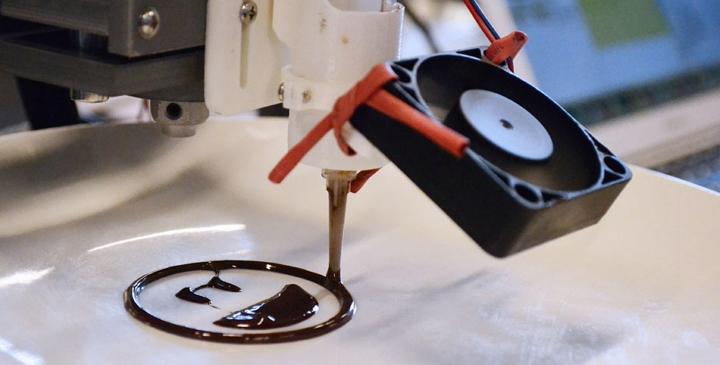 Researchers at the Royal Melbourne Institute of Technology are using 3D printing to examine the relationship between physical activity and reward via chocolate. Like the original SweetHearts concept we saw back in October, this time the RMIT researchers are taking their research into the home.
The team began their investigation with a scenario which represented physical activity in the form of material artifacts, run by researchers Rohit Ashok Khot, Larissa Hjorth, and Florian ‘Floyd’ Mueller.
They wanted to know what effect 3D printed objects representing a person’s physical activity might create for that user. To do so, they developed a system they called SweatAtoms. It used physical activity data – based on heart rate – and then built the “3D printed material artifacts.”
The study was conducted in six households, and the participants were presented with five different material representations of their physical activity over the course of two weeks.
 The RMIT team say they found that the 3D printed objects “made participants more conscious about their involvement in physical activity.”
Now, in another version of their project, ten families in Melbourne, Australia will be given a 3D printer for use in their homes which will print out chocolate “rewards” based on how much they exercise. This latest study will examine the idea that 3D printing chocolate will encourage people to exercise, and Khot told Mashable Australia he believes the project will help researchers look into new ways to present “corporeal data.”
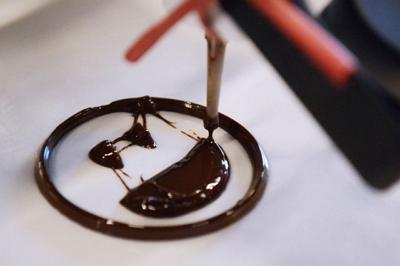
As each test subject goes through their daily exercise regimen, the data will be tracked and, according to the results, a chocolate will be printed on an EdiPulse 3D printer. The chocolates are meant to represent the amount of energy each of them expends during the course of a given day. If a subject meets a particular fitness goal, the chocolate reward will take the form of a “smiley face,” and if they slack off, a “frowny face.”
“We think of it as positive reinforcement,” says Khot. “It’s not directly looked at in terms of the size and quantity, but the more exercise you do, the more cheerful and beautiful the chocolate becomes. People like to track their exercise data using things like Fitbits, but that only gets seen in numbers and graphs on a screen. Now that we can track exercise, why not connect it to an edible material?”
Each of the dark chocolate printed candies will be a relatively small maximum of 30 milliliters a day. Khot says the study should be complete by September.
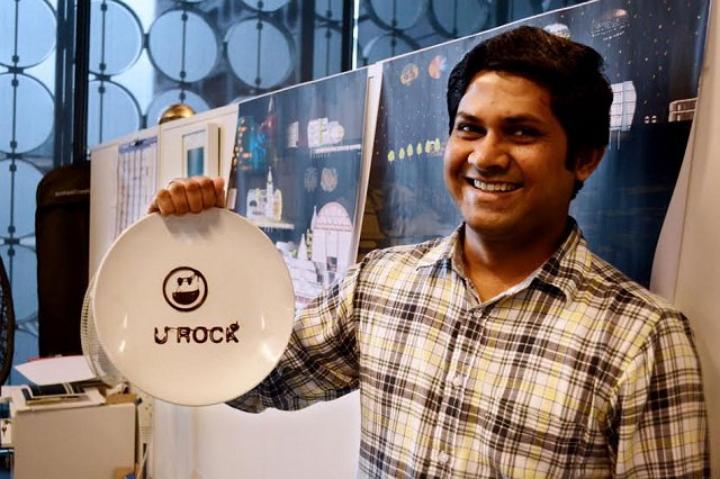
Rohit Ashok Khot of RMIT
While Khot says it might be more appropriate to print out a healthier reward than chocolate, 3D printing is relatively limited when it comes to outputting food. Khot and his team say they hope to inspire people to view food printing in a positive light, and that the idea might lead to “new ways of quantifying the self” as 3D printing becomes a more common tool in homes for food production.
“In the future, people could have such appliances in the home, and we are exploring how they could use them,” Khot says.
Would you take part in an experiment which uses 3D printed food as part of the regime? Let us know in the 3D Printed Chocolate Rewards forum thread on 3DPB.com.
Subscribe to Our Email Newsletter
Stay up-to-date on all the latest news from the 3D printing industry and receive information and offers from third party vendors.
Print Services
Upload your 3D Models and get them printed quickly and efficiently.













You May Also Like
DOE Awards $50M to Coreshell Technologies & AM Batteries for Domestic Anode Production
One topic that I do my best to stay on top of is the inseparability between rising adoption of metal additive manufacturing (AM) and the growing awareness of a need...
3D Systems Gets Further $9 Million For US Air Force Metal 3D Printing Project
3D Systems has received an extra $9 million under the Air Force’s Large-Format Metal 3D Printer Advanced Technology Demonstrator program. In 2023, the firm already got $10.8 million from the...
3D Printing Financials: 3D Systems, Prodways, and Align Build on Positive Momentum
The latest earnings from 3D Systems (NYSE: DDD), Prodways (EPA: ALPWG), and Align Technology (Nasdaq: ALGN) show that the 3D printing market continues to move forward. Some businesses are growing...
Walter Reed Gets Premarket Clearance to Make 3D Printed Point-of-Care Medical Devices
The Walter Reed National Military Medical Center’s 3-D Medical Application Center (3-D MAC) has received premarket clearance to make 3D printed medical devices. This is the first time that a...