IperionX Gets $11.5M Army Boost to Make Titanium Fasteners in the U.S.

IperionX is going to get another $11.5 million, potentially up to $25.4 million, of an existing SBIR Phase III with the Army (Task Order W911QX26FA097). The award covers low-cost titanium powder for military applications and is part of a $99 million SBIR Phase III program. This comes off the company raising $50 million in July. IperionX also received a titanium plate order for the Office of the Secretary of War Submarine Workforce and Industrial Base (OSW-SWIB) program worth $6.6 million in July. The US military is serious about localizing titanium production and titanium recycling, and the government has been showering IperionX and its competitors with money. 6K got $1.9m from the DLA and a further $23.4 million from the Defense Production Act Title III. Continuum, meanwhile, got $1.1 million in NAWC Aircraft Division Funding and the same amount from the Army Materiel Command.
IperionX is getting this money now specifically for fastener production. Fasteners may seem a little low value and humdrum an item to lavish so much money and attention on, but they’re crucial in keeping everything together. Titanium fasteners can be found in military helicopters, tanks, submarines, all over. At the same time, while the Berry Amendment is a fine motivator for securing high-value military deals and for funding new programs with a Made in the USA element, it’s the overlooked basics that the military is now tending to. Fasteners are just the kind of thing that hasn’t seen enough attention and investment, just the kind of thing that has moved overseas and has been left to atrophy in the US.
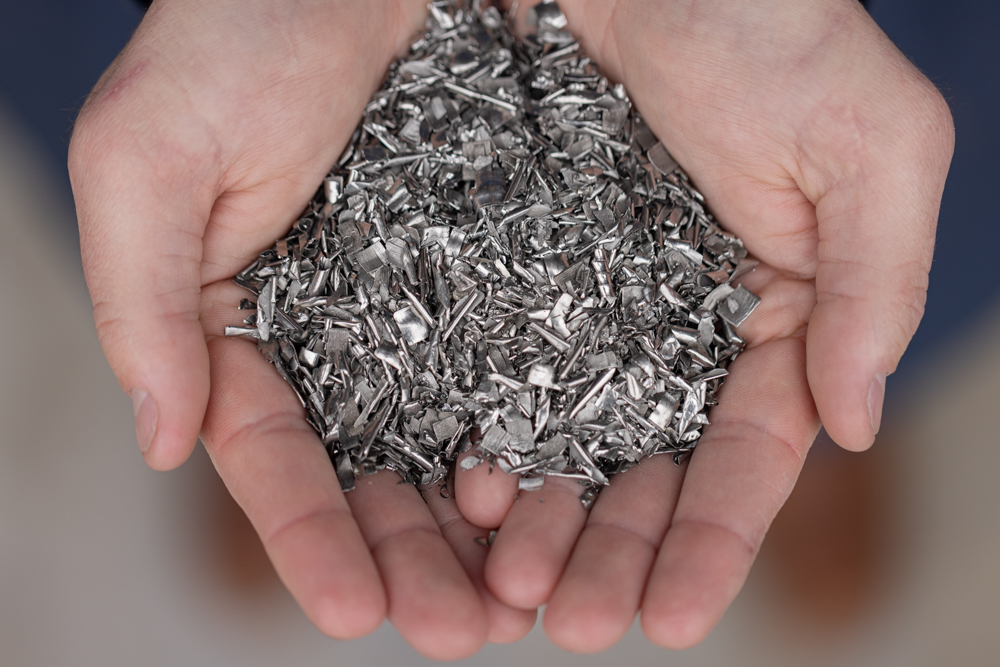
Titanium scrap for recycling. Image courtesy of IperionX.
The company is now focusing on bots, track pins (hinges for tank treads), and other fasteners. They will be tested at Detroit Arsenal and the Army Research Laboratory’s Aberdeen Proving Ground. The company thinks it may yet enter refractories, including the mythical C103, which the firm is pursuing with Global Advanced Metals. The company wants to look at recycling and producing Niobium powders. C103 may be used in applications such as hypersonics and missiles. C103 is susceptible to contamination; scrap flows will either have to come from discontinued weapons systems or from chips and turnings of people working with C103 right now. Getting control of that waste stream would be extremely valuable. But even if we look at decommissioned vehicles, then things like Titan III missiles and Space Shuttles. Decommissioning the Minuteman III ICBM could involve Boeing, Northrop Grumman, and the DLA and is generally a delicate thing politically and technically. So I’m not sure how much there is out there of C103 crap, but if you can get it, then it would be valuable. Some reports suggest there could be less than 100 tonnes of refractory scrap generated by the US military per annum, whereas there may be over 70,000 tonnes of steel and iron.
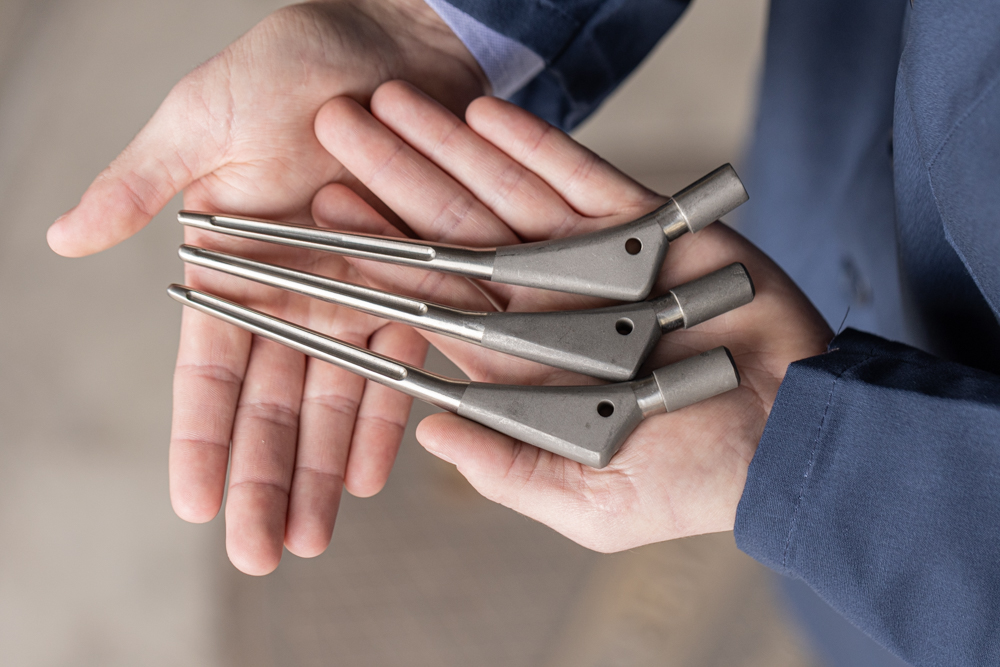
IperionX titanium components. Image courtesy of IperionX.
IperionX CEO Taso Arima said,
“This second U.S. Army task order represents an important step in scaling IperionX’s titanium powder-to-part manufacturing platform. The SBIR Phase III award aims to advance continuous and industrial-scale HSPT™ and dehydride capacity and bring titanium fastener finishing fully in-house at our Virginia titanium manufacturing facility.This award aligns with GenX, our next-generation continuous HAMR production platform, which together will provide an integrated American titanium manufacturing system. The program will expand our capacity to manufacture titanium track pins, bolts and fasteners for the U.S. Army, shorten production lead times and strengthen the domestic titanium manufacturing capabilities required to support U.S. defense supply chains.”
The company wants to offer shorter lead times and increase capacity by producing them in-house in Virginia. By going from scrap to part in a single facility, the company should be able to build up an efficient operation there.
To me, the fasteners are actually much more interesting than the niobium. Even in the great pivot from the exotic to the mass through the magic of the forge, American firms tend to focus on high-value items. But if you can do an integrated energy-efficient powder-to-part production business for low-value items, you may, in fact, be impossible to dislodge. What’s more, I could totally imagine getting $5 million for some Niobium production startup, while getting the same amount for fasteners would be harder. VC models focus on moats and the difficult. But if you could reliably make millions of fasteners for the military each year, it would be a very defensible business.
Subscribe to Our Email Newsletter
Stay up-to-date on all the latest news from the 3D printing industry and receive information and offers from third party vendors.
Print Services
Upload your 3D Models and get them printed quickly and efficiently.













You May Also Like
How Should Businesses Build New Business? Dirk Simon Weighs In — Part 1
Dirk Simon had deep experience in materials and chemistry before joining the 3D printing industry. Instrumental in BASF and Farsoon’s market introduction, Dirk has spent a lot of time thinking...
The Frankenservice Part 2: Have Your Cake and Eat it Too
This series of articles delves into a thought experiment. What if we let go of using a few machines very optimally, but instead use lots of different machines to meet...
The Additive Chicken Coop, Part IV: Lemmings
If we look at our past, we can see how making custom machines, incessantly watching ourselves, and our inability to rescope shaped our industry. We have also looked at the...
The Additive Chicken Coop, Part III: Bananas
A friend of mine, Ed Davis, once pointed out the level of strategic replication in additive. I wasn’t aware of it before and haven’t been able to unsee it since....