3D Printing in Automotive Applications to be $1.1 Billion Annual Market by 2019

 Automotive manufacturers have, at least until recently, used additive manufacturing and 3D printing technologies principally to support their prototyping activities, but that status and application is changing rapidly.
A report from SmarTech Publishing finds that 3D printing in the automotive industry is poised to take off, and in a big way. According to that report–“Additive Manufacturing Opportunities in the Automotive Industry: A Ten-Year Forecast“–automotive applications of 3D printing will generate a combined $1.1 billion by 2019.
The authors say there are a few key trends driving the uptick in applications by auto manufacturers such as large print volumes for 3D printed prototype parts, using 3D printing to build concept models for fit and finish checks, and design verification and even the creation of functional parts used in test vehicles and engines.
Those uses mark a shift in 3D printing technology toward higher-value processes and it may well mark the moment in time when manufacturers begin to adopt AM for end-use automotive parts.
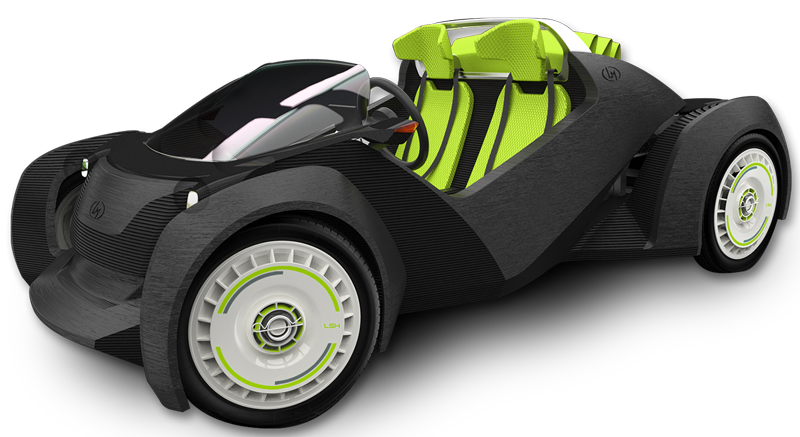
Image: LocalMotors.com
In fact, Local Motors has issued a challenge to the 3D printing community aimed at spurring the creation of a highway-capable vehicle where the majority of the car’s structure is created using a hybrid additive-subtractive method. The challenge is also meant to serve as a proof of concept that Direct Digital Manufacturing (DDM) can not only be functional, but provide economic advantages over traditional manufacturing methods. Local Motors say they hope the challenge will promote ideas like building cars with fewer parts by eliminating tooling. The Local Motors challenge for a $7,500 cash prize is open to submissions until June 15th. Entries will then be validated, and the final stage of voting will run June 19-25.
Leading automotive manufacturers already use AM and 3D printing to build a wide variety of tooling, jigs, and fixtures for use in assembly and manufacturing processes, and SmarTech say they’ve developed a customer adoption model for 3D printing which is specifically tailored to the automotive industry. This latest report features a model template the company uses to illustrate current–and future–adoption of 3D printing technology in the automotive market.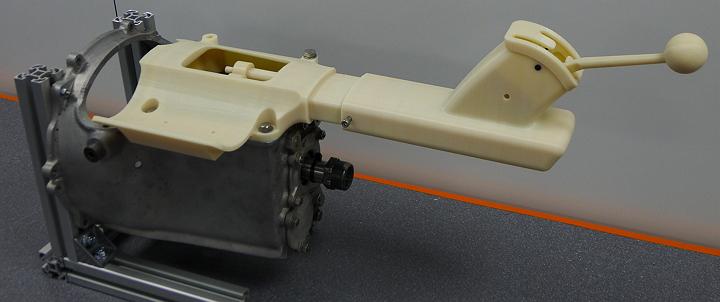
The company says the report analyzes new business opportunities which will arise from the ongoing penetration of 3D printing equipment onto the factory floor, and it takes into account the value of materials, software, and services with automotive applications.
 SmarTech says this report also reviews the current limitations of 3D printing in automotive industry applications, and it takes a look at how several key companies have overcome those limitations.
The report also includes SmarTech’s ten-year forecast of 3D printing equipment, software, services, and materials consumed by the automotive industry and it projects sales value and unit sale. The report also includes breakouts by geographical region and discussions of how major have adapted their 3D printing and AM product strategies.
SmarTech has been providing coverage of and forecasts for various sectors of the 3D printing industry, including recent looks into the dental and precious metals arenas.
What do you think of this industry report which calls for a huge uptick in 3D printing and AM adoption in the automotive sphere over the next 10 years? Do you think the numbers are realistic? Let us know in the Automotive 3D Printing Market Report forum thread on 3DPB.com.
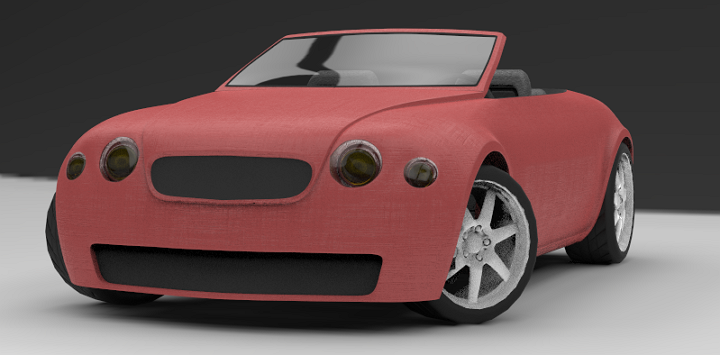
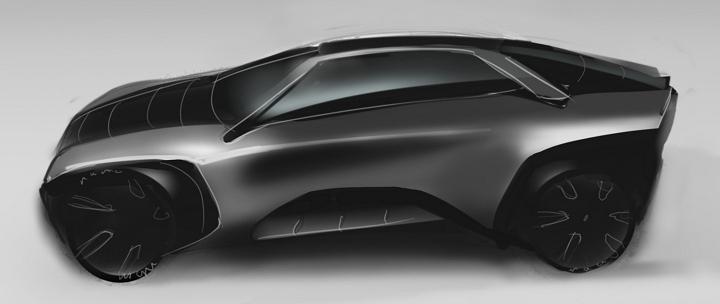
The Apache Concept Car by Ramy Voland
Subscribe to Our Email Newsletter
Stay up-to-date on all the latest news from the 3D printing industry and receive information and offers from third party vendors.
Print Services
Upload your 3D Models and get them printed quickly and efficiently.













You May Also Like
10 Years of Multi Jet Fusion: Onsite at HP’s Vancouver, Washington Facility
At this year’s RAPID event in Boston, HP Additive Manufacturing Solutions celebrated ten years in the additive manufacturing (AM) market. The company ushered in the milestone with several innovations, including...
These 3D Printed Lattices Can Sense Damage Before Failure
A new paper, “Full-Field Damage Monitoring in Architected Lattices Using In situ Electrical Impedance Tomography,” points to lattices being able to detect damage. This could really help composites in critical...
3D Printing News Briefs, October 3, 2026: Hypersonics, Hotends, & More
We’re starting off with defense in this weekend’s 3D Printing News Briefs, as Titomic was awarded a $5 million U.S. defense contract, and VulcanForms announced a partnership with Specter Aerospace...
3D Printing News Briefs, October 1, 2026: Defense, Enclosures, & More
In today’s 3D Printing News Briefs, we’re starting with defense news, first from Massivit and then from AML3D. Then we’ll move on to U.S. manufacturing of a new large-format LPBF...