Chinese Create Huge 40×40 Foot Graphene / Fiberglass 3D Printer – Planning on Constructing Homes

 “Bigger is better,” as the old adage goes. When it comes to a juicy steak, or a diamond ring, these words always hold true. When it comes to 3D printing, however, there still remains some debate.
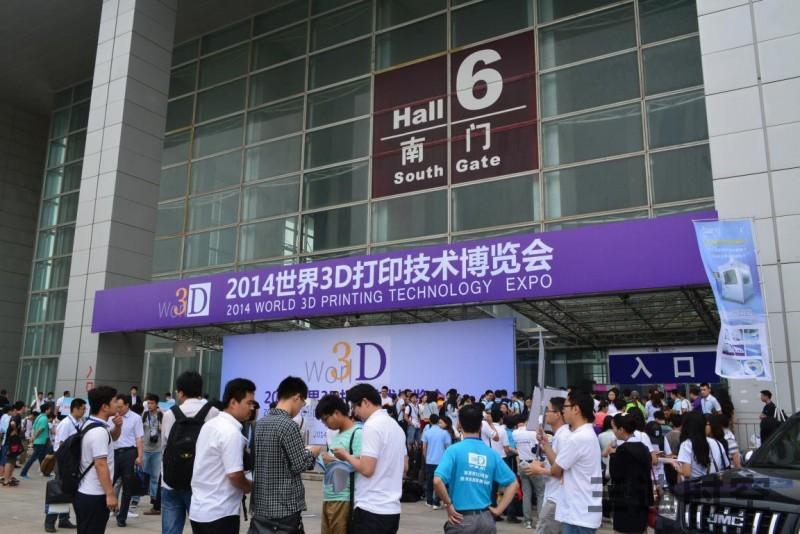
The 2nd World 3D Printing Technology Expo was held in Qingdao, Shandong, China this past week (June 19-22). It featured thousands of individuals from China, United States, Germany, Belgium, the United Kingdom, and almost a dozen other countries. They were there to discuss the latest breakthroughs in 3D Printing, including possible applications, material use, business models and more.
Qingdao Unique Products Develop Co., Ltd, a company known for their high quality Desktop 2D and 3D Printers, apparently believes that the old catch phrase doesn’t only apply to gemstones and beef. They apparently believe it to hold true for 3D printers as well. The company was on hand at the 3D printing conference this past week to show off something quite amazing. They introduced what they refer to as the ‘World’s Largest’ 3D printer, which has an incredible X and Y axis of 12 meters (almost 40 feet) each.
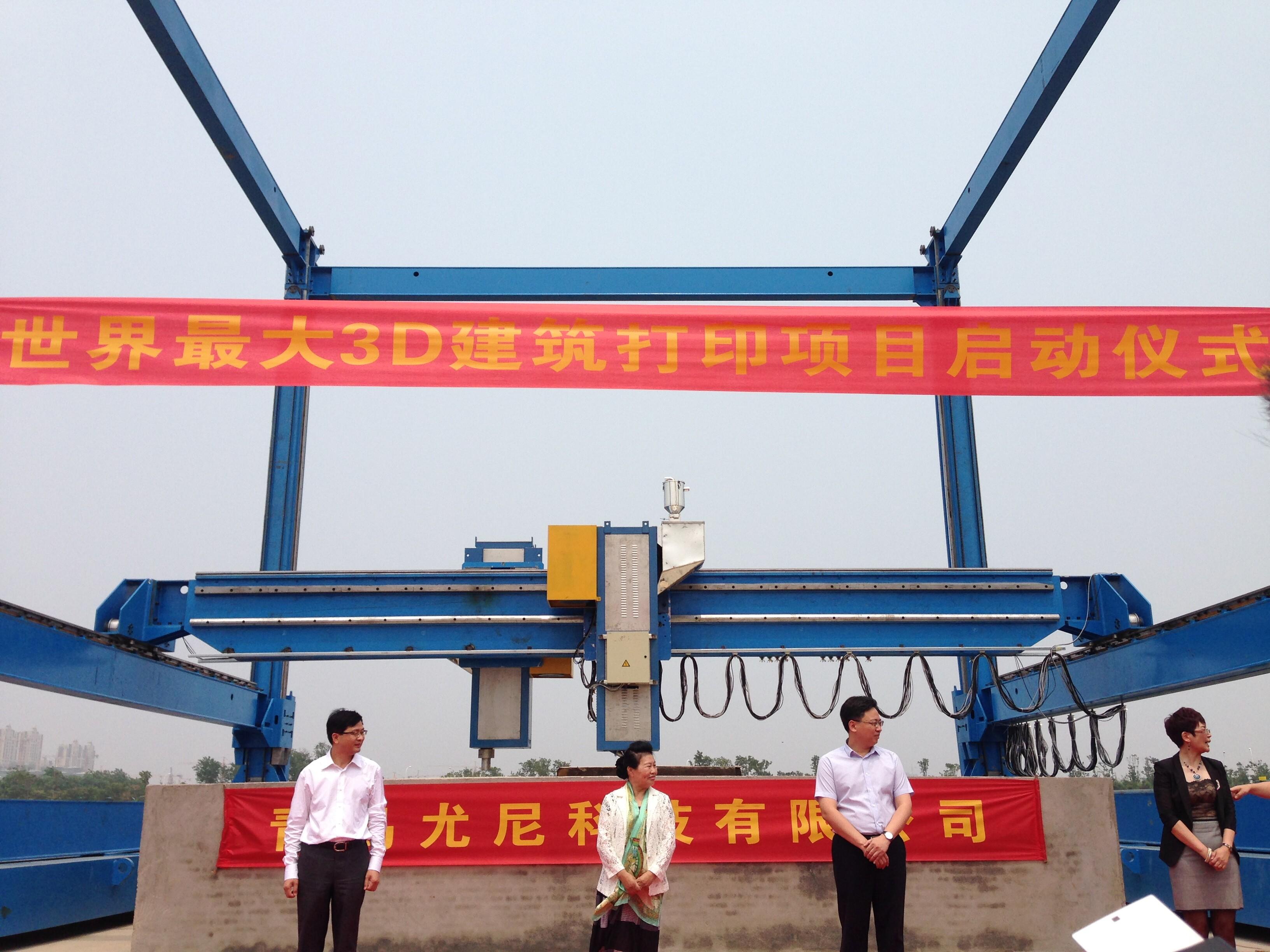
This new gigantic 3D printer will set out on its first official task, of printing out a replica of the world famous “Temple of Heaven”, a religious building located in central Beijing. The replica will be 7 meters in diameter and 8 meters high, and is expected to take around 6 months to complete. Representatives from Qingdao were on hand to show off a mini-replica of the Temple of Heaven, in which they will be printing on their large 3D printer.
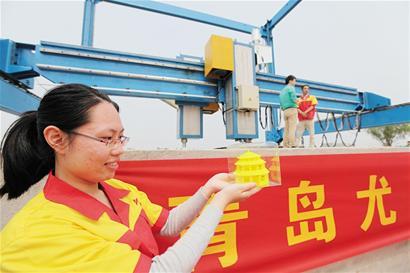
A mini-replica of the Temple of Heaven
In the future, this incredible printer may be used to construct homes and other buildings, as they have come up with a specially formulated printing material which uses a combination of graphene and fiberglass, to creating an extraordinarily strong printing material. The company plans to challenge the 3D printed canal house project currently on-going in the Netherlands.
“The project in the Netherlands is an interesting one, but we plan to eclipse it by making our buildings stronger and easier to print,” explained a representative of Qingdao to 3DPrint in an email.
Qingdao Unique Products believes that their printer is superior to the ones used in the Netherlands in that it will be able to print entire houses out in one go, rather than using 3D printed pieces that are then bonded together, like in the construction of the Dutch Canal House project. Qingdao’s buildings should be three times as strong because of their specially formulated printing material.
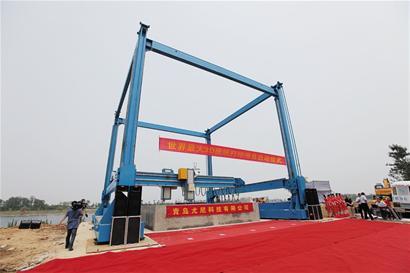 China has long been known for their extremely large 3D printers. It should be interesting to see how their 3D printing house project goes. Being able to print out buildings nearly 40 feet in diameter should be quite sufficient in the construction of some smaller homes. With this said, Qingdao may still create a larger printer in order to print even larger buildings in the future.
What do you think about this incredible new 3D printer? Would you want your house constructed with it? Discuss in the Large Chinese 3D printer forum thread on 3DPB.com
Subscribe to Our Email Newsletter
Stay up-to-date on all the latest news from the 3D printing industry and receive information and offers from third party vendors.
Print Services
Upload your 3D Models and get them printed quickly and efficiently.













You May Also Like
AI Design and Point-of-Care Integration Headline ADDITIV Medical 2026
Medical additive manufacturing is expanding rapidly inside major healthcare institutions. In 2026 alone, hospital systems including Indiana University Health and Sheffield Teaching Hospitals launched dedicated point-of-care 3D printing facilities to...
GKN Aerospace’s UAV Demonstrator with 3D Printed Engine Avoids ITAR Regulations
The US CIA director recently made an unannounced visit to Moscow that has naturally raised much speculation, while the EU and NATO have now officially accused Russia of being behind...
The Business Case for 3D Printed Stents
A new 3D printed stent developed at New York University (NYU) does not look like the devices doctors typically use today. Instead of a simple tube, the prototype resembles a...
3D Printing Financials: 3D Systems, Prodways, and Align Build on Positive Momentum
The latest earnings from 3D Systems (NYSE: DDD), Prodways (EPA: ALPWG), and Align Technology (Nasdaq: ALGN) show that the 3D printing market continues to move forward. Some businesses are growing...