Unique 3D Printed “Intertwine” Vase Design is Inspired by DNA and Leaf Patterns


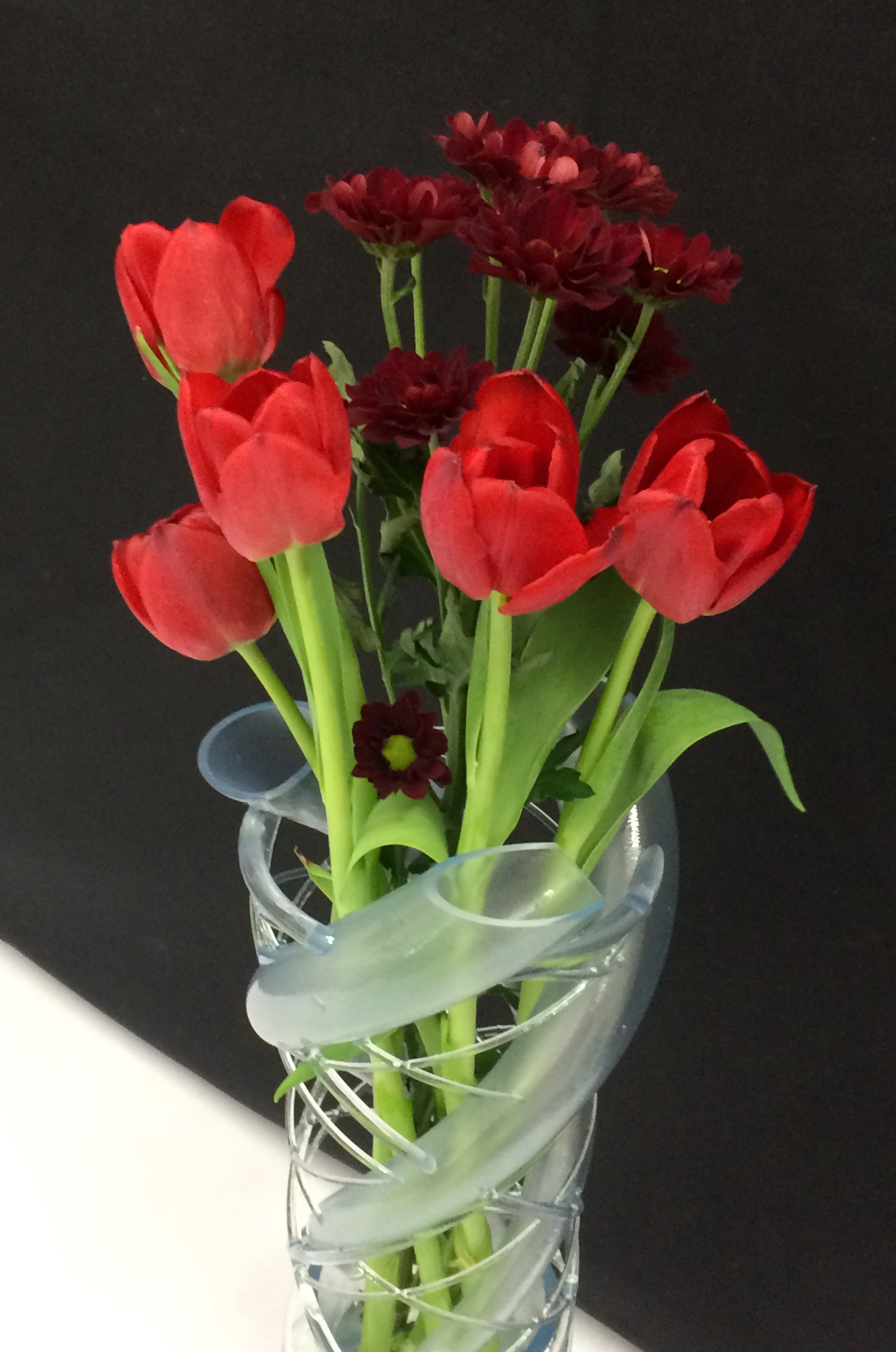
A University of Lincoln (England) assignment to create a brand of 3D printed products targeting a specific demographic blossomed into the “Intertwine” flower vase, part of the “Entangle” brand of high-end luxury housewares for urban dwellers. The vase’s designer, Daniel Lane, told 3DPrint.com that pattern inspiration preceded form in this process, and the end result was the idea to create a vase:
“I personally took inspiration from DNA structures and leaf cell patterns and decided to utilise the helix and spiral structures as a starting point for the design,” Lane told us. “After a few days looking at the shapes and forms, the patterns leant themselves to forming a vase, which fitted in perfectly with the luxury homeware range.”
The idea to make water flow through the body of the vase came later.
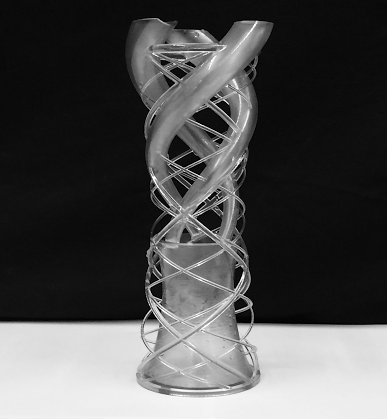
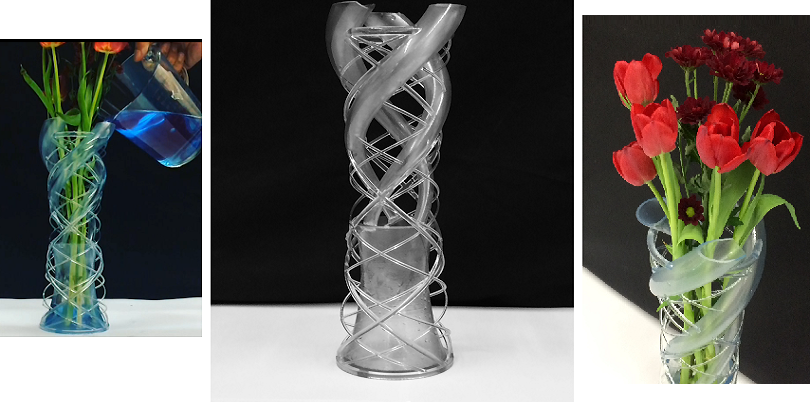
Lane initially got to work in the CAD software Rhino, using the concept of strands that were “piped, tapered, and rotated” at different diameters and varying degrees to create non-uniform and overlapping tubes creating the vase’s body. Then Lane saw some potential that makes this vase such a unique piece.
“After looking further at generative design patterns and thinking about connecting the vase to the brand name (Entangle) I came up with the idea to get the water to interact with the body of the vase itself and created 3 larger helix strands, which were then hollowed,” he explained.
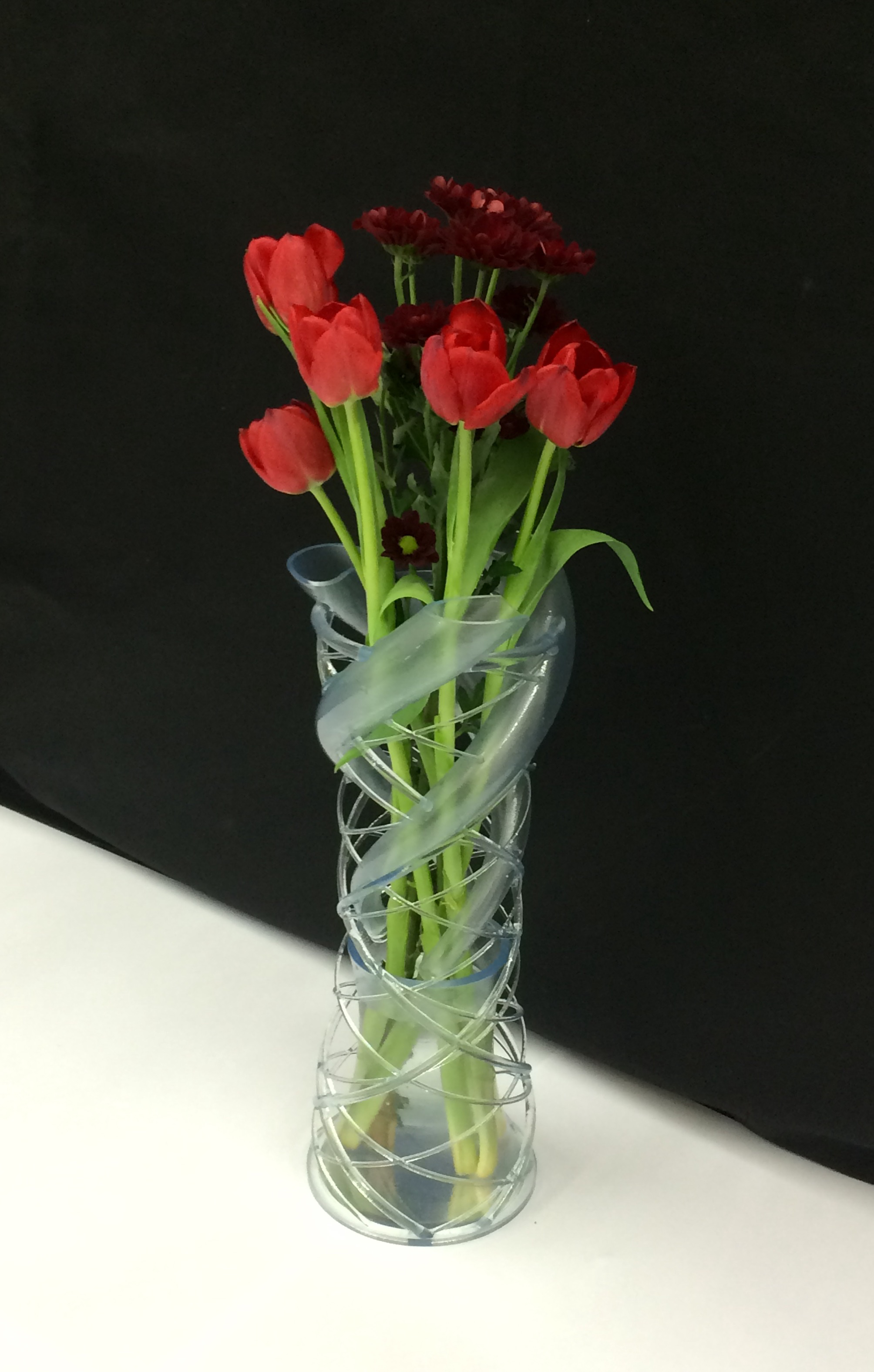 In aesthetic terms, this design allows the user to watch the water flow into the vase’s body, as it traverses the overlapping tubes. But another highly functional feature also grew out of this initial tube-based design concept. After a few days of cut flowers sitting in a vase, the water runs down and you need to refresh it. Depending on how full the vase is, you frequently must remove the flowers to refill the vase. But the Intertwine vase has eliminated that step as fresh water flows into the vase through tubes, skipping the need to remove flowers to “top up” the water.
In order to achieve the design effect of visible water flowing through tubes, Lane decided the vase would need to be 3D printed in a transparent material. He opted to use iMaterialise to print the vase in their transparent resin using the stereolithography method, and while he wasn’t sure how long it took to print the final vase, a 1/3 size test piece printed in PLA took 7 hours to print — just to give a ballpark estimate.
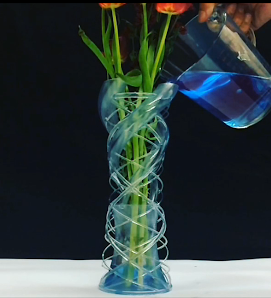
The results of this process are quite intriguing, and Lane describes the vase (which can hold 350 mL of water) as appearing delicate while remaining strong.
“Although the form and aesthetic of the vase look very delicate,” he notes, “the piece is actually quite robust and each strand has been printed at a diameter that achieves the delicate aesthetic whilst also providing a strength and stability to the product.”
The delicate balance Lane strikes between design and function, which is the key characteristic of the Intertwine vase, will be exhibited along with the rest of the Entangle product line at the New Designers show in London July 1-4th.
You can also check out Entangle Design’s Facebook and Twitter sites for more information and updates. If you’re interested in purchasing your own Intertwine vase for £450, you can contact the Entangle team via social media.
Let us know what you think of this vase at the Intertwine Vase forum thread over at 3DPB.com. The video below shows the vase in action.
Subscribe to Our Email Newsletter
Stay up-to-date on all the latest news from the 3D printing industry and receive information and offers from third party vendors.
Print Services
Upload your 3D Models and get them printed quickly and efficiently.













You May Also Like
Phillips Federal Participates in Marine Corps Exercise
Phillips Federal will participate in a Marine Corps exercise that will use several additive manufacturing technologies. The 1st Maintenance Battalion, 1st Marine Logistics Group, I Marine Expeditionary Force (IMEF), will...
Ceramics 3D Printing at Ceramitec 2026
Ceramitec is a key event for the ceramics industry. Held in the lovely city of Munich, it is the leading global event for the ceramics community. With around 13,000 participants...
AM Forum Berlin 2026: Tough Love From BMW’s Timo
We’re once again in the lovely city of Berlin, at the absolutely immense Estrel Center. The congress center, a musical and theater venue, towers over the easternmost reaches of the...
Printing Money Episode 35: Notable VC and M&A Deals, with Arno Held and Alex Kingsbury
Welcome to Printing Money Episode 35 and let us be the last to wish you a happy new year. For this episode Danny is joined by Arno Held (Managing Partner,...